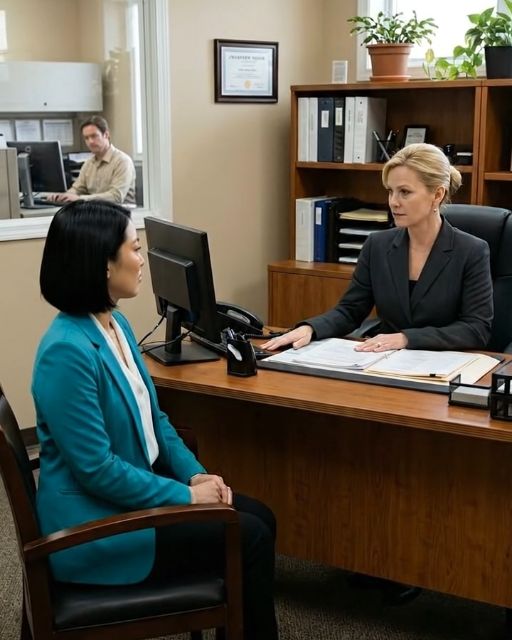
The administrator smiled like she’d rehearsed it. “Mr. Fletcher has become… disruptive. We think he’d be better suited elsewhere.”
I stared at her across the polished desk. My father had lived at Grandview Manor for three years. He was 82, quiet, barely left his room.
“Disruptive how?”
She folded her hands. “He’s been making accusations. Telling the other residents that we’re stealing from him. It’s causing distress.”
I felt my jaw tighten. “Is he wrong?”
Her smile didn’t budge. “Mrs. Chen, your father has dementia. He hides his own belongings and forgets. We’ve been very patient, but – “
“I want to see his room.”
She hesitated. Just for a second. “Of course.”
We walked down the hall. The place smelled like boiled vegetables and disinfectant. Dad’s room was at the end, the door half-open.
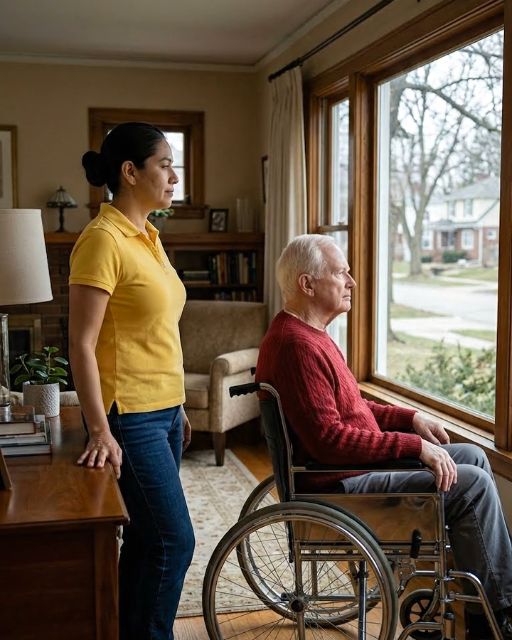
He was sitting on his bed, staring at his hands. When he saw me, his face lit up.
“Ruthie,” he whispered. “They took it again.”
“Took what, Dad?”
“The money. The envelope.”
The administrator cleared her throat. “You see what I mean.”
I knelt beside him. “Dad, where do you keep your money?”
He looked at me like I was stupid. “In my shoe. Left one. Back compartment.”
I reached for his closet. The administrator stepped forward. “Mrs. Chen, I don’t think – “
I grabbed his old brown loafer. It was worn through at the heel. I stuck my hand inside, felt around the insole.
There was a slit. My fingers touched paper.
I pulled out a rolled bundle. Not money.
Receipts. Dozens of them. All dated within the last six months. All signed by staff members. All for withdrawals from my father’s account.
I looked up at the administrator. Her face had gone white.
“What is this?” I asked.
She didn’t answer.
I unrolled another slip. This one had a name I recognized: Denise Morton, Head Nurse. The amount: $1,200.
My father tugged my sleeve. “I told you,” he said softly. “I told you they take it.”
I stood up, my hands shaking. “You’ve been stealing from him.”
“Those are… those are probably—”
“Probably what? Probably forged by an 82-year-old man with dementia?”
She took a step back. “I’ll need to speak with our legal team.”
I pulled out my phone. “Great. So will the police.”
Her mouth opened, but no sound came out.
I turned to my father. “Dad, pack your things. You’re coming home with me.”
He nodded, but his eyes were somewhere else. He reached under the mattress and pulled out a small notebook.
“What’s that?” I asked.
He handed it to me. “The list,” he said. “All of them.”
I flipped it open.
It wasn’t just receipts. It was names. Dates. Amounts. Other residents.
My stomach dropped.
This wasn’t just about my father. It was about all of them.
At the bottom of the last page, in shaky handwriting, he’d written one more thing.
A name I didn’t recognize: Harold Voss.
“Dad, who’s Harold?”
He looked at me, his eyes suddenly sharp. Clearer than they’d been in months.
“The one who started it,” he said. “The one they said died last year.”
I froze. “What do you mean, ‘said’?”
He leaned in close, his voice barely a whisper.
“Because two nights ago, I saw him in the basement. And he told me everything.”
The administrator had quietly slipped out of the room. I could hear her heels clicking fast down the hallway.
I sat down next to my father, the notebook still in my hands. “Dad, I need you to stay with me. Tell me exactly what Harold said.”
He rubbed his temples like he was trying to pull the memory forward. “Harold worked here. Maintenance. He noticed things. Money going missing. Residents signing papers they didn’t understand.”
“And they killed him?” My voice came out higher than I intended.
Dad shook his head. “No, no. They paid him off. Made him disappear. Gave him money to leave town and never come back. But his sister lives in Manchester, got sick. He came back to see her one last time.”
That made more sense, but it was still horrible. “So he’s been hiding?”
“Staying with his nephew across town. But he snuck back here to get something he’d hidden. That’s when I found him.”
I looked at the notebook again. The handwriting changed halfway through. Some entries were in my father’s shaky script, but others were cleaner, more precise.
Harold had been helping him document everything.
“Where is Harold now?” I asked.
Dad pointed to a phone number scrawled on the inside cover. “He said to call if you believed me. Said he’d testify.”
My hands were shaking as I dialed. The phone rang four times before a gruff voice answered.
“Yeah?”
“Is this Harold Voss?”
A long pause. “Who’s asking?”
“Ruth Chen. Peter Fletcher’s daughter. My father says you can help.”
Another pause. Then: “Meet me at Bailey’s Diner on Crosswood Street. One hour. Come alone.”
The line went dead.
I looked at the administrator’s empty chair, then back at my father. “Dad, I need to go meet someone. But first, we’re getting you out of here.”
I packed his essentials quickly while he sat on the bed, watching. For someone with dementia, he seemed remarkably calm. Almost relieved.
As we walked down the hall, I noticed something. The other residents were watching us through cracked doors. An old woman with white hair gave me a small nod.
They knew. They all knew something was wrong.
At the front desk, a different staff member tried to stop us. “Mrs. Chen, you can’t just—”
“Watch me,” I said, guiding my father past her.
In the parking lot, Dad stopped and turned back to look at the building. “There are good people in there, Ruthie. The ones who didn’t know. Don’t punish them.”
Even now, he was thinking about others. That was my father.
I drove him to my house and got him settled in the guest room. My husband Marcus came home from work early, confused but supportive when I explained.
Then I drove to Bailey’s Diner alone.
Harold was sitting in the back booth, a cup of coffee going cold in front of him. He was maybe sixty, weathered skin, hands that looked like they’d worked hard all their life.
“You look like your dad,” he said when I sat down.
“He says you have proof.”
Harold pulled out a flash drive from his jacket pocket. “Six months of security footage. I copied it before I left. Shows staff going into rooms at night. Shows them taking residents to the office to sign papers. Shows Denise Morton pocketing cash.”
I took the drive carefully, like it might disappear. “Why didn’t you go to the police yourself?”
He laughed bitterly. “Because they paid me twenty thousand dollars to disappear. Because I took it. Because I was scared and broke and stupid.”
“But you came back.”
“My sister’s dying. Made me think about what matters.” He looked down at his coffee. “Your dad’s a good man. When I ran into him in that basement, he didn’t judge me. Just asked me to help make it right.”
I felt tears prick my eyes. “He’s always been like that.”
Harold pushed a manila envelope across the table. “Bank statements. I accessed the facility’s accounts remotely. A friend of mine is good with computers. This shows where the money went.”
I opened it. Thousands of dollars, siphoned from resident accounts over two years. The administrator’s name appeared again and again.
“How many people are involved?” I asked.
“Four staff members that I know of. Maybe more. The administrator, Mrs. Pritchard, she runs it. Denise Morton helps. Two orderlies process the paperwork.”
I thought about my father’s notebook. About all those names. “How many residents did they steal from?”
“At least fifteen. Maybe twenty. Some have died. Their families never knew.”
The anger I felt was hot and sharp. “I’m going to the police. Today.”
Harold nodded. “I’ll come with you. Tell them everything. I don’t care anymore about the money they gave me. I’ll give it all back if it helps.”
We went to the police station together. Detective Morrison listened to everything, examined the evidence, made calls.
Within two hours, officers were at Grandview Manor with a warrant.
The news broke that evening. The administrator and three staff members were arrested. The facility was shut down pending investigation.
My phone wouldn’t stop ringing. Other families, other children of residents, all asking questions.
But there was one call that mattered most.
It was from a lawyer named Sandra Bowen. She specialized in elder abuse cases.
“Mrs. Chen, I’d like to help you file a class action suit. Pro bono. What they did to those people… we need to make sure it never happens again.”
Over the next three months, the case built. Harold testified. My father testified, remarkably lucid when it mattered. Other residents came forward.
The defense tried to argue that my father’s dementia made him unreliable. But the receipts, the footage, the bank statements, they told the truth.
Mrs. Pritchard, the administrator, broke first. She confessed to everything in exchange for a lighter sentence. The money had gone to gambling debts, a bad divorce, poor investments.
Denise Morton tried to claim she was just following orders. The jury didn’t buy it.
In the end, all four were convicted. Prison sentences ranged from three to seven years.
The civil case resulted in a settlement of 1.2 million dollars, distributed among the affected families.
But something else happened that I didn’t expect.
Harold Voss used his portion of the settlement to start a nonprofit. An organization that audits nursing homes and assisted living facilities, looking for signs of abuse.
He asked my father to be on the board.
Dad said yes.
His dementia hadn’t gone away. Some days were harder than others. But he had purpose again. Once a month, he and Harold would review reports, talk to families, make sure other people’s parents were safe.
On good days, Dad was sharp as ever. On bad days, I’d find him in the guest room, holding that old brown shoe like a trophy.
“I kept the proof,” he’d say. “I remembered.”
And he had. When it mattered most, he’d remembered.
Six months after the trial, we held a small gathering. The families who’d been affected, Harold, Detective Morrison, Sandra the lawyer.
One woman approached me with tears in her eyes. “Your father saved my mother’s savings. She can afford proper care now. Please thank him.”
I found Dad in the kitchen, eating cake with Harold. They were laughing about something.
When I told him what the woman said, he shrugged. “Just did what was right, Ruthie. That’s all.”
Just did what was right.
Like it was simple. Like it was easy.
But it wasn’t simple, and it wasn’t easy. It took courage to keep those receipts when everyone said he was crazy. It took clarity in moments of confusion. It took trust that someone would eventually believe him.
I think about that day in his room a lot. How close I came to dismissing him. How the administrator almost convinced me he was just confused.
We trust institutions. We trust people in authority. We assume that someone else is watching, that systems work, that our parents are safe.
But sometimes they’re not.
Sometimes the person everyone thinks is confused is the only one seeing clearly.
My father taught me that. Not with words or lectures, but with receipts hidden in a shoe and a notebook under a mattress.
He taught me that doing the right thing doesn’t require a sound mind every single day. It requires a good heart and the courage to act when it counts.
Harold visits every week now. They sit on the porch, two old guys who saved each other. Harold gave Dad purpose. Dad gave Harold redemption.
And me? I visit more. I listen more. I never assume I know better.
Because the truth was hiding in a shoe the whole time. I just had to be willing to look.
The real lesson isn’t about nursing homes or theft or justice. It’s simpler than that.
Believe people when they tell you something’s wrong. Even if they forget what they had for breakfast. Even if they repeat themselves. Even if everyone else says they’re confused.
Sometimes the most vulnerable among us see what the rest of us miss. And sometimes all they need is one person to believe them.
My father gave me that gift. The gift of paying attention. The gift of trust.
I’ll spend the rest of my life trying to pass it on.