I was sick but still went to work. I went to the bathroom every hour. Instead of appreciating my effort, my manager ordered extra hours to ‘make up for bathroom time’. I agreed, furious. The next Monday, she called me, voice shaking. She didn’t know I secretly recorded every single word of that conversation on my phone.
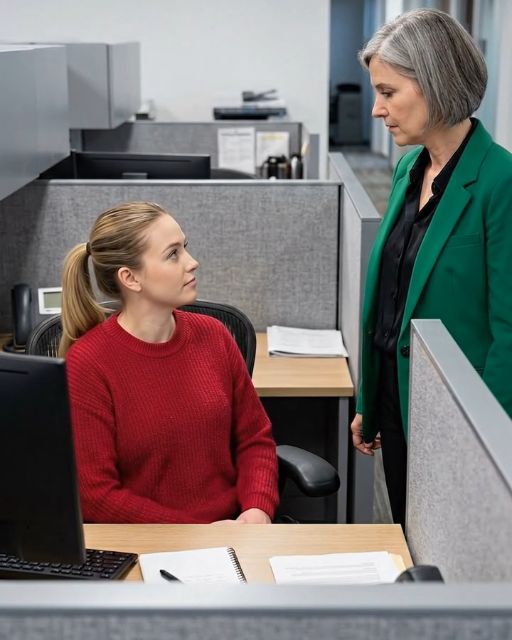
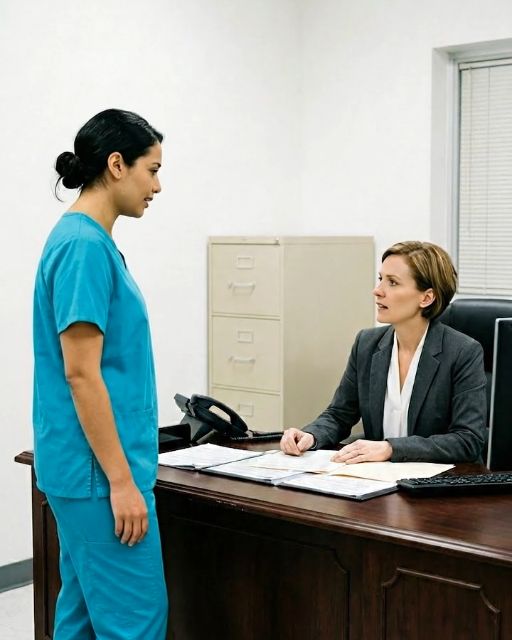
My manager, Brenda, had always been the type of person who viewed employees as machines rather than human beings. To her, a stomach flu wasn’t a biological reality but a personal affront to the company’s quarterly productivity goals. When I stood in her office that Friday, pale and clutching my stomach, she didn’t offer a chair or a glass of water.
She simply pointed at the digital clock on the wall and told me that my thirty-five minutes of cumulative “restroom breaks” would be deducted from my lunch and added to the end of my shift. I remember the coldness in her eyes, a look that suggested I was somehow trying to scam the company by being genuinely ill. I felt a surge of adrenaline that temporarily masked my nausea, and I quietly hit the record button on the voice memo app in my pocket.
“You need to understand, Silas,” she had said, her voice dripping with a fake, corporate concern. “If I let you slide on this, everyone will start having ’emergencies’ just to avoid their desk, and we have the regional audit coming up.” I nodded, not trusting my voice, and walked back to my cubicle to endure four more hours of misery while the recording captured her subsequent laughter with her assistant about my “weak constitution.”
That weekend, I stayed in bed, sipping ginger ale and reflecting on the three years of loyalty I had given to a firm that treated me like a faulty piece of hardware. I had worked through holidays, covered for Brenda when she took “discreet” long weekends, and never once complained about the stagnant pay. But something about her demand for “bathroom makeup time” broke the last string of my patience.
When Monday morning rolled around, I expected the usual cold greeting and a pile of overdue files on my desk. Instead, my phone buzzed at 7:30 AM, and Brenda’s voice sounded like it had been put through a paper shredder. She was frantic, stuttering over her words, and asking me if I had seen the internal server logs from the weekend.
“Silas, please tell me you were the one who logged in on Saturday to finalize the Henderson account,” she pleaded. I told her the truth, which was that I had been asleep for nearly forty-eight hours straight, recovering from the dehydration she had worsened. There was a long, heavy silence on the other end of the line, followed by a faint sob.
It turned out that while Brenda was busy micromanaging my health, she had neglected to double-check the security permissions for the regional audit files. Because she had shared her master password with her “favorite” nephew—an intern she had hired against company policy—he had accidentally wiped the entire Henderson directory while trying to install a gaming emulator on his workstation.
The irony was thick enough to choke on; the very audit she used as an excuse to torture me was now the engine of her own destruction. She begged me to come in early and see if I could use my administrative recovery keys to find a backup, promising me that she would “forget” about the extra hours she had assigned. I sat on the edge of my bed, feeling a strange sense of calm as I realized the power dynamic had shifted entirely.
I drove to the office not because I wanted to save her career, but because I wanted to witness the fallout of her own making. When I arrived, the atmosphere was thick with panic, and the regional director, Mr. Vance, was already there, pacing the floor with a scowl that could peel paint. Brenda looked like she hadn’t slept in a week, her hair disheveled and her hands shaking as she tried to explain the “technical glitch.”
Mr. Vance turned to me, knowing I was the lead analyst who handled the Henderson data, and asked for my professional assessment of the situation. I could have lied to protect her, or I could have spent hours trying to reconstruct the data from old physical files, but I chose a different path. I pulled out my phone and placed it on the conference table, right in front of the man who held both our futures in his hands.
“Before we discuss the data,” I said quietly, “I think you should understand the environment that led to this oversight.” I played the recording from Friday, letting the room fill with Brenda’s voice mocking my illness and demanding I work extra hours to compensate for a biological necessity. The room went dead silent as her cruel words echoed off the glass walls, followed by the segment where she joked about the “idiot intern” she had hired to do her busy work.
Brenda’s face went from pale to a deep, bruised purple, and she couldn’t even look Mr. Vance in the eye. The regional director didn’t say a word until the recording finished; he simply picked up the phone and asked the intern to join us in the boardroom. The “twist” I hadn’t expected, however, was what happened when the intern, a young man named Marcus, actually walked in.
Marcus wasn’t the arrogant brat Brenda had described; he looked terrified, clutching a USB drive as if it were a life raft. He looked at Brenda, then at Mr. Vance, and then he looked at me with an expression of profound guilt. “I didn’t delete it,” he whispered, his voice cracking. “I found out what she was doing with the payroll and the overtime hours, and I moved the files to a secure drive because I was scared she’d delete them to cover her tracks.”
The room spun for a moment as Marcus explained that he had overheard Brenda talking about “adjusting” my overtime pay to make her department’s budget look better. He had realized that the “bathroom time” she was making me work wasn’t just a power trip; it was a way to get free labor that she could bill to the client while pocketing the difference in her bonus structure. Marcus had acted as a whistleblower in training, protecting the data not from a glitch, but from his own aunt’s potential sabotage.
Mr. Vance’s expression shifted from anger to a cold, calculated disappointment that was far more terrifying. He realized that the “technical error” was actually a desperate move by a corrupt manager who was losing control of her scheme. Brenda tried to scream that Marcus was lying, that he was just a kid who didn’t know how to use a computer, but the evidence was already mounting against her.
Marcus handed the USB drive to me, and within minutes, I had the Henderson account fully restored and verified for the audit. The data was perfect, but Brenda’s reputation was in ruins, exposed by the very people she thought she could manipulate. Mr. Vance asked Brenda to pack her things immediately, informing her that a full forensic audit of her department’s payroll would begin that afternoon.
As she was escorted out by security, she looked at me with a hatred that was almost tangible, but I felt nothing but a profound sense of relief. I wasn’t happy that she lost her job, but I was satisfied that the truth had finally caught up with her. The office felt lighter, the air seemed clearer, and for the first time in years, I didn’t feel like a cog in a broken machine.
Mr. Vance sat me down afterward and offered me the interim manager position, along with a significant raise and a formal apology for the treatment I had endured. He also kept Marcus on, recognizing the young man’s integrity and giving him a proper mentorship under my guidance. We spent the rest of the day cleaning up the mess Brenda had left behind, working as a team rather than as a hierarchy of fear.
The lesson I learned that day was one that has stayed with me through every job I’ve held since then. Integrity isn’t just about doing the right thing when people are watching; it’s about how you treat people when you think you have all the power. Brenda thought my illness made me weak, but it was actually her own lack of empathy that proved to be her ultimate downfall.
Money and titles can be taken away in an instant, but the way you treat your colleagues is the only thing that truly lasts. We often think that being “tough” is the same as being a good leader, but true leadership requires a heart as much as it requires a head. I realized that by recording her, I wasn’t just protecting myself; I was providing the mirror she refused to look into.
The “bathroom time” she stole from me was eventually returned in the form of a career I actually enjoyed and a workplace where people were respected. Marcus and I became close friends, and he eventually went on to become one of the best analysts the firm had ever seen. We often joked that a stomach flu was the best thing that ever happened to our professional lives, though we never wanted to experience it again.
If you ever find yourself in a position where you feel small or undervalued, remember that the truth has a funny way of surfacing when it’s needed most. Don’t let someone else’s cruelty turn you into a person you don’t recognize. Hold onto your dignity, keep your receipts, and trust that the universe has a way of balancing the scales in the end.
This story is a reminder that kindness is not a weakness, and corporate greed is a short-term strategy that leads to long-term failure. We spend most of our lives at work, and we deserve to be treated with the basic humanity that every living being is entitled to. When we stand up for ourselves, we often end up standing up for everyone else who is too afraid to speak.
Thank you for taking the time to read about my journey from a sickbed to the manager’s office. If this story resonated with you, or if you’ve ever dealt with a “Brenda” in your own life, please consider sharing this post with your friends. Your support helps spread the message that integrity matters more than any bottom line. Don’t forget to like and share to help others find the courage to stand up for what’s right!