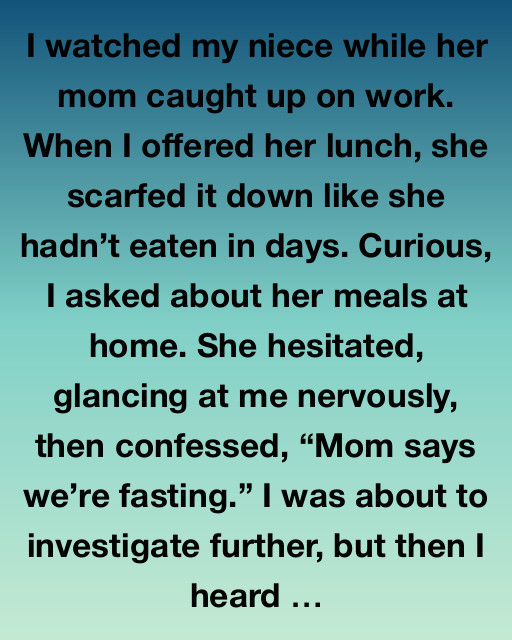
I watched my niece while her mom caught up on work. When I offered her lunch, she scarfed it down like she hadn’t eaten in days. Curious, I asked about her meals at home. She hesitated, glancing at me nervously, then confessed, “Mom says we’re fasting.” I was about to investigate further, but then I heard a faint knock at the door.
Answering it, I found our neighbor standing there, holding a basket of freshly baked muffins. She offered a warm smile and an invitation to a neighborhood picnic. As we chatted, my thoughts kept drifting back to my niece’s odd confession about fasting.
After a few polite exchanges, I declined the invitation, promising to consider it next time. Closing the door, I turned to my niece, whose eyes were glued to the muffins. “Want one?” I offered, and she nodded enthusiastically.
As my niece devoured the muffin, I pondered what she had said. Fasting didn’t seem like something they usually did, not without a specific reason or occasion. Maybe her mother misunderstood something or perhaps skipped mentioning it earlier.
Over the weekend, I tried to relax while looking after her. My sister had been swamped with a huge project and needed as much help as she could get. But the thought of fasting lingered in my mind.
Throughout the afternoon, my niece and I played several board games and watched cartoons. Every now and then, I caught her glancing at the clock, as if waiting for something or someone.
At dinner, she ate eagerly again, prompting me to gently probe further. “Sweetie, have you been doing alright?” I asked softly, not wanting to alarm her. She seemed to pause, then nodded quickly.
Kids are often smarter than we give them credit for, I thought. Deciding to approach her mother with my doubts, I made a mental note to do so at the earliest opportunity.
When my sister came by to pick up my niece, she seemed more worn-out than usual. Her eyes had shadows beneath them, and her usual cheerful demeanor seemed strained.
“Are you okay, Sarah?” I asked sincerely. She nodded, exhaling deeply. “Just work stuff,” she replied with a tired smile. But I knew something wasn’t quite right.
After they left, I noticed a small, toy unicorn forgotten under the couch. Smiling, I picked it up, thinking how much my niece loved unicorns, and resolved to see Sarah again soon.
The following weekend, I invited my niece over again, under the guise of wanting to try a new recipe. Sarah seemed grateful for the offer and dropped her off on Saturday morning.
This time, I decided to ask my niece more candidly about their home life. At breakfast, I set a plate of pancakes before her, drizzling them with syrup.
“How has school been?” I asked, watching her intently as she began eating. She answered quickly about her favorite subjects and teachers, her face lighting up with genuine enthusiasm.
After a few bites, I veered the conversation towards home. “And how’s your mom been? Does she get time to relax?” I probed casually.
She lowered her fork, pondering for a moment before whispering, “She works a lot. Sometimes she’s too tired to cook.” Guilt sparkled in her wide eyes as though she feared betraying a family secret.
Suddenly, the idea of fasting made more sense. Sarah was overwhelmed with work, possibly too overwhelmed to keep up with everything, including consistent meals.
Instead of confronting my sister, I opted for subtle support, starting with a collection of her favorite groceries. After dropping my niece home, I left the groceries at their front door with a note.
In the note, I assured Sarah that it was no trouble, emphasizing that everyone needed help sometimes. A part of me hoped she’d find encouragement rather than embarrassment in my gesture.
A week passed with no word from Sarah. I tried to stay patient, not wanting to pry into her personal struggles. But concern weighed heavier on my heart with each day that passed.
Finally, she called me one evening to thank me. Her voice was soft, touched with emotion. “I didn’t realize I needed so much help until you sent those groceries,” she admitted gratefully.
We talked for an hour about everything that had been going on—a big work project, her reluctance to ask for help, and balancing parenthood with personal needs.
It was then I understood that Sarah feared appearing vulnerable, thinking it a weakness to rely on anyone else. Many people often thought asking for help meant admitting defeat.
I reassured her that no problem was too big when faced together. Realizing a partnership in life was important, I encouraged her to lean on me whenever she needed.
That conversation strengthened our relationship, a bond adapting to challenges and supporting one another through them. The friendship I shared with my sister deepened.
The next weekend, I offered to take my niece to the neighborhood picnic to give Sarah a well-deserved break. My niece was thrilled at the idea, eyes twinkling in anticipation of adventure.
Our neighbor was delighted to see us there. My niece gleefully raced off towards the other children, laughter echoing as they played tag across the sunny park.
I stood chatting with other adults, feeling a sense of camaraderie and warmth within the community. They all had their struggles, we all did, but together we’d find ways to overcome them.
Suddenly, amidst the casual conversations, someone mentioned an upcoming bake sale fundraiser to help a family dealing with unforeseen medical bills. It caught my attention immediately.
Aware that everyone faced challenges, I volunteered to bake and organize part of the event, including my niece in the preparations as an exciting new experience.
Returning her home that evening, I shared the bake sale details with Sarah, who listened intently. To my surprise, she expressed eagerness to help with the event.
The bake sale day arrived vibrant with life and involvement from the entire neighborhood. Our combined efforts were a testament to the power of community and mutual care.
As the event unfolded beautifully, Sarah felt inspired, noticing that once-close friends she’d lost touch with were more than willing to lend support.
Her newfound motivation led her to initiate a crafting class, blending creativity with relaxation. It became a hit, drawing enthusiasm and smiling faces from everyone who participated.
With time, stressors began to shift to the sidelines as priorities realigned. Both Sarah and I discovered the joy of a shared journey, helping one another as family.
To my niece, these revelations cultivated a lesson in kindness and the understanding that asking for help wasn’t a sign of weakness but of strength.
The ensuing weeks were marked with smiles, embraces, and laughter. Our strengthened bonds were evident even in the simple moments, like sharing a meal together more frequently.
Reflecting on what had been accomplished, I couldn’t be prouder of our resilience. Together, we took steps to nurture not only our needs but those of others around us.
This journey showed that ignoring a cry for help, no matter how small, could mean missing an opportunity to lift each other and grow together.
Sarah found balance, realized she could embrace vulnerability, and immersed herself in activities that bonded the family. My niece learned valuable lessons in empathy and generosity.
By our collective example, we encouraged each other to reach out in moments of need, paving pathways for future support systems in our lives.
Embracing support carried a moral beyond just easing immediate burdens. It was about fostering unity and kindness in every small act of understanding and compassion.
As Sarah and I sat together under the stars one evening, she expressed heartfelt gratitude, the sincerity in her voice mirroring our fulfilled lives.
“We’ve faced challenges and overcome them. I learned so much about strength, family, and asking for help. Thank you,” Sarah said, her words embedding deeply into my heart.
The lessons we learned opened us to future experiences and opportunities with open arms and ready hearts. We realized how profoundly connected we were with the world around us.
And as we fostered connections, we noticed the secrets to happiness lay not in what we achieved alone, but in how we shared and cared for others together.
If you’ve felt alone in your struggles, remember to reach out. Do not underestimate the helping hands eager to support you through tough times.
We encourage you to embrace the beauty in sharing life’s moments and challenges with those dear and near. Like, share, and make kindness your compass.