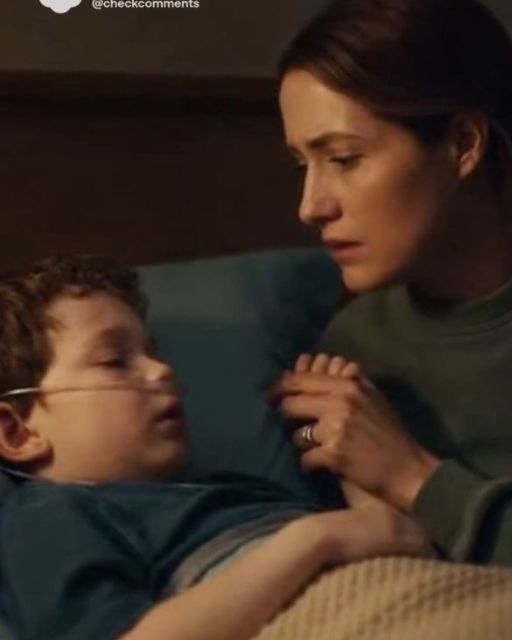
For three years, I’ve watched my son, Brandon, fade away. A mystery illness doctors couldn’t name.
We’ve drained our savings, sold our car, and moved into a tiny apartment just to pay for specialists who all said the same thing: “We’ve never seen anything like it.”
Our last hope was a full genetic panel. The doctor said it might show a rare inherited disorder.
Yesterday, he called me. “Can you come in, Colleen? Alone.”
My heart pounded the whole way there. I sat on the cold plastic chair in his office.
He wouldn’t look me in the eye. He just said, “We found the problem. But it’s not a disease.”
My breath caught in my throat. He slid a file across the desk.
It had another woman’s name on it. Sarah Jenkins.
“The reason we can’t find a genetic match between you and Brandon,” he said quietly, “is because there isn’t one.” He pointed to the photo on the first page.
“This is his mother. And your biological son is…”
He paused, letting the impossible words hang in the sterile air. He then turned a page in the file.
“…living with her. His name is David.”
The world tilted on its axis. The doctor’s words were a buzzing swarm of bees in my ears, loud and nonsensical.
A mistake. It had to be a mistake.
“No,” I whispered, the word barely a puff of air. “That’s not possible. I gave birth to him.”
I remembered the weight of him on my chest, his tiny fingers curling around mine. Those memories were anchors in the storm that was now my life.
Dr. Evans sighed, his face etched with a pity I didn’t want. “There was a records mix-up at the hospital. A fire in the administrative wing a week after the births corrupted some files.”
He explained they had cross-referenced birth dates, times, and the rare blood type I shared with my biological son. It all pointed to one unbelievable conclusion.
Two baby boys, born minutes apart, given to the wrong mothers.
I felt a strange, chilling detachment, as if I were floating above my own body, watching a scene from a terrible movie. I looked at the picture of Sarah Jenkins.
She was smiling, with kind eyes and the same dark, curly hair as Brandon. The resemblance was undeniable, a knife twisting in my gut.
“So, Brandon’s illness,” I managed to say, my voice cracking. “It’s genetic? From her?”
Dr. Evans nodded slowly. “It appears to be a rare mitochondrial disorder. It’s passed down maternally. The reason we couldn’t find it is because we were looking at your genetic code, not hers.”
He continued, his voice gentle. “This actually gives us a path forward, Colleen. A very clear one.”
But I couldn’t hear the hope. All I could hear was the shattering of my world.
My son wasn’t my son. And my real son was out there, a stranger.
I drove home in a daze, the steering wheel slick under my sweaty palms. How could I tell my husband, Mark?
How could I walk into our apartment and look at the frail boy in the bed, the boy I loved more than life itself, and see a stranger?
When I opened the door, the scent of antiseptic and chicken broth filled the small space. Mark was by Brandon’s side, reading to him from a comic book, his voice cheerful and steady.
Brandon was propped up on pillows, his skin pale and translucent. He managed a weak smile when he saw me. “Hi, Mom.”
The word “Mom” struck me like a physical blow. I sank onto the edge of the sofa, the file a lead weight in my lap.
Later that night, after Brandon was asleep, I told Mark. I laid the file on the coffee table and watched his face crumble as he read.
He paced the tiny living room, running his hands through his hair. He was angry, then confused, then just deeply, profoundly sad.
“So all this time,” he said, his voice thick with emotion, “our son… our David… has been healthy?”
I nodded, unable to speak past the lump in my throat.
“And Brandon,” he gestured toward the bedroom, “he’s been sick because of a cosmic lottery? Because someone swapped a label on a bassinet?”
We didn’t sleep that night. We just held each other, two shipwrecked survivors clinging to the wreckage.
Dr. Evans had already made the initial contact. He had a legal and ethical obligation to inform the other family.
A meeting was arranged. A neutral location. A coffee shop halfway between our town and theirs.
Walking in felt like walking to my own execution. I saw them in a corner booth. Sarah Jenkins looked just like her photo, her hands nervously shredding a napkin.
Beside her was her husband, Robert, a big man with a protective arm around her. And between them was a boy.
He had my eyes. My husband’s smile.
He was the picture of health, all boundless energy and scraped knees. My heart ached with a love so fierce and painful it took my breath away.
This was David. My son.
The introductions were awkward, a stilted dance of pleasantries over a chasm of shock and grief.
Sarah couldn’t stop looking at me, her eyes filled with a million questions. I couldn’t stop looking at David.
“I don’t understand how this could happen,” Robert said, his voice a low rumble. He was skeptical, his gaze sharp and questioning.
We explained everything we knew, the words feeling thin and inadequate.
Sarah finally spoke, her voice quiet. “And our son… Brandon… he’s very sick?”
“Yes,” I whispered. “He is.”
That’s when Dr. Evans, who had agreed to mediate the first meeting, laid out the real reason we were all there.
“Brandon needs a bone marrow transplant,” he said, his tone clinical but kind. “The mitochondrial disorder has severely compromised his immune system. A transplant from a direct biological relative is his only chance.”
He looked directly at Sarah. “You, Sarah, are his best hope. His only hope.”
The air in the coffee shop grew thick and heavy. I watched as the reality of the situation crashed down on Sarah and Robert.
It wasn’t just a discovery. It was a request. An impossible, life-altering request.
Robert’s face hardened. “Wait a minute. You’re telling us that our son isn’t our son, and now you want my wife to undergo a major medical procedure for a boy she’s never met?”
His protective instincts flared. “How do we know this isn’t some elaborate scam? To get money? Or… this?” He gestured toward Sarah.
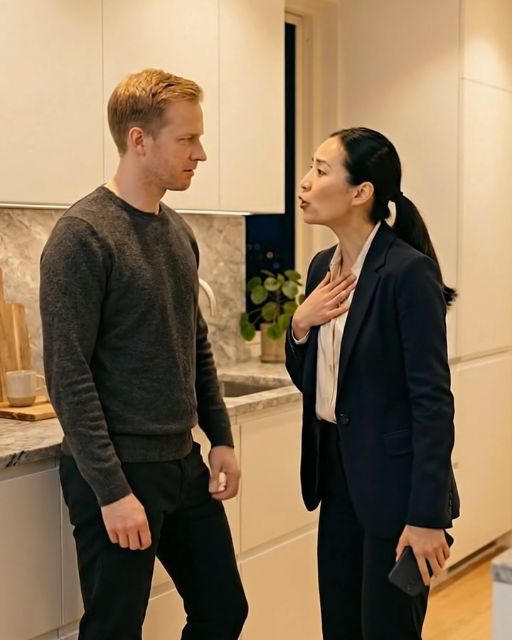
I flinched as if he’d slapped me. Mark put a hand on my arm, his grip tight.
“It’s not a scam,” Mark said, his voice steady despite the tremor I could feel running through him. “We’ve lost everything we have trying to save him. We don’t want anything from you but a chance for him to live.”
Sarah looked from me to her husband, her face a mask of conflict and fear. She looked at David, who was happily coloring on a napkin, oblivious.
“I… I need to think,” she stammered, gathering her purse. “This is too much.”
They left. And just like that, the fragile thread of hope we’d been clinging to snapped.
We went home to our quiet, sterile apartment, the silence heavier than ever before. Brandon had a bad night, his fever spiking.
I sat by his bed, wiping his forehead with a cool cloth, and all I could think was, “I’m failing you. I’m not the right mother for you. I can’t even save you.”
Days turned into a week. We heard nothing from the Jenkins family.
Dr. Evans called to say they weren’t answering his calls. The hospital’s legal team was looking into options, but he warned us that you can’t compel someone to donate.
Desperation is a cold, sharp thing. It makes you do things you never thought you would.
I found their address online. It wasn’t hard.
Mark tried to stop me. “Colleen, what are you going to do? Beg? Yell at them? You’ll only make it worse.”
“I have to do something,” I cried. “I have to make her see him. Not as a medical file, not as a problem, but as a boy. Her boy.”
I drove to their house, a pretty little suburban home with a swing set in the backyard. It was everything we used to have.
I sat in my car for an hour, just watching. I saw David ride his bike up and down the driveway. I saw Robert push him on the swing.
My heart felt like it was being torn in two. One half grieving for the life my son David was living without me, the other half terrified for the life Brandon was losing with me.
Finally, I saw Sarah come out onto the porch. She looked tired, her shoulders slumped.
I got out of the car. I didn’t have a plan. I just had a mother’s desperation.
I walked up her driveway, my hands empty except for a small, worn photo album I had grabbed on my way out the door.
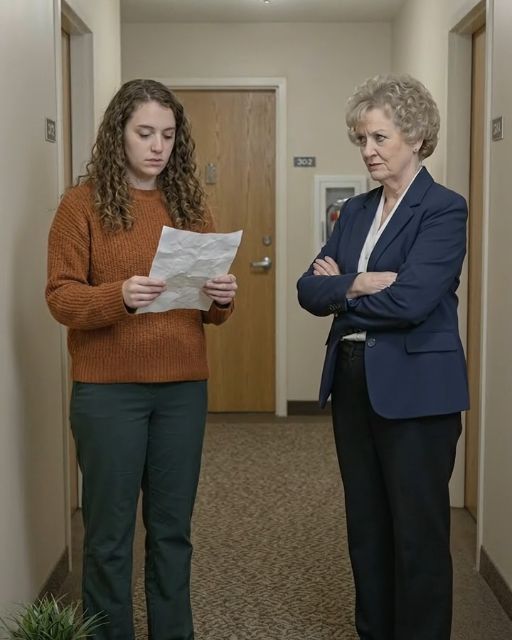
She saw me and stiffened. “What are you doing here?”
“I’m sorry to just show up,” I said, my voice shaking. “I know this is all… insane. But I need you to see him.”
I opened the album. The first picture was of Brandon as a newborn, a scrunched-up, beautiful little thing with a full head of dark, curly hair.
I flipped the page. Brandon at his first birthday, covered in cake. Brandon on his first day of school, his backpack almost as big as he was.
Then, the pictures began to change. The light in his eyes dimmed. He got thinner. There were more pictures of him in hospital beds than on playgrounds.
“He loves superheroes,” I said, my voice thick with tears as I pointed to a picture of him in a faded Superman costume. “He believes they can do anything. He used to tell me he was going to fly when he got better.”
I looked up at her, my heart laid bare. “He is kind, and funny, and so, so brave. He is so much more than his illness.”
Tears were streaming down Sarah’s face now. She reached out a hesitant hand and touched one of the photos.
“He has my father’s smile,” she whispered.
Just then, Robert came out of the house. His face was a thundercloud. “Sarah, get inside. Ma’am, you need to leave now.”
“Robert, look,” she said, holding the album up.
He glanced at it, his expression unyielding. “It doesn’t change anything. It’s a risk. I won’t let you do it.”
I saw the conflict in Sarah’s eyes, the pull between the husband she loved and the son she never knew.
Then came the twist I never saw coming. It wasn’t about the risk. It was about something deeper.
“It’s not just the risk, Colleen,” Robert said, his voice cracking for the first time. “My sister… she died two years ago. On an operating table. A routine procedure, they said. It went wrong.”
His whole body shuddered. “I can’t… I can’t lose her too. I can’t put her in a hospital and take that chance again.”
His fear wasn’t for a stranger. It was for his wife. His whole world.
And in that moment, I understood. I saw his pain, his terror. It wasn’t malice or selfishness that was stopping them. It was love. A fierce, protective love, just like my own.
My anger dissolved, replaced by a wave of empathy. “I’m so sorry,” I whispered. And I meant it.
I went home defeated, but with a strange sense of peace. I had done all I could. The rest was out of my hands.
Two days later, my phone rang. It was Sarah.
“Can we see him?” she asked, her voice small. “In the hospital. Robert and I. We want to see Brandon.”
They came that afternoon. They stood in the doorway of his room, looking so out of place in the sterile environment.
Brandon was awake, but weak. He looked at these two strangers with his big, tired eyes.
Sarah walked slowly to his bedside. She reached out and brushed a curl of dark hair off his forehead. It was the same gesture I had made a thousand times.
“Hi, Brandon,” she said softly. “I’m Sarah.”
He gave her a tiny, weak smile. And in that smile, she saw it. Robert saw it. The piece of them that had been missing.
Robert came and stood beside her, his hand on her shoulder. He looked down at the pale, fragile boy who was a mirror of his wife, and his hardened exterior finally cracked. I saw a tear trace a path down his cheek.
They stayed for an hour. They didn’t talk much. They just were. Present.
The next morning, Dr. Evans called. “Sarah is here,” he said, his voice filled with a warmth I hadn’t heard before. “She’s getting tested to see if she’s a match.”
She was a perfect match. Of course, she was.
The transplant was scheduled. It was a long, arduous process, filled with risks for both of them. Robert never left Sarah’s side. Mark and I never left Brandon’s.
We became a strange, fractured family, bound together by hope and fear in the cold, white hallways of a hospital.
Slowly, miraculously, it worked. The color started to return to Brandon’s cheeks. The light came back into his eyes.
The recovery was long. There were good days and bad days. But there were more good days than we had seen in years.
Sarah recovered too. She would come and sit with Brandon, reading him the same comic books Mark used to.
One afternoon, I found her sitting by his bed, holding his hand while he slept.
“I can never thank you enough,” I said, my voice choked with gratitude.
She looked at me, her eyes clear and full of a profound understanding. “Don’t thank me,” she said. “He’s my son too. You just… you raised him for me. You kept him safe until I could find him.”
She paused, then added, “And you have to know, Colleen. David is an amazing kid. You’d be so proud. He has your stubborn streak.”
We both laughed through our tears.
That was the day everything truly changed. It wasn’t about “my son” or “her son” anymore. They were “our boys.”
The lines blurred. We didn’t switch them back. How could we? You can’t un-love a child you’ve raised for a decade. You can’t erase a history of lullabies and scraped knees.
Instead, we built something new.
It’s been two years since the transplant. Brandon is in remission. He’s still small for his age, but he has energy. He runs and plays. He flies.
We bought a house with the Jenkins family. A big duplex with a shared backyard. It was a crazy idea, but it felt right.
The boys have two rooms, one in each house. They have two moms and two dads. They have a brother.
Last weekend, we had a barbecue in the backyard. I watched Brandon and David chasing each other with water guns, their laughter echoing in the summer air.
Mark was at the grill with Robert, arguing happily about sports. Sarah was beside me, putting her arm around my shoulders.
“Look at them,” she said, her voice filled with wonder. “They’re happy.”
I nodded, my heart so full it felt like it might burst.
Life doesn’t always give you the family you expect. Sometimes, it shatters the one you have into a million pieces.
But if you’re lucky, and if you’re brave enough to look past the pain, you learn that love isn’t about biology or ownership. It’s about showing up. It’s about building bridges over impossible divides.
We were two separate families, broken by a mistake made years ago. But in the wreckage, we found each other. And we built a new, bigger, stronger family. One born not of blood, but of a love so powerful it healed us all.