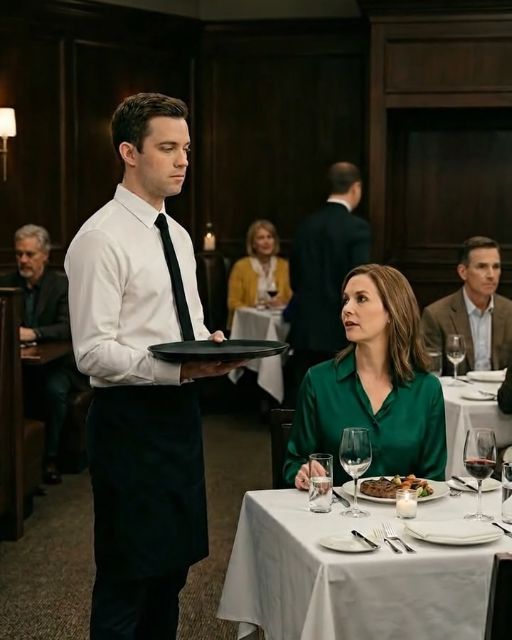
“You’re not invited to Thanksgiving.” I nodded, quietly canceled the catering, froze the resort booking, paused the mortgage help – and now she won’t stop calling…
The phone felt cold against my ear.
Her voice was bright, efficient. The same tone she used to manage her team at the office.
“We’ve decided to keep Thanksgiving just to the four of us this year, Carol. It’s just easier.”
Easier.
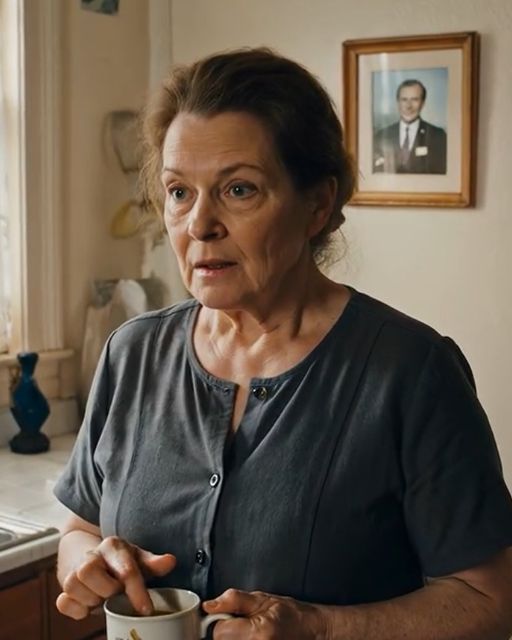
The word hung in my kitchen, thick and ugly. I was holding the same chipped mug my husband gave me thirty years ago. The steam rose from the coffee like a ghost.
I could hear my son in the background, his voice a low murmur. He was there. He was letting this happen.
I didn’t fight.
I learned a long time ago that fighting just made me the “difficult” one. The one who “creates drama.”
So I just said, “All right.”
And I felt something deep inside me, a support beam I didn’t even know was there, finally crack.
She sighed. A sound of pure relief. Like she’d just scrubbed a stubborn stain off her perfect white counter.
She had no idea.
She didn’t know I had just booked a five-star lakeside resort for the whole family, a surprise for the holiday weekend, all on my credit card.
She didn’t know I had arranged for a full Thanksgiving catering service, so she wouldn’t have to lift a finger. My card was on file.
She definitely didn’t know that every month, when their mortgage payment came up a few hundred dollars short, it was my name the bank called. And my account that quietly filled the gap.
She thought she was uninviting an old woman.
She was uninviting the foundation of the house she was living in.
I hung up the phone.
The clock on the wall ticked. Loudly. My husband’s photo watched me.
“Okay,” I whispered to him. “I’m done.”
My hands were steady when I picked up the phone again. My voice was calm.
“Hello, this is Carol. I need to cancel the Thanksgiving catering order. Yes, the entire thing.”
Click.
“Hi there, I’m calling to cancel a reservation under my name. No, the guests will no longer be attending.”
Click.
“Yes, this is Carol. I’m calling about the supplemental mortgage payments. Please stop them, effective immediately. Any issues should be directed to the primary homeowners.”
For forty-eight hours, there was only silence.
Then the calls started.
First, a confused message from the caterer, meant for my son.
Then a sharp, formal email from the bank.
And then, finally, my son.
His voice was tight with a panic I hadn’t heard since he was a teenager who’d just crashed his first car.
“Mom? What happened? The bank called. Did you… did you cancel everything?”
I took a sip of my coffee.
For the first time in a decade, I wasn’t thinking about what I needed to fix for them.
I was thinking about the old lake house my husband left me. The one my son always wanted to sell.
It was the first Thanksgiving I’d be spending alone.
And it was the first day of my life that was truly mine again.
“I undid the arrangements I made, Daniel,” I said, my voice as smooth as the lake at dawn.
There was a sputtering on the other end. Disbelief.
“The arrangements? Mom, what arrangements? Brenda got a call from a caterer saying our Thanksgiving dinner was canceled. She never ordered catering.”
I took another slow sip. I let the silence stretch.
“I ordered it for all of us,” I explained simply. “As a surprise.”
He was quiet for a moment. I could almost hear the gears turning in his head, the pieces clicking into a place he didn’t like.
“And the resort?” he asked, his voice softer now, laced with dread.
“That too,” I confirmed. “A weekend trip. For the whole family.”
“Oh.” It was a small, wounded sound.
Then the anger kicked in, a familiar defense mechanism for him when he felt cornered.
“So what is this, Mom? Punishment? You’re angry so you’re taking your toys and going home?”
I looked at Tom’s picture on the wall. He was smiling, his eyes crinkling at the corners. He always said my quietness was my greatest strength.
“No, Daniel,” I said, my voice losing none of its calm. “This isn’t a punishment. It’s a consequence.”
“A consequence for what? For wanting one quiet holiday?”
“You can have a quiet holiday,” I told him. “You just have to pay for it yourself.”
The line went dead. He had hung up on me.
An hour later, Brenda called. Her tone wasn’t bright and efficient this time. It was sharp, like shattered glass.
“I cannot believe how petty you’re being, Carol.”
I didn’t say anything. I just listened to the hum of my old refrigerator.
“To cancel a child’s Thanksgiving dinner out of spite. And to cut us off financially? After all we do for you?”
I almost laughed at that. All they did for me. It was a spectacular level of delusion.
“Brenda,” I said, interrupting her tirade. “You said you wanted Thanksgiving to be just the four of you. I am simply respecting your wishes.”
“This isn’t about my wishes! This is about you trying to control us with your money!” she shrieked.
“If you truly believe that,” I said, feeling a strange sense of peace settle over me, “then you should be relieved. You’re free now.”
I hung up before she could respond. I blocked both their numbers.
The silence that followed was the most beautiful sound I had ever heard.
I spent the rest of the day packing. Not a lot. Just a few boxes of clothes, Tom’s photo, and my favorite books.
The drive to the lake was three hours. Three hours of watching the city shrink in my rearview mirror.
With every mile, I felt a weight lifting from my shoulders I didn’t realize I had been carrying. It was the weight of expectation. The weight of being needed, but not wanted.
The lake house was just as I’d left it two years ago, after the last time I’d argued with Daniel about selling it.
It was dusty and smelled of pine needles and damp earth. A fine layer of neglect covered everything.
I ran my hand over the stone fireplace Tom had built with his own two hands. It was the heart of this home.
For years, this house had felt like a burden. A relic of a past I was supposed to move on from.
Now, it felt like a sanctuary. A place to rebuild.
The first thing I did was open all the windows, letting the crisp November air chase out the stale memories.
I found the old record player and put on one of Tom’s favorite jazz albums. The music filled the quiet spaces.
For the next two days, I cleaned. I scrubbed floors, washed windows, and polished wood until it gleamed.
I wasn’t just cleaning a house. I was clearing out the cobwebs in my own soul.
I found an old box of photographs in the attic. There I was, young and vibrant, holding a baby Daniel. There was Tom, beaming, with his arm around me.
We were a team. We were partners.
I had forgotten what that felt like.
On Wednesday, the day before Thanksgiving, I drove into the small town nearby.
The local grocery store was bustling with people buying last-minute ingredients.
I bought a small chicken, some sweet potatoes, and a bag of cranberries. Just enough for one.
I felt a pang of loneliness, a ghost of Thanksgivings past. The noise, the chaos, the mountains of food.
But it passed quickly, replaced by a quiet contentment.
Thanksgiving morning, I woke to the sight of sunlight dancing on the lake.
I made myself a cup of coffee and sat on the porch, wrapped in one of Tom’s old flannel blankets.
The air was cold and clean. A pair of loons drifted silently across the water.
There were no frantic calls. No passive-aggressive comments about my stuffing. No arguments over the television.
There was only peace.
I roasted my little chicken. I made mashed sweet potatoes just the way I liked them, with a little cinnamon. I simmered the cranberries on the stove until the whole house smelled like the holidays.
I set a single place at the old oak dining table.
I poured myself a glass of wine and raised it to Tom’s empty chair.
“Happy Thanksgiving, my love,” I whispered. “I’m okay.”
And for the first time in a very long time, I knew it was true.
I spent the weekend walking the trails around the lake, reading by the fire, and sleeping soundly through the night.
On Sunday evening, as I was watching the sunset paint the sky in shades of orange and purple, a car pulled into the long gravel driveway.
My heart gave a little jump. It was Daniel’s car.
He got out, looking tired and smaller than I remembered. He was alone.
He stood by his car for a long moment, as if gathering his courage.
I didn’t go to him. I just sat on the porch, waiting.
He walked slowly up the steps and stood before me.
“Hi, Mom,” he said, his voice rough.
“Daniel.”
He shoved his hands in his pockets. “The house looks good.”
“I’ve been cleaning,” I said.
We sat in silence for a few minutes, watching the last sliver of sun disappear behind the mountains.
“We had Thanksgiving at Brenda’s parents’ house,” he said finally.
I just nodded.
“It was… a disaster.”
He let out a long, shaky breath. This was the part he had come to say.
“Brenda’s parents, Richard and Susan, were supposed to meet us at the resort you booked,” he explained, not looking at me. “Brenda told them we were treating them to a luxury weekend.”
Of course she did. The performance of success.
“She wanted to impress them. She always feels like she has to prove to them that she’s doing well, that she made the right choice marrying me.”
The words hung in the air, heavy with unspoken insecurities.
“When the resort reservation was canceled, she had to tell them the truth. Not the whole truth, of course. Just that there was a mix-up with the booking.”
He finally turned to look at me, his eyes filled with a weary shame.
“But Richard, her dad… he’s a smart man. He started asking questions. Questions about our finances. About the new car. About the down payment on our house.”
I stayed silent, my hands wrapped around my warm mug.
“The whole story came out, Mom. Everything. How you helped with the down payment. How you were covering the mortgage shortfall every month. How Brenda uninvited you so she could have this perfect weekend with her parents, on your dime, without you there to… complicate the picture.”
The twist of the knife was so much sharper than I could have imagined. I wasn’t just “easier” to get rid of; I was an inconvenient truth.
“And what did Richard and Susan say?” I asked softly.
Daniel looked down at his shoes. “Susan cried. And Richard… I’ve never seen him so angry. Not at me. At Brenda.”
He took a deep breath.
“He told her that the measure of a person isn’t the size of their house or the car they drive. It’s how they treat the people who helped them get there. He said he and Susan hadn’t raised her to be so… ungrateful. To discard family like an old coat.”
It was a strange feeling. A sort of vindication, but it was hollow. All I felt was a deep sadness for my son, trapped in the middle of this mess.
“They left on Friday morning,” Daniel continued. “Richard told Brenda to call him when she remembered the values they taught her. She hasn’t stopped crying since.”
So that was it. The grand performance had ended with the stage collapsing.
“I’m sorry you went through that, Daniel,” I said, and I meant it.
“I’m the one who’s sorry, Mom,” he said, his voice breaking. “I stood by and let it happen. I let her speak to you that way. I was so caught up in trying to keep her happy, I forgot what was actually important.”
He looked around at the lake house, at the warm light spilling from the windows.
“I always said we should sell this place,” he said quietly. “I called it a money pit. An old relic.”
He met my eyes. “I was wrong. It’s a home. And you’re its heart. And we treated you like… like a bank.”
Tears were now tracking down his cheeks. He didn’t bother to wipe them away.
“I don’t expect you to forgive me,” he said. “Or to go back to the way things were. I just… I had to come tell you that I see it now. I see everything.”
I stood up and walked over to him. I put my arms around my son, this grown man who suddenly seemed like a lost little boy.
He held on to me tightly, burying his face in my shoulder.
We stood there for a long time as the stars began to appear in the dark sky.
The old way was broken. There was no going back. But maybe, just maybe, we could build something new.
Something better.
Our relationship didn’t magically fix itself overnight. It took time. And it took work.
Daniel started driving up to the lake house every other weekend. Not to ask for anything, but to give.
He helped me fix the leaky roof. He repaired the broken dock. He learned how to build a fire in the hearth his grandfather had made.
We talked. Really talked, for the first time in years. About his fears, his marriage, his life.
Brenda sent a letter a month later. It was long and tearful, full of apologies that sounded like they were finally her own. She was in counseling with her parents.
I wrote back a simple note. “I wish you peace.”
I never went back to being their financial safety net. I taught Daniel how to budget. I helped them create a real plan, one they could manage on their own. It was harder, but it was theirs.
I stayed at the lake house. It became my home again. I joined a book club in town. I started painting, something I hadn’t done since before I was married.
My life became smaller, quieter, and infinitely more full.
My relationship with my son was no longer built on a foundation of his need and my obligation. It was built on the solid ground of mutual respect and genuine love.
Sometimes, you have to let the old structure crumble to the ground. You have to walk away from the wreckage and find a quiet place to sit.
Only then can you see what’s worth rebuilding. Only then can you find the forgotten pieces of yourself and start to build a new life, one whose foundation is your own.