At Sunday dinner, my uninvited MIL looked pale but claimed to be fine. She secretly shared her water bottle with my son. Two days later, he caught the flu. Furious, I told my husband, but his answer left me speechless: “Mom just called me. She’s in the hospital.”
I sat there, stunned. “Hospital? Why?”
He swallowed hard. “She collapsed this morning. The flu hit her harder than she let on… but that’s not all. She didn’t tell anyone she has lupus. Her immune system’s really weak.”
I blinked, trying to process it. My anger fizzled, replaced with a rush of guilt. I hadn’t known. None of us had. She hadn’t even told her son.
The truth was, my relationship with my mother-in-law, Silvia, had always been rocky. She had a way of showing up unannounced, offering unsolicited advice, and criticizing me in the most polite tone imaginable. I was used to feeling like I couldn’t win.
But hearing she was in the hospital, sick and alone, shook something loose in me.
“I’ll stay with Noah,” I said quietly. “Go see her.”
He nodded, kissed my forehead, and rushed out.
That night, while I nursed my son’s fever, I couldn’t stop thinking. Why hadn’t she told us she was sick? Why did she come to dinner if she wasn’t feeling well? And why share water with my kid?
Two days later, my husband came home with red eyes and a distant look. “She wants to talk to you,” he said. “Alone.”
“Me?”
“She said she has something to confess. And… to ask.”
I didn’t know what to expect. I wasn’t ready to forgive. But I agreed to go.
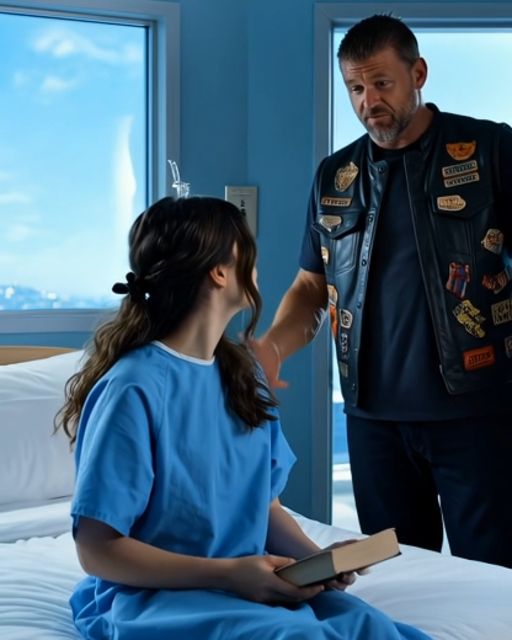
The hospital room was quiet, except for the beeping of a heart monitor. Silvia looked thinner than I remembered, her skin almost translucent. Her hands trembled slightly as she motioned for me to sit.
“I owe you the truth,” she said, voice raspier than usual. “And probably an apology.”
I sat down, keeping my expression neutral.
She took a deep breath. “I knew I was sick. I’d had a flare-up for weeks. But I didn’t want to cancel dinner. I didn’t come just to eat, or to see my son. I came to see you.”
“Me?” I frowned.
She nodded. “I’ve been hard on you. I judged you before I ever gave you a chance. But that night, I was planning to make peace. I brought a letter. It’s still in my bag.”
I was caught off guard. Silvia, the woman who once said my lasagna tasted like “regret and oregano,” wanted to make peace?
She continued, “When I saw Noah sipping from my bottle, I should’ve stopped him. I panicked. I didn’t want to scare him or make it awkward, and I thought—stupidly—that it was just a little cold. I never meant to hurt him. I just wanted things to feel… normal.”
Her voice cracked.
I sighed. “He’s recovering. Kids bounce back.”
“I don’t.” She gave a sad smile.
Silence stretched between us. Then she pulled a folded paper from her bag and handed it to me. Her hands were shaking.
“I was going to read it out loud, but maybe it’s better if you read it when you’re ready.”
I hesitated, then took it. It was thick. Handwritten. My name on the front.
“Why didn’t you ever tell us about your illness?” I asked.
“Pride. And shame,” she said. “I’ve always been the one who fixes things, not the one who needs help.”
I nodded slowly. It made more sense than I wanted it to.
That night, after putting Noah to bed, I sat at the kitchen table and opened the letter. It was seven pages long.
In it, she confessed to how hard it had been to watch her son marry a woman who was so different from her. She admitted she’d been jealous, afraid of being replaced. She detailed memories of her own mother-in-law treating her poorly, and how, in some twisted way, she thought being “honest” and “involved” was her way of doing better.
She even talked about how she’d been diagnosed with lupus a year before our wedding, and never told anyone—not even her son—because she didn’t want to be a burden.
By the time I reached the last page, I was crying. She ended the letter with a plea: “If anything happens to me, please don’t let Noah grow up thinking I didn’t love him. And if you can… forgive me.”
I sat there for a long time. I didn’t know if I could forgive her right away. But I could understand her a little more. And sometimes, understanding was the first step.
The next morning, I made soup and took Noah with me to visit her. She looked surprised to see us.
“I thought you’d be too angry,” she whispered.
“I was,” I admitted. “But now… I’m more sad than angry.”
She smiled weakly and opened her arms for Noah, who ran straight to her.
From that day on, something shifted.
Silvia stayed in the hospital another week, but our visits became routine. Noah drew her pictures. I brought her homemade meals. And slowly, we began to talk.
Not just about surface things, but real things. Her regrets. My frustrations. Our fears. Somehow, the walls between us began to crumble.
One day, she told me about the daughter she lost in childbirth before my husband was born. I’d never known. That loss, she said, had shaped her parenting—and her fears.
“I was always terrified of losing the people I loved,” she whispered. “So I held on too tight.”
That explained so much. The way she clung to her son. The constant check-ins. The passive-aggressive comments. It wasn’t just control. It was fear.
By the time she was discharged, we weren’t exactly best friends, but we were something better: honest.
Then came the real twist.
A week after she got home, Silvia invited us over for dinner. She insisted on cooking, even though we offered to bring takeout. When we arrived, she had set the table beautifully. Candlelight. Cloth napkins. The whole thing.
But as we sat down, she made an announcement that took our breath away.
“I’ve decided to move into assisted living,” she said simply.
“What?!” my husband nearly dropped his fork.
She smiled. “I need help, and I need to stop pretending I don’t. I want to spend whatever time I have left living, not hiding.”
I was stunned. This was a woman who refused to use a cane even when her knees ached. Who’d driven herself to doctor appointments against advice. Now she was choosing help?
She looked at me. “You showed me what it means to accept care without shame. Watching you with Noah, and even the way you cared for me when you were angry… it changed me.”
I didn’t know what to say. So I just reached for her hand.
In the months that followed, her health stabilized. The assisted living place was small and cozy, not far from us. She made friends, joined a book club, and even started painting.
And the biggest surprise? She became Noah’s favorite person.
Every Saturday, they had a standing date. She’d tell him stories, teach him card games, and sneak him a chocolate or two.
One day, Noah asked me, “Did Grandma always love me this much?”
I smiled. “Yes. She just didn’t always know how to show it.”
Silvia lived another three years. Peacefully. Fully. She passed in her sleep one summer night.
At her memorial, I read a part of her letter out loud. There wasn’t a dry eye in the room.
Afterward, an older woman approached me. She’d been Silvia’s neighbor in the assisted living center. “She talked about you all the time,” she said. “Said you were the daughter she never got to raise.”
That hit me hard.
Life is strange like that. The people who hurt you can also be the people who heal you—if you’re willing to look beyond the pain.
Looking back, I still remember that Sunday dinner. The anger. The fear. The disbelief.
But more than anything, I remember what came after.
Growth. Forgiveness. Family.
Sometimes, the most unexpected guests leave behind the greatest gifts.
And sometimes, sharing a water bottle—however foolish—leads to a second chance neither of you knew you needed.
If this story touched your heart, share it with someone who needs a reminder that healing is possible—even in the most unlikely relationships. And don’t forget to like it if you believe in second chances.