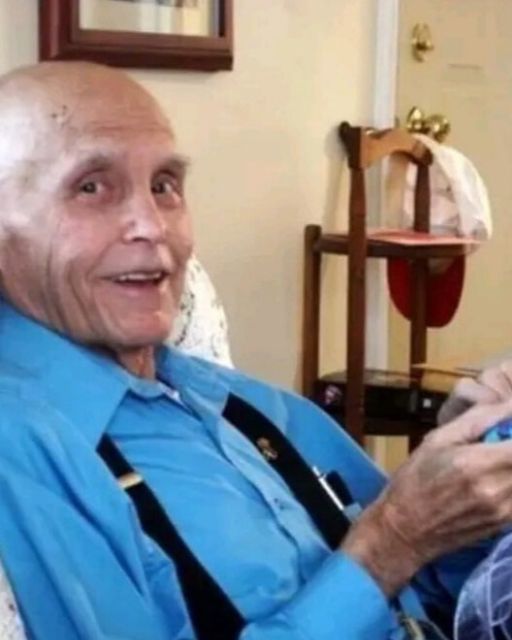
He was just the quiet neighbor next door—until the day I found out he was battling cancer alone. For three years, I became his caregiver, his cook, his friend. I was there for treatments, birthdays he’d never celebrated, and the everyday moments in between.
When he passed, his family—who’d turned away from him—wanted nothing, not even the keepsakes I tried to send. I donated most of his estate to cancer research and kept a small shadow box filled with pieces of his life.
Some people leave you money or possessions. Others leave you a lesson: kindness is the only legacy worth keeping.
I first met him on a rainy afternoon. I was coming back from work, balancing two grocery bags, and one split open at the bottom. Cans rolled across the wet pavement, and before I could even react, he was there—tall, thin, wearing an old sweater, helping me gather them up. He didn’t say much, just gave a small smile, placed the bags by my door, and nodded before disappearing into his house.
At first, that was all I knew about him. He kept to himself, rarely had visitors, and his blinds were almost always drawn. Sometimes I’d see him sitting on the porch in the early mornings with a cup of tea, looking out at nothing in particular. There was something both peaceful and lonely about him.
It wasn’t until months later that I found out he had cancer. I’d seen him struggling to carry a heavy bag from his car and offered to help. That’s when I noticed the hospital wristband still around his wrist and the pale, tired look in his eyes. He didn’t try to hide it—he just said, “It’s a bad week,” as if that explained everything.
From that moment on, I couldn’t just stand by. I started checking in on him, at first with small things—bringing over soup, shoveling his driveway in the winter, watering his plants when he wasn’t feeling well. But as time went on, it became more than that. I began driving him to appointments, sitting with him during treatments, and making sure he had someone to talk to on the days when the silence in his house became too heavy.
He told me his name was Martin. He was in his early sixties but looked older, worn down by years of hard work and harder luck. He’d worked as a carpenter for most of his life and had hands that still bore the marks of it—calloused, strong, but now shaking more often than not.
Martin had no one, or at least that’s what he said. His family had drifted away after some old falling-out that he didn’t like to talk about. Friends had moved on, and he’d been left with nothing but his small house and a lifetime of quiet.
The first time I asked if he wanted to celebrate his birthday, he laughed. “Haven’t had one of those in twenty years,” he said. But I made a cake anyway, lit a single candle, and sat with him in his kitchen while he looked at it like he wasn’t sure if he should laugh or cry.
Over the years, we created our own little traditions. On Fridays, I’d cook dinner for both of us, and we’d watch old movies. He loved black-and-white films, the kind where the dialogue was sharp and the romance subtle. On Sundays, if he was feeling well enough, we’d take a slow walk to the park down the street. Sometimes we talked, sometimes we didn’t. It didn’t matter—just being there together was enough.
But cancer has its own timeline, and as much as we tried to keep things normal, there were bad days. Days when he could barely get out of bed, when the pain was written across his face no matter how much he tried to hide it. I learned to sit with the silence on those days, to hold a cup of tea for him until his hands were steady enough to take it.
I never saw him complain. He faced each appointment, each treatment, with a kind of quiet bravery that humbled me. The nurses adored him because he always asked how their day was, even when it was clear he was exhausted.
One winter evening, while we were watching an old western, he turned to me and said, “You know, I used to think my life didn’t matter much. That I’d leave this world and no one would notice. But you’ve made me feel like someone would.” I didn’t know what to say, so I just put my hand over his and squeezed it.
When the end came, it was peaceful. I was there, holding his hand, telling him it was okay to rest. He left quietly, like he’d lived.
I thought his family might want to know. I tracked down a phone number for his sister and called, explaining who I was and what had happened. She was polite but distant, saying they hadn’t spoken in decades and that there was “nothing left to say.” She didn’t ask about his belongings, his photos, or the letters I’d found in a shoebox under his bed.
It broke my heart a little, but I understood. Some wounds never heal, and some bridges are burned for good. Still, I wanted something good to come from what he left behind. So I arranged to donate most of his estate—his savings, his tools, even some of his furniture—to cancer research organizations and local charities.
The only things I kept were small: a shadow box with his watch, an old photograph of him as a young man standing by a half-built house, a ticket stub from a movie we’d watched together, and the birthday candle from that first cake. They sit on a shelf in my living room, a quiet reminder of the years we shared.
Months later, I got a letter from one of the cancer research centers I’d donated to. They told me that Martin’s contribution had funded a patient support program—meals, transportation, and counseling for people going through treatment. It felt like the perfect tribute to a man who’d lived his final years with dignity and kindness.
But the real twist came almost a year after he passed. I was coming home from work when a young woman knocked on my door. She looked nervous, holding a small envelope in her hands.
“Are you the one who took care of Martin Harris?” she asked.
I nodded, unsure who she was.
She explained that she was his niece—his sister’s daughter. She’d only recently learned about his passing and had been looking for me ever since. “I never knew why my mom didn’t talk to him,” she said, tears in her eyes. “But I found some of his letters. He wrote to me when I was a kid, even though my mom never gave them to me.”
She handed me the envelope. Inside was a thank-you card, written in neat handwriting. It was from Martin, dated about a month before he passed. In it, he thanked me for “giving an old man a reason to look forward to tomorrow” and said that if I ever met his niece, I should tell her she was loved, even if she never knew it.
I told her everything I could—about his kindness, his humor, the way his face lit up when he talked about building things. She cried, but she smiled, too.
We ended up sitting on my porch for hours, talking about him. Before she left, she asked if she could see the shadow box. When I showed it to her, she touched the watch gently and said, “He wore this when he built a treehouse for my mom as a kid. She told me about it once.”
I offered to give it to her, but she shook her head. “You were his family when no one else was. You keep it.”
That night, as I looked at the shadow box, I realized that the lessons Martin left me weren’t just about kindness. They were about showing up. About being there for people—not because you have to, but because you choose to.
Life is full of people who are carrying burdens we can’t see. Sometimes, all it takes is noticing them, saying hello, offering a hand. It might not change the whole world, but it can change theirs.
Martin taught me that. And in a way, he’s still teaching it, through every meal delivered to a patient, every ride to a treatment center funded by his donation. His kindness didn’t end when he did—it ripples outward, touching people he never even met.
We often think legacies are about grand gestures or big achievements. But sometimes, they’re built quietly, in small moments of care that add up over time.
If there’s one thing I want people to take from his story, it’s this: You don’t have to be rich, powerful, or famous to make a difference. You just have to care enough to act.
And maybe, when your time comes, someone will look back at the life you lived and feel the same way I do about Martin—grateful to have been part of it, even for a little while.
So if you have someone in your life who might be feeling alone, reach out. Ask them how they’re doing. Sit with them, even if there’s nothing to say. Sometimes, just knowing someone is there is the greatest gift of all.
Kindness costs nothing, but its value is immeasurable. That’s the legacy Martin left me, and it’s the one I’ll carry forward for the rest of my life.
If this story touched you, share it with someone who might need the reminder. And maybe, today, be someone’s reason to believe in kindness again.