My parents kept walking into my apartment like they still owned my life, so I moved without a word—and the next people who opened that door ended up calling the police on them instead of me.
A young couple opened my old front door and called the police on my parents.
They did the one thing I never could.
And it all started with a key.
Just one. An “emergency” key.
I gave it to my mom the day I signed the lease, thinking it was a peace offering. A symbol that even with my own place, I was still their daughter.
I thought a locked door would finally mean something.
Growing up, my bedroom was a stage and I was always on it. My mom read my journals. My dad tracked my phone. Privacy was a word for other families.
This apartment, I told myself, was different.
New lease. New locks. New life.
I was wrong.
The first Sunday, I woke up to the smell of frying onions.
I walked into my living room to see my dad’s slippers on my floor and my mom at my stove. She was humming. She waved the key at me like a trophy.
“Your fridge was sad,” she said. “I came to cook.”
My stomach dropped.
My plates were rearranged. My food was in the trash. There were newly cut keys on my counter, a whole set, “to make it easier for next time.”
I told her to text first.
She looked at me like I’d just cursed her.
Then, two days later, I came home from a work trip.
My bedroom door was ajar.
The bed was warm and wrinkled. The air smelled like cheap pizza. My laptop was open.
My sister, Chloe, answered the phone laughing.
“Your bed is so comfy,” she said. “Mom said you’re never there anyway.”
They didn’t see it as my home.
They saw it as an extension of theirs. An annex they could use whenever they wanted.
I drove to their house, the one with the perfect lawn.
I asked for the key back.
My mom’s face fell. Her voice started to shake. “After everything I’ve done for you? We just want to check on you.”
My dad put his arm around her. He told me I was being hurtful.
That keeping a key was reasonable.
I took a breath.
“Then I’ll change the locks.”
That should have been it.
Three weeks of quiet passed. I almost let myself believe it was over.
Then I came home from work one night and heard the TV.
A light was on. A mug of hot tea was steaming on my coffee table.
My mom was on my couch, smiling.
“I called your landlord,” she said, beaming with pride. “I told him I was worried. He was so helpful.”
The air left my lungs.
That night, I sat in the dark and made a decision.
My therapist had told me what I needed.
Real distance. A place they couldn’t just walk into.
So I found one. A high-rise near Central Station with a front desk, security cameras, and key cards that couldn’t be copied at a hardware store.
Two coworkers helped me move in the middle of the night.
We loaded my life into a truck under the quiet city lights.
I didn’t leave a note.
For three days, I left my phone face down. The silence was the first clean breath I’d taken in years.
When I finally turned it over, the screen lit up with a war zone.
Missed calls. Frantic texts. A public social media post declaring me “missing.”
They had gone to my old apartment.
They had pounded on the door.
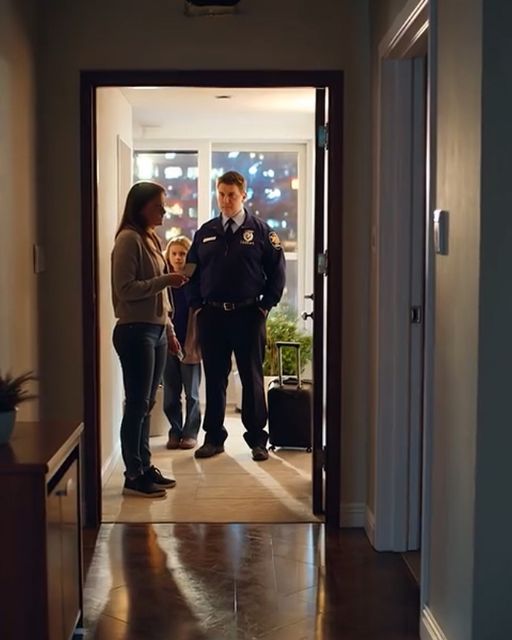
And a young couple, surrounded by unpacked boxes, had opened it.
They found my parents demanding to know what they had done with their daughter.
The couple, having no idea who these people were, did the only logical thing.
They called the police.
An unknown number from the city finally got through.
My parents were at a station. They were being told that entering a stranger’s home isn’t “family business.”
It’s something else entirely.
When I walked into that sterile conference room, the sight stopped me cold.
My mother, mascara streaked down her face.
My father, pale and shrunken in his chair.
My sister, Chloe, pacing in the corner like a trapped animal.
For the first time in my life, I wasn’t the one being questioned.
I wasn’t the one who had to explain myself.
They were.
A police officer, a woman with kind eyes and a no-nonsense posture named Officer Riley, gestured for me to sit.
She sat across from all of us, a calm center in a storm of my family’s making.
“So, you’re Maya,” she said, her voice even. “Your parents were very concerned.”
My mother let out a sob. “We thought something terrible had happened!”
My father nodded grimly, his hand on her shoulder. “We had no idea where she was.”
Officer Riley looked at her notepad. “They tell me you moved without telling them.”
I nodded, my throat tight. “I did.”
“Why would you do that, Maya?” my father’s voice was low, laced with a disappointment that used to crush me. “Why would you put us through this?”
My sister stopped pacing. “Yeah, what’s wrong with you? They were worried sick.”
I looked at their faces, a jury that had convicted me a thousand times before I ever spoke.
But this room was different. The audience was different.
I took a deep breath. “Because you wouldn’t stay out of my apartment.”
My mother gasped. “We were helping you!”
“You let yourselves in whenever you wanted,” I continued, my voice finding a strength I didn’t know it had. “You gave a key to Chloe. You got another one from my landlord behind my back.”
Officer Riley wrote something down. She didn’t look up.
“It wasn’t your home,” I said, looking directly at my mother. “It was mine.”
The words hung in the air. Simple. True. And to them, completely alien.
“We are your family,” my father said, as if that explained everything. As if that was a universal key.
“The new tenants, David and Sarah, don’t know you,” Officer Riley interjected smoothly. “To them, you were two strangers trying to force your way into their new home.”
“It was a misunderstanding!” my mother insisted.
“No,” the officer said, finally looking up and meeting my mother’s eyes. “It was trespassing. Had they decided to press charges, you’d be in a much more serious situation.”
The color drained from my father’s face.
Chloe scoffed, but she was leaning against the wall now, her bravado gone.
“This isn’t about a key,” Officer Riley said, her gaze shifting to me. “This is about boundaries. And a lack of them.”
She turned back to my parents. “Your daughter is an adult. She is safe. She has a right to her own life and her own privacy. You cannot force your way into it.”
The finality in her voice was a shield I’d never had.
My mother just cried, her shoulders shaking.
My father stared at his hands. He looked old.
For a moment, I felt a familiar pang of guilt. The old urge to smooth things over, to apologize, to take the blame just to make it stop.
But I looked at Officer Riley, at the four sterile walls, and I held on to the silence.
I wasn’t the one who had broken the law.
They released my parents with a formal warning. A report was filed.
The young couple, David and Sarah, thankfully chose not to press charges.
Officer Riley gave me her card before I left. “If they show up at your new place, you call me directly.”
Walking out of the station into the cool night air, I felt strangely light.
The world hadn’t ended. I had said the truth, and I was still standing.
I went back to my new apartment, to the quiet and the security of the front desk.
I ordered a pizza, the good kind from the place down the street, and ate it on the floor of my mostly empty living room.
The guilt was still there, a faint buzzing under my skin.
But for the first time, it was quieter than the feeling of relief.
My phone rang two days later. It was my mother’s sister, my Aunt Carol.
“Your mother is a wreck,” she said, no hello. “Your father isn’t sleeping. You need to call them.”
The old script. The family emergency broadcast system.
“They know I’m okay, Aunt Carol.”
“It’s not about being okay, Maya. It’s about respect. They raised you. They love you.”
“Their love feels like a cage sometimes,” I said, the words surprising even me.
There was a pause on the line. “Well. You have to admit, just disappearing was cruel.”
I thought about it. “Maybe. But having my home invaded felt cruel, too.”
The conversation ended with a sigh from her and a quiet goodbye from me.
I spent the next few weeks building a life within my new walls.
I bought a huge, leafy plant and named it ‘Riley’.
I painted my bedroom a soft green color that my mother would have called “drab.”
I found a yoga studio and started going on Saturday mornings, a time my family had always reserved for mandatory brunches.
I was discovering myself, piece by piece, without an audience.
One afternoon, I got an email. The sender was David, the man from my old apartment.
I almost deleted it.
The subject line was: “Hope this isn’t weird.”
I opened it.
He wrote that he and his wife, Sarah, were so sorry about what happened. He said they figured out pretty quickly what was going on. Sarah, he explained, had a similar situation with her own family years ago.
He ended the email with, “We love the apartment. Thank you for moving out. And more importantly, we’re really glad you’re okay.”
I stared at the screen and started to cry.
Not from sadness or from guilt.
But from the simple, profound relief of being understood by a total stranger.
Two months passed in near silence.
No surprise visits. No barrages of texts. Just a few stilted, one-line messages from my sister asking if I was still alive.
I was starting to think this was it. This was the new normal.
A strained, distant relationship was better than none, I told myself. It was the price of my freedom.
Then, an email came from my father.
It was short. “Your mother isn’t well. She wants you to pick up the last box of your things from the house.”
My heart hammered in my chest. A trick. It had to be a trick. A way to get me back to the house, to corner me, to have the big emotional scene they felt they were owed.
I typed and deleted a dozen angry replies.
Then I typed a simple one. “I can’t come to the house. You can leave it for me in the lobby of my building on Sunday.”
I was setting a boundary. I waited for the pushback.
The reply came an hour later. “Okay.”
Just okay.
That Sunday, I was a nervous wreck. I watched the security feed from my apartment, waiting for the confrontation.
But it never came.
The doorman called me. “Package for you, Maya.”
In the lobby was a single, sealed cardboard box. My father was already gone.
I took it upstairs, my hands shaking slightly.
It felt like a bomb. The last piece of my old life.
I opened it. On top was my old stuffed bear, its fur worn smooth. My high school yearbooks. A stack of photos.
Underneath all the memories was a smaller, dusty box.
It was a shoebox, tied with a faded ribbon.
It wasn’t mine. My mother’s handwriting was on the side. “Private.”
My first instinct was to close the box. To respect the one boundary she had never given me.
But I couldn’t. I needed to understand.
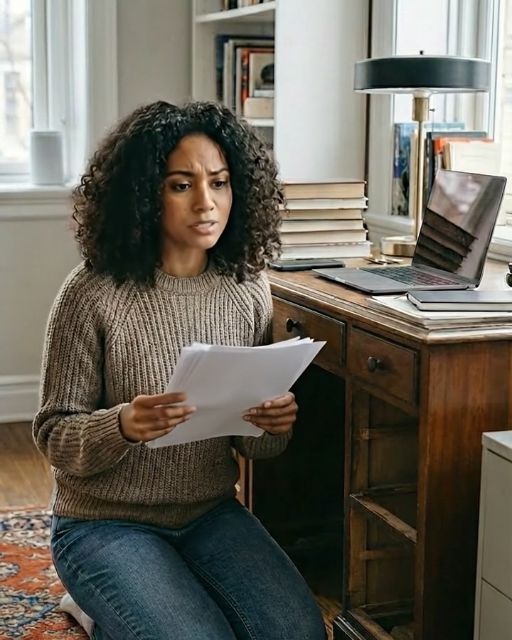
I untied the ribbon. Inside were not photos, but journals. Thin, spiral-bound notebooks from the 1970s.
Her handwriting was different then. Young. Looping.
I opened the first one.
My mother wrote about her first crush, about arguments with her parents, about wanting to be an artist.
And she wrote about her little sister, Lily.
Lily was a firecracker, she wrote. A wild child who dreamed of moving to California.
I had never heard of Lily.
I kept reading, my breath caught in my throat.
I read about the fights Lily had with their parents, who were strict and unyielding. I read about her sneaking out, about her wanting a life they couldn’t understand.
It was my story. Written thirty years before I was born.
Then I got to the last entry in the first notebook.
“Lily’s gone. She packed a bag after the fight last night. She said she was never coming back. Mom says she’ll be home when her money runs out. I hope she’s right. I’m so scared.”
I fumbled for the next journal.
It was dated a year later. My mother’s handwriting was jagged. Broken.
She wrote about the phone calls. The dead ends. The police reports that went nowhere.
Lily never came home.
They never found out what happened to her. She just vanished.
The last pages were filled with my mother’s guilt.
“I should have stopped her,” she wrote. “I saw her packing her bag. I should have told Dad. I should have locked her door. I should have kept her safe.”
I closed the journal.
The air in my apartment was still. The city noise outside faded away.
It wasn’t about control. Not really. It wasn’t about ownership.
It was about fear.
A deep, forty-year-old fear of a ghost.
A fear that if she loosened her grip, I would vanish just like her sister did.
My anger, the hard shell I had built around my heart for years, didn’t vanish. But it softened.
It made room for something else. A painful, aching empathy.
Her methods were wrong. They had suffocated me. They had hurt me.
But I finally understood the ‘why’.
She wasn’t trying to hold on to me. She was trying to hold on to a ghost.
I picked up my phone. I didn’t think about what to say. I just called her.
She answered on the first ring. Her voice was small. “Hello?”
“I got the box,” I said, my own voice hoarse.
“Oh. Good.”
“I read your journals, Mom.”
Silence. I could hear her sharp intake of breath. I imagined her bracing for my anger.
“I’m sorry,” I said. “I’m so sorry about Lily.”
A sob broke over the line. A sound so full of grief it felt like it had been held in for decades.
“I just didn’t want to lose you, too,” she whispered.
That one sentence unlocked everything.
We didn’t fix forty years of pain in one phone call.
But it was a start.
I told her I loved her. And I told her that to love me, she had to let me go. She had to trust me.
I told her that I wasn’t Lily.
My father got on the phone. He told me he was sorry. He said he was just trying to protect my mother’s heart.
We started talking. Really talking.
They started going to therapy. Together, and separately.
The visits started slowly. A coffee in a neutral cafe. A walk in the park.
My mother learned to text. “Thinking of you,” she’d write. Nothing more.
One day, she came to my apartment. She buzzed from the lobby.
I met her downstairs and we walked up together.
She looked at my green walls and said, “It’s a peaceful color.”
That was everything.
My freedom wasn’t about the absence of my family. It was about the presence of boundaries.
The police report was a wall I couldn’t build. The couple in my old apartment were the strangers who laid the foundation. And my mother’s secret grief was the unexpected key that finally, truly, let me in.
It taught me that people’s actions are often a reflection of their own broken pieces, their own hidden stories. Understanding that doesn’t excuse the hurt, but it can pave the road to a different kind of forgiveness. A forgiveness that isn’t for them, but for yourself, allowing you to build a new life, on your own terms, with a door that only opens when you decide to answer.