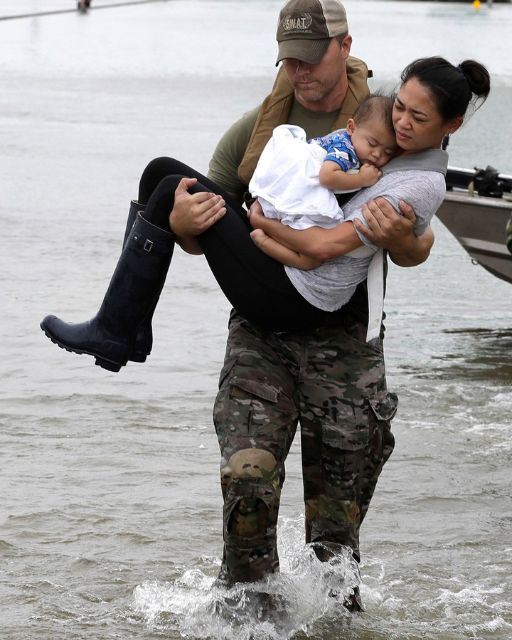
The floodwaters reached our chest by dawn. I clung to my baby, legs NUMB, while my husband waved down rescue boats. When they pulled up, a man in camo scooped us into his arms without a word.
As we reached dry ground, he whispered, “Ma’am, someone sent me for you.” I asked who—and he said, “Your sister.”
At first, I thought I’d misheard him. My sister? We hadn’t spoken in over six years.
The last time we were in the same room, we were shouting over our mother’s will. Everything had unraveled so fast after Mom passed—old resentments, money, who cared more—it all boiled over. She accused me of being selfish, I called her heartless, and we left each other’s lives like strangers slamming doors.
But now, soaked and shivering on a muddy embankment, her name was the last thing I expected to hear.
“My sister sent you?” I asked again, clutching my baby closer.
The man nodded, helping us onto a waiting truck. “She’s been calling every rescue unit since the warnings started. Gave me your address, told me not to leave without you.”
I blinked back tears, not sure if it was the cold or the shock making me shake harder.
We were taken to a temporary shelter set up in the high school gym. Cots lined the floor, and the air smelled like damp clothes and instant coffee. My husband, Ron, wrapped his arms around me and the baby, while I sat there wondering how my sister even knew where we lived. We’d moved three times since the fallout.
Later that night, after the baby finally stopped crying and drifted off to sleep, I slipped out to the hallway for a moment of quiet. The buzzing lights flickered overhead, and I just stood there, dripping dry, staring at nothing.
That’s when I saw her.
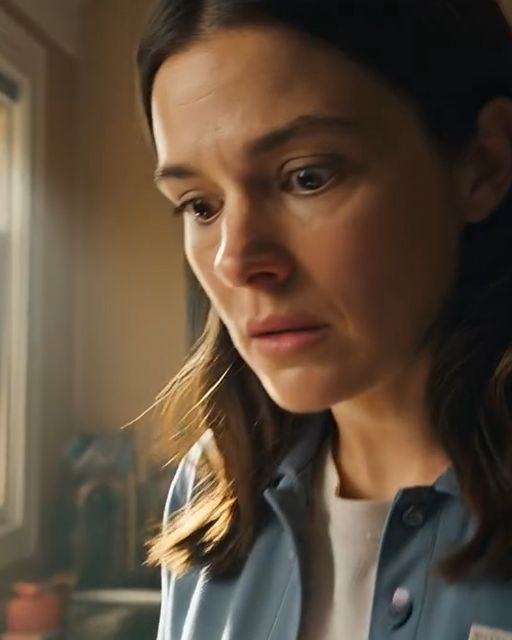
She looked older, more tired, and wore a yellow rain jacket that still had mud on the sleeves. Her dark curls were pulled back into a frizzy ponytail, and when she met my eyes, it was like no time had passed—but also like all the time in the world had.
“Hi, Liv,” she said.
I didn’t know what to say. My mouth opened, but nothing came out.
She reached into her pocket and held out a crumpled photograph—one of us from when we were little, sitting on Grandma’s porch eating popsicles. “I kept this,” she said. “I just… couldn’t let something happen to you without trying.”
That cracked me. Right there in the hallway, I started sobbing. She pulled me into a hug, and I didn’t fight it. For the first time in years, I let her hold me.
“I’m sorry,” I whispered.
“Me too,” she said. “We lost so much time.”
We sat on the floor, backs against the lockers, and talked until the sun rose. The flood had taken our home, but in some strange way, it had given me my sister back.
Her name was Lydia, and she lived just two counties over. She had a daughter now, two years older than mine. She told me she’d found my address last year through an old Christmas card our aunt had forwarded. She almost reached out but didn’t know if I’d want to hear from her.
“It took a disaster for me to stop caring whether you were mad at me,” she admitted, her voice cracking.
I felt the same. Pride had kept us apart for so long, and now, in the wreckage, none of that seemed to matter.
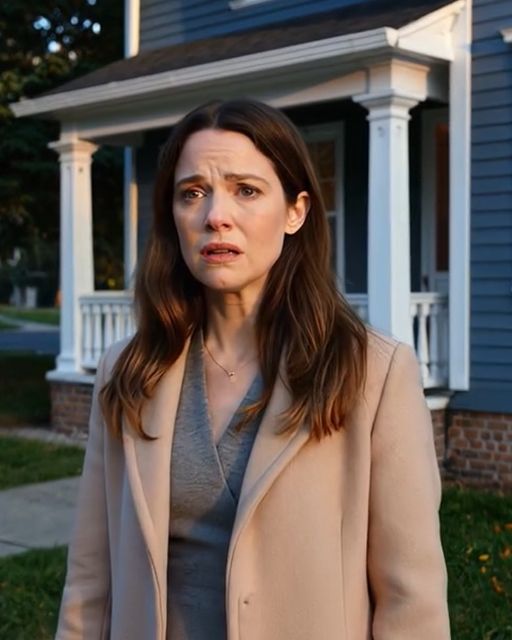
A week passed before we could return to what was left of our neighborhood. Ron and I stood in front of our house, or what remained of it. Waterlines marked halfway up the windows. Most of our belongings were ruined.
FEMA was slow to respond, and insurance was slower. We ended up staying with Lydia and her family. At first, it was awkward, being in someone else’s home, even if that someone was your sister. But within days, the old rhythm started to return.
Lydia’s husband, Mark, was quiet but kind. He built a crib for our baby from scrap wood. Their daughter, Riley, took to my little Ellie like a big sister, singing to her and handing her toys.
Every night, Lydia and I would sit at the kitchen table, sipping whatever cheap wine she had in the fridge. We’d talk about Mom, about childhood, about where it all went wrong between us.
“I think we were both grieving and didn’t know how to show it,” she said one night, stirring her tea.
I nodded. “And maybe we were too stubborn to see past our pain.”
The days stretched into weeks. Ron got work through a neighbor of Lydia’s, doing cleanup for flood-damaged homes. I helped out around the house, looked after the girls, cooked meals. For the first time in a long while, life felt like it was moving forward instead of just treading water.
But just when it seemed like things were finally settling, another twist came.
I got a call from our bank—someone had found a box in our garage, lodged behind the dryer. Inside it were soaked envelopes, including one marked “FOR OLIVIA—ONLY IF I’M GONE.” It was in Mom’s handwriting.
My heart nearly stopped.
I opened the letter right there in the parking lot of the donation center. It was short, written in slanted cursive.
Liv,
If you’re reading this, then I’m gone. And I know you and your sister have been at odds, but I want you to remember something. Family is messy. Love isn’t always quiet or kind. But it’s worth it. Don’t let money or words said in pain ruin the one bond that matters most. You and Lydia need each other more than you know.
Love, Mom.
I read it three times before I could even speak. That letter felt like a key, unlocking everything I’d been holding in.
That night, I handed it to Lydia at the kitchen table. She read it in silence, her fingers trembling.
“She knew,” she whispered. “Even back then.”
We didn’t cry this time. We just sat there holding hands, both of us finally letting the past go.
Over the next few months, life began to reshape. Our house had to be gutted, but a community grant came through, and some volunteers from a church group helped with the rebuild. Lydia and Mark insisted we stay as long as we needed.
In return, I took over homeschooling Riley when their school stayed closed due to mold issues. Lydia found a job at a small vet clinic. It wasn’t glamorous, but it brought her joy.
Spring came, and with it, the blossoms that always reminded me of our mom’s garden. We planted a few in Lydia’s backyard—roses, like the ones Mom used to grow.
One day, as we watched our daughters playing in the grass, Lydia turned to me and said, “You know, maybe the flood didn’t destroy our lives. Maybe it washed away the things that didn’t matter.”
I smiled. “And left behind what does.”
The bond we rebuilt wasn’t perfect, but it was real. We still had little arguments, clashed over silly things, but now we talked it out. We remembered to say sorry. We leaned on each other.
When our house was finally finished, I wasn’t sure I wanted to move back. But Lydia insisted, in her usual bossy-sister way, that we needed our own space again. So we moved back down the road—just close enough that the girls could walk between houses.
A year later, we threw a big neighborhood BBQ, inviting everyone who’d helped us along the way. The rescue man in camo even showed up—his name was Danny, and he’d stayed in touch with Lydia after the flood. He brought his teenage son and helped grill burgers in the yard.
As the sun set, and kids ran barefoot through the sprinkler, I looked around and realized how full my life had become. Not in the ways I expected—not with money or perfect plans—but with people, with forgiveness, with new chances.
The flood was a nightmare I’d never wish on anyone, but it stripped us down to the core. And from there, we got to rebuild—not just our house, but our hearts.
If someone had told me years ago that Lydia would be my best friend again, I wouldn’t have believed them. But now, I couldn’t imagine life without her.
And it made me wonder—how many relationships stay broken, just because no one takes the first step?
Sometimes it takes a flood to remember what really matters.
If you’ve drifted apart from someone you love, maybe now is the time to reach out. Don’t wait for a disaster to remind you how short life is.
If this story moved you, please like and share it. You never know who needs a reminder to pick up the phone and forgive.