My daughter said I wasn’t “supportive” because I had a doctor follow-up—then she told me not to come over again, and I found out she’d changed the locks.
Her voice on the phone was a little too bright.
“Mom, can you watch the baby this weekend? We have a work retreat in the mountains.”
I looked at the knee brace slung over my desk chair. A dark, velcro-strapped reminder of my last fall.
“I can’t, honey. I have a follow-up with the doctor Saturday morning.”
The silence that followed wasn’t empty. It was sharp.
Then, her voice went flat. “Wow. Okay. I guess you’re just not being supportive of our family.”
She hung up before I could find my own voice.
An hour later, my phone screen lit up. It was a text from Sarah.
Please don’t come by the house anymore. It’s time for boundaries.
Then the line that stopped my breath.
We’ve changed the locks.
I read it twice. Then a third time, as if the words might rearrange themselves into something I understood. They didn’t.
So I got in my car. Disbelief is a kind of fuel.
Her street looked the same. Tidy lawns, a few bicycles tipped over in the grass. I parked across from the two-story house I helped them buy.
I stared at the front door. The one we’d painted yellow together, back when she still looked at me like I knew something about the world.
I rang the bell. Nothing.
I rang it again.
Then I saw it. A flicker in the upstairs window. A curtain falling back into place. Someone was home.
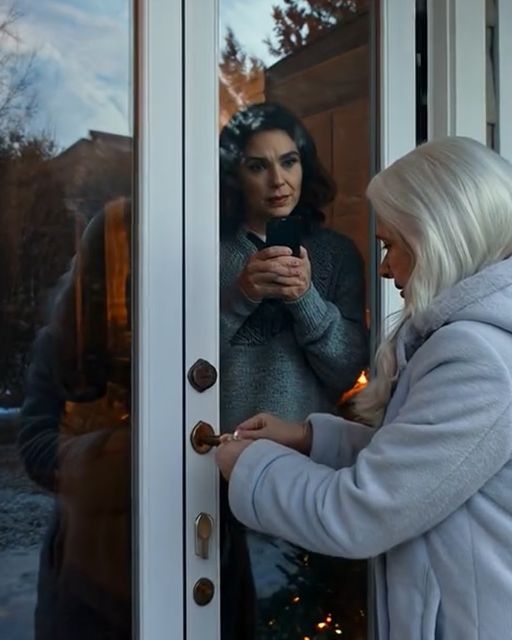
My hand was shaking as I put my old key in the lock. It slid in, but it wouldn’t turn. Just a hard, metallic stop. The sound of a house that no longer recognized me.
Back in my kitchen, I stood under the childish crayon drawings taped to my fridge. “Best Grandma.” “I love you.”
A cold, clean anger started to burn in my chest. This wasn’t about a weekend. This was an erasure.
I went to my desk and pulled out the thick folder I hadn’t touched in years. The one with dates and amounts. Every transfer, every insurance payment, every last-minute check I’d written.
I found my old attorney’s card and made the call. His receptionist offered me Tuesday morning.
Then I made another call. To the bank.
“Stop all automatic payments,” I said, my voice calmer than I felt.
There was a careful pause on the line. “All of them, ma’am?”
“All of them,” I said.
By Thursday, my son-in-law, Mark, finally called. He was polite in a way that had nothing to do with kindness.
“Hey, Carol… the usual transfer didn’t come through. The insurance payment, too. Just wondering if there was a mistake.”
“No,” I said. “Not a mistake.”
Ten minutes later, a text from Sarah flashed on my screen.
You’re creating a lot of stress in our household.
I sat in a brown leather chair across from Mr. Davis. The polished surface of his desk felt a mile wide. He slid a thick packet of papers toward me. My new will. My revised trust.
He peered at me over his glasses. “Are you sure, Carol?”
I thought about the dead key in the lock.
I thought about the curtain twitching in the window.
I thought about how easy it was to be deleted by a text message.
Just as I reached for the pen, my purse began to vibrate. A frantic, insistent buzzing against the leather.
Sarah’s name glowed on the screen. She was calling this time.
I let it ring.
I let it ring until it stopped.
Then I picked up the pen.
The scratch of the ink on the thick paper was the only sound in the room. It felt final. It felt like I was signing my own declaration of independence.
Mr. Davis nodded slowly, taking the documents from me. “It’s done.”
I walked out of his office into the bright afternoon sun and felt… lighter. The anger was still there, a low ember, but it was joined by a strange sense of clarity.
For years, my life had been a series of reactions to their needs. A forgotten school project, a car that wouldn’t start, a down payment they couldn’t quite make.
I had become a line item in their budget. A resource.
That evening, my next-door neighbor, Eleanor, found me pulling weeds in my front garden with a little too much vigor.
“Tough day?” she asked, leaning on the shared fence.
I told her everything. The phone call, the locks, the lawyer.
She listened without interrupting, her expression thoughtful. “You know,” she said when I was finished, “a pot that is always poured out will eventually run dry.”
Her words stuck with me. For the first time in a week, I slept through the night.
The next few weeks were a study in silence. No more calls. No more texts.
It was a hollow, aching quiet at first. I’d pick up my phone to share a picture of a flower from my garden or a funny thing I saw at the store, only to remember there was no one on the other end who wanted to see it.
The drawings on my fridge seemed to mock me. I took them down, one by one, and placed them in a box. It hurt, but it was a necessary hurt, like cleaning a wound.
To fill the silence, I started doing things for myself.
I joined the local library’s book club. I started volunteering at the animal shelter on Wednesday afternoons.
I spent hours walking the dogs, feeling their uncomplicated joy, their unconditional affection. It was a balm on a part of my soul I didn’t know was so bruised.
One day, I was sorting donated blankets when a young woman, probably Sarah’s age, started crying quietly in the corner.
Her name was Beth. She’d just lost her own mother and volunteering was her way of coping.
We started talking. We got coffee.
I told her about my knee, and she told me about her mom’s battle with a long illness. I didn’t tell her about Sarah. It was a wound too fresh to show a stranger.
But it felt good to just be Carol again. Not “Mom.” Not “Grandma.” Just a person with her own stories.
About a month after my visit to the lawyer, another text came from Sarah. It was a picture of my granddaughter, Lily, sitting on the yellow front step.
She’s been asking for you.
My heart seized. It was a low blow, and we both knew it.
I stared at her sweet, chubby face, her little hand waving at the camera. My thumb hovered over the reply button.
Then I put the phone down and went to walk a sad-eyed beagle named Hank.
The real break came another two weeks later. A call from a number I didn’t recognize.
“Is this Carol Spencer?” a professional voice asked.
“It is.”
“This is David from the main branch of Westland Bank. I’m calling about the property on 142 Oak Street.”
It was Sarah and Mark’s address.
“Yes?” I said, my stomach tightening.
“We’ve received a home equity line of credit application from Mark and Sarah Jennings,” he continued. “As your name is also on the deed as a co-signer from the original mortgage, we require your signature to proceed.”
The world tilted on its axis. My name was on the deed. I’d co-signed to help them get approved, with the understanding it was a formality and I’d be removed in a few years once their credit improved.
They never removed me.
And now they were trying to borrow against a house I partly owned. Without my permission.
“An equity line of credit?” I repeated, my voice hollow.
“Yes, for the maximum allowable amount,” he said. “I can send the paperwork over to you for review.”
“Don’t bother,” I said, the cold, clean anger returning with a vengeance. “I will not be signing anything.”
I hung up the phone and finally understood.
This wasn’t about me being unsupportive. This was about money. They were in trouble, deep trouble, and they needed cash. My one “no” about a single weekend had threatened their entire plan.
They hadn’t just changed the locks on the house. They had planned to lock me out of their financial disaster, using my own assets to fund it. The cruelty, the manipulation… it was all a desperate, calculated strategy.
That night, for the first time, I cried. Not for the loss of my daughter, but for the depth of her betrayal.
The next evening, there was a knock on my door.
It wasn’t a tentative tap. It was a frantic, desperate pounding.
I looked through the peephole and saw Sarah. Her face was pale and tear-streaked, her hair a mess. She was alone.
I opened the door.
“He’s gone, Mom,” she sobbed, her words tumbling out. “Mark’s gone.”
She said the bank had called Mark after they spoke to me. They denied the loan.
He had panicked. They’d had a terrible fight. He blamed her. He blamed me. He packed a bag and left.
“He took the car,” she whispered, looking past me into the house she hadn’t seen in months. “He drained the joint account.”
She looked so young and lost, like the little girl who used to run to me with a scraped knee.
A part of me, the mother part, wanted to pull her into my arms. But another part, the woman she had hurt so deeply, stood its ground.
“Why, Sarah?” I asked, my voice quiet but firm. “Why the locks? Why the lies?”
Her shoulders slumped in defeat. She finally looked at me, her eyes filled with a shame that was painful to see.
“Mark said… he said you were controlling us with your money,” she stammered. “He said that your help always came with strings, and that if we wanted to be a real family, we had to be independent.”
The irony was so bitter, it almost made me laugh.
“So his plan for independence was to secretly borrow against my share of your house?”
She flinched. “I didn’t know he was doing that. Not at first. He just said we needed to set boundaries. That you’d come around if we were firm. He said you’d give us the money anyway if we just made you feel guilty enough.”
I stepped back from the door, letting her in. The house seemed to swallow her.
She looked around at the empty spaces on the walls, the spot on the fridge where her daughter’s drawings used to be.
We sat at the kitchen table for hours.
She told me about Mark’s gambling debts. The credit cards she didn’t know about. The “work retreats” that were actually trips to casinos.
He had twisted her reality, isolating her from me, her oldest and most reliable source of support. He had convinced her I was the enemy, all so he could maintain control. She had been a fool, she said. A weak, desperate fool.
There were no easy answers. I didn’t have a magic wand to fix her life.
But I did have a spare room.
The next few months were hard. Sarah got a job as a receptionist. It was humbling, but it was a start.
I helped her find a financial counselor. We went through the mountain of debt Mark had left behind.
The yellow house had to be sold. It was the only way.
We packed up her life in boxes, a mirror image of the day we’d unpacked them with so much hope. When she found the old photos of us painting the front door, she sat on the floor and wept.
I didn’t rush to comfort her. I let her feel the full weight of her choices.
Slowly, carefully, we started to build something new. Our relationship wasn’t what it was before. It couldn’t be.
The easy intimacy was gone, replaced by a careful respect. She didn’t ask for anything. She showed me her budget each week. She insisted on paying me a small amount for rent.
I started bringing Lily’s drawings back out, taping them to the fridge one at a time. Each one felt like a promise.
One Saturday morning, I woke up to the smell of coffee. Sarah was in the kitchen, holding a mug out to me.
“I have to work in a few hours,” she said. “Would you be able to watch Lily?”
I looked at her. Her eyes were clear. It wasn’t a demand. It was a request.
“I can’t today, honey,” I said gently. “I have that book club meeting at the library, remember?”
A flicker of the old panic crossed her face, but it was gone in an instant. She took a deep breath and nodded.
“Okay,” she said. “That’s okay. I’ll call Maria from down the street.”
And in that simple moment, I knew we were going to be all right.
I did eventually change my will again. I didn’t cut Sarah out completely. I set up a tightly managed trust for her and a separate educational fund for my granddaughter.
But the animal shelter, where I now served on the board, remained my primary beneficiary. I had found a purpose outside of my family, and it was mine to nurture.
Support isn’t a blank check or a blind “yes.” True support is giving someone the tools to stand on their own, even if it means letting them fall first. Boundaries aren’t walls to keep people out; they are the foundations on which you build a house of self-respect, a place where love can enter through the door instead of being demanded through a locked window.