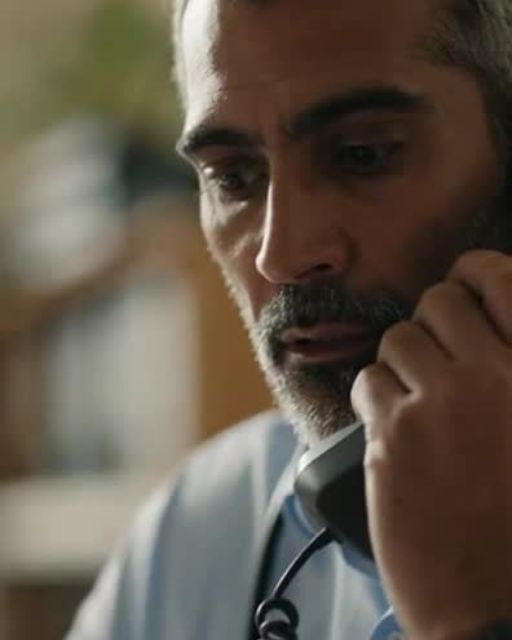
“She’s just old. Confused. The tests don’t mean anything.”
That’s what my sister, Norah, said when I asked why Mom hadn’t seen a specialist yet.
But something felt off.
Our mother, once sharp as a tack, had started forgetting names, confusing dates, misplacing money. I wanted answers. Norah kept brushing it off—said stress was making me dramatic.
She lived with Mom. I didn’t. So I trusted her—at first.
Until I visited last month and saw the unopened envelope in the kitchen trash.
It had Mom’s name on it. From the neurologist.
I fished it out. Sealed. Postmarked three weeks ago.
When I confronted Norah, she said Mom didn’t need more “scary words” floating around. That she was “protecting her.”
But protecting who, really?
So I made my own appointment with Mom’s primary doctor. I asked for her full medical file.
The nurse hesitated. “That was already picked up,” she said.
“By who?” I asked.
She glanced at the chart. “Signed for by… Norah.”
That night, I couldn’t sleep. I kept thinking—what if something was being missed? Hidden?
Turns out, something was.
The next morning, I got a call from Dr. Siegel, the neurologist.
“I found the original referral report,” he said. “It was misfiled under a similar name—pure accident. But I remember your mother. She came in for testing six months ago.”
I sat up straight. “Six months?”
He paused.
“You need to come in. Today. Bring your sister if you can. But either way… there’s something you need to see. And a decision needs to be made—fast.”
My hand was shaking as I hung up.
Because whatever Norah was hiding… it wasn’t just about Mom’s memory.
I drove straight to Dr. Siegel’s office. The waiting room smelled like antiseptic and old magazines. My leg bounced the whole time.
When he finally called me back, his expression was serious but kind. He slid a manila folder across his desk.
“Your mother has a benign meningioma,” he said. “A slow-growing tumor pressing on her frontal lobe. It’s what’s causing the memory issues, the confusion.”
My throat went dry. “A tumor?”
“It’s treatable,” he said quickly. “Surgery has an excellent success rate for this type. But it needs to happen soon. The longer we wait, the more cognitive damage becomes permanent.”
I stared at the scans, at the dark spot in Mom’s brain. “Norah knew about this?”
Dr. Siegel nodded. “She was here. Six months ago. I gave her copies of everything. Told her the same thing I’m telling you now.”
Six months. Half a year of watching Mom decline while Norah smiled and said everything was fine.
I left the office in a daze. Called Norah immediately.
“Where are you?” I demanded.
“At work. Why?”
“I just came from Dr. Siegel’s office.” Silence. “You want to explain why you’ve been hiding Mom’s diagnosis for six months?”
She sighed, like I was being unreasonable. “Because surgery at her age is risky. She could die on the table, and for what? A few more years of barely remembering us?”
My hands tightened on the wheel. “That’s not your call to make.”
“I live with her,” Norah shot back. “I see her every day. You show up once a month and think you know what’s best?”
“She deserves to know. She deserves to choose.”
Norah’s voice went cold. “She’s not competent to choose anymore. And honestly, neither are you. You’re too emotional about this.”
She hung up.
I sat in my car, shaking with anger. Then I drove to Mom’s house.
When I got there, Mom was in the garden, pulling weeds that weren’t there. She looked up and smiled, but it took her a moment to place me.
“Sweetheart,” she said finally. “What a nice surprise.”
I helped her inside, made tea, sat across from her at the kitchen table. Her hands trembled slightly as she lifted her cup.
“Mom,” I said gently. “Do you remember going to see Dr. Siegel? The brain doctor?”
She frowned, searching her memory. “I… I think so. There were tests. Lots of questions.”
“He found something. A growth in your brain. It’s making you forget things.”
Her eyes filled with tears. Not because she was scared, but because she finally understood why her mind had been betraying her. “I thought I was losing myself,” she whispered.
“You’re not,” I said, taking her hand. “It can be fixed. But it means surgery.”
She looked at me for a long moment. Despite everything, despite the fog, I saw clarity in her eyes. “Then I want to do it.”
That evening, Norah came home. The tension in the room was immediate.
“You told her,” Norah said flatly.
“Of course I told her. It’s her life.”
Norah threw her purse on the counter. “You have no idea what you’ve done. The recovery alone could kill her. And even if it doesn’t, you’re giving her false hope.”
Mom spoke up then, her voice quiet but firm. “I’m sitting right here, Norah. Stop talking about me like I’m already gone.”
Norah’s face crumpled. “Mom, I just… I can’t watch you suffer through surgery and recovery for something that might not even work.”
And there it was. The truth underneath all the lies.
Norah wasn’t protecting Mom. She was protecting herself.
“I’ve been taking care of you for three years,” Norah continued, her voice breaking. “Since Dad died. I gave up my apartment, my life. And now she wants to put you through surgery that could take you away from me anyway?”
Mom stood up slowly, walked over to Norah. “Baby, I know it’s been hard. But hiding this from me… that’s not love. That’s fear.”
The next week was a blur of pre-op appointments and family tension. Norah barely spoke to me.
But two days before the surgery, something strange happened. Norah showed up at my apartment with a cardboard box.
“What’s this?” I asked.
“Mom’s things. Legal documents, old photos, her jewelry.” She set it down. “Just in case.”
I felt my anger soften slightly. “She’s going to be fine.”
Norah nodded, but she looked haunted. “There’s something else. In the box. Letters.”
After she left, I opened it. Inside were dozens of letters, all addressed to me, dating back three years. Letters from Mom that I’d never received.
My hands shook as I read them. Mom asking why I never called anymore. Wondering if she’d done something wrong. Mentioning things I’d supposedly said or done that I had no memory of.
Norah had been intercepting our communication. Manipulating both of us.
I called her immediately. “The letters, Norah. Why?”
She was crying. “Because you left. After Dad died, you went back to your life two states away. I was alone with her, and she kept asking for you, and I just… I wanted her to stop. I wanted to be enough.”
It wasn’t an excuse. But it was honest.
“You should have told me you needed help,” I said.
“Would you have come?”
The question hit hard because I didn’t know the answer.
Surgery day arrived. Mom was surprisingly calm as they prepped her. She held both our hands.
“Whatever happens,” she said, “I’m glad I know the truth. I’m glad I got to choose.”
Norah and I sat together in the waiting room. Five hours. Not talking much, but present.
When Dr. Siegel finally emerged, he was smiling. “She did great. We removed the entire tumor. She’ll need time to recover, but her prognosis is excellent.”
Norah collapsed into me, sobbing with relief.
Over the next few months, Mom’s recovery was slow but steady. Her memory sharpened. Her personality returned. She started painting again, something she hadn’t done in years.
Norah and I had hard conversations. She started therapy. We established boundaries, schedules, shared responsibilities.
One afternoon, about four months post-surgery, Mom called us both into the living room. She had something in her hands.
“I found these,” she said, holding up the letters. “The ones you kept from me.”
Norah’s face went white. “Mom, I’m so sorry—”
Mom held up her hand. “I’m not angry. But I need you both to hear something.” She looked at me. “You did leave. You did choose distance after your father died.”
I started to protest, but she continued.
“And you,” she turned to Norah, “you tried to control everything because you were drowning and didn’t know how to ask for help.”
We both sat silently, ashamed.
“Here’s what I learned from almost losing my mind,” Mom said. “Family isn’t about being perfect. It’s about showing up, even when it’s messy. Even when you’re scared.”
She tore the letters in half. “So let’s start over. All of us.”
That was two years ago. Mom’s scans are still clear. Her garden is thriving. So is she.
Norah still lives with her, but now I visit every other weekend. We hired part-time help. We talk openly about hard things.
I learned that sometimes the people we trust most are capable of terrible decisions made from love twisted by fear. And that forgiveness isn’t about forgetting—it’s about choosing connection over resentment.
Mom taught us that being vulnerable enough to say “I need help” is braver than suffering in silence. That truth, even when it’s terrifying, is always better than comfortable lies.
Because in the end, she didn’t just survive the surgery. She survived our dysfunction too. And somehow, we all came out stronger.
If this story touched you or reminded you to check in on the people you love, share it. Sometimes the hardest conversations are the ones that save us. And if you’ve ever felt caught between doing what’s right and what’s easy, drop a like—you’re not alone in that struggle.