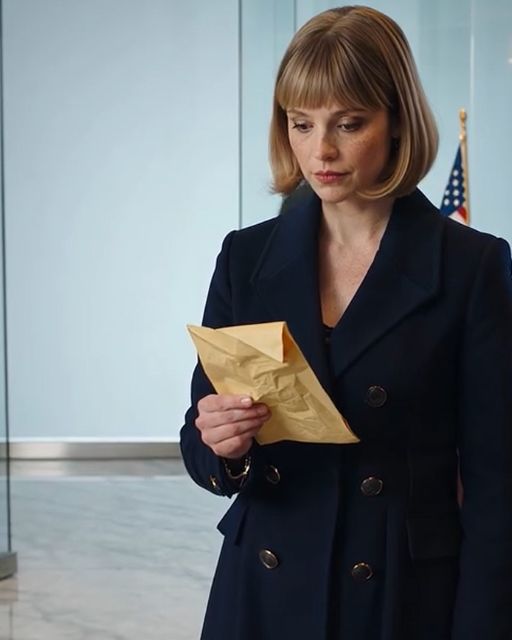
The agent went pale.
She looked from the yellowed certificate in her hand, to my face, and back to the paper. Her professional smile was gone.
“One moment,” she whispered. She didn’t ask. She told me.
Then she vanished through a heavy door. I heard the lock click.
It started at my grandmother’s funeral. Two months ago, she’d squeezed my hand across her kitchen table. “When I’m gone,” she said, her voice thin as thread, “they’ll tell you I left nothing. Don’t believe them.”
A man in an old suit pressed a worn envelope into my hands after the service. It was for me, he insisted. Only me.
“Records don’t lie,” he whispered, leaning in. “People do.”
Before I could even open it, my sister Sarah was there. She snatched it, glanced inside with a flicker of a smile, and dropped the whole thing into a bin of wilting funeral flowers.
My mother saw. “Don’t make a scene, Anna,” was all she said.
But I couldn’t sleep that night. You don’t throw away something that’s worthless. You throw away something that’s dangerous.
So before sunrise, I drove back to the chapel. I climbed into a cold metal dumpster behind the kitchens. The air was thick with coffee grounds and dying lilies.
My fingers found it. A crumpled yellow envelope.
My grief had turned into something sharper.
And that’s how I ended up here, in a silent corporate lobby, watching the clock tick.
Ten minutes later, a senior specialist with a tight voice led me to a conference room. The blinds were already drawn.
Through the glass wall, I watched her make a call, one hand cupped over her mouth.
Then the director arrived. With a lawyer. They both stared at my grandmother’s envelope on the table like it was a lit match.
My phone buzzed in my purse. A missed call from my mother. Then Sarah. Then my mother again. People who never cared where I was.
Not until I walked into a room they couldn’t control.
The director set a thick folder on the table. He flipped it open and slid it toward me.
A page inside was stamped in red ink, over and over. Rejected. Denied. Rejected.
He tapped a name written at the bottom, then looked me straight in the eye.
“Miss Klein,” he said softly, “do you recognize this name?”
I leaned forward. The typed letters were faded, but clear. Elias Vance.
I shook my head. “No. I’ve never heard of him.”
The director, a man named Mr. Harrison, shared a look with his lawyer. It was a look that said, “Here we go.”
“Elias Vance,” he began, his voice carefully neutral, “was your grandfather’s business partner.”
I blinked. My grandfather, Robert, had died when I was a toddler. The family story was simple. He’d tried to start a business, but his partner had stolen the money and ruined him.
That story was the foundation of our family’s quiet struggle, the reason my grandmother had to work two jobs for thirty years.
“Our records tell a slightly different story,” Mr. Harrison continued. He slid a document out of the folder. It was a copy of a patent application.
“Your grandfather and Mr. Vance co-invented a data compression algorithm back in the late seventies. It was revolutionary.”
He let that hang in the air. The room was so quiet I could hear the hum of the air conditioning.
“They were on the verge of something big. This company, OmniCorp, was just a mid-level player back then. We wanted to buy their patent.”
My phone buzzed again. A text from Sarah this time. A single, frantic question mark. I ignored it.
“Your grandfather wanted to sell,” the director said. “Mr. Vance did not. He believed their invention was worth far more than we were offering.”
He paused, choosing his words. “The deal fell through. A few weeks later, Mr. Vance was in a fatal car accident.”
A cold feeling started in my stomach. This was more than an inheritance.
“Shortly after his death,” the lawyer cut in, his voice like gravel, “the patent was sold to OmniCorp. Signed over solely by your grandfather for a fraction of the original offer.”
He pushed another document across the table. A transfer of ownership. I saw my grandfather’s name, Robert Klein, signed at the bottom.
“My grandmother…” I started, my voice barely a whisper. “What does she have to do with this?”
“Your grandmother, Eleanor, never believed the official story,” Harrison said. He gestured to the folder. “For forty years, she petitioned this company.”
“She claimed the signature was a forgery. She claimed Mr. Vance was cheated. She claimed your grandfather was cheated.”
His eyes held a trace of something that looked almost like pity. “She was a secretary with a high school education going up against a multinational corporation. Every claim was denied.”
The red stamps – Rejected, Denied – suddenly felt like wounds. Each one was a year of my grandmother’s life. A year she fought and lost.
“So what you have,” the lawyer said, tapping the yellowed certificate I’d brought in, “is what appears to be an early draft of the patent. With both your grandfather’s and Mr. Vance’s original signatures.”
He cleared his throat. “It presents a… discrepancy.”
A discrepancy. That’s what they called a lifetime of lies.
Mr. Harrison leaned forward, folding his hands on the polished table. “Miss Klein, your grandmother was a very persistent woman. We admire that.”
“But this is a legacy issue for us. An old file that should have been closed long ago. We are prepared to offer you a settlement to resolve this matter, once and for all.”
He named a number.
It was a staggering amount of money. Enough to change my life, my whole family’s life, forever.
There was a condition, of course. A non-disclosure agreement. I would have to give them the certificate, and I would have to be silent.
The room felt like it was shrinking. This wasn’t just a check. It was a price tag on my grandmother’s entire life’s purpose.
“I need some time to think,” I managed to say.
The lawyer slid his card across the table. “We can recommend an excellent independent counsel to review the agreement for you.”
I knew a trap when I saw one. I took the card anyway.
As I stood up, my legs shaky, my phone lit up with a new text. It was Sarah again.
“Whatever they’re offering, take it. Don’t ruin this for us.”
Us.
The word hit me like a stone. There was no “us” in my family, not really. There was them, and there was me.
I walked out of the OmniCorp tower into the blinding afternoon sun. The city noise felt distant and muffled.
I needed to understand. Not just the corporate side of the story, but the human one.
I thought of the man at the funeral. “Records don’t lie. People do.” He had to know more. But I had no idea who he was.
Then I saw him.
He was standing across the street, by a small park, as if he were waiting. He was wearing the same old, slightly-too-large suit.
I crossed the street, my heart pounding. He saw me coming and gave a sad, small smile.
“She knew you’d listen,” he said. His voice was gentle. “Eleanor always said you were the only one who truly listened.”
“Who are you?” I asked.
“My name is Daniel,” he said, extending a hand. “Daniel Vance. Elias Vance was my father.”
The world tilted on its axis. My father wasn’t in a car accident. Not really.
We sat on a park bench, the city traffic a roaring river around us. Daniel told me the real story.
His father hadn’t died. He’d been run off the road, threatened, and told to disappear if he wanted his family to live.
So he did. They moved to a different state, changed their name, and lived in poverty and fear for decades. The official death certificate was a forgery, part of the cover-up.
“My father died two years ago,” Daniel said, his eyes on the pavement. “A broken man. He never stopped talking about the invention, about what was stolen from him. From your grandfather.”
He explained how he found my grandmother, Eleanor, about fifteen years ago. He was looking for answers, and so was she.
Together, in secret, they became allies. Two families, torn apart by the same lie, searching for the same truth.
They spent years gathering evidence. Old letters. Notarized affidavits from former employees. And the centerpiece, the yellowed certificate.
“Eleanor was the engine,” Daniel said with a fond smile. “She never, ever gave up. She trusted you. She said when the time came, you’d know what to do.”
He looked at me, his expression turning serious. “There’s something else you need to know, Anna.”
“About five years ago, OmniCorp did an internal audit. A new legal team found the old Vance file and realized the massive liability they were sitting on.”
My stomach tightened. I knew this was leading somewhere terrible.
“They couldn’t find my family,” he said. “We were too well hidden. But they found yours. They reached out to your grandmother’s next of kin.”
He didn’t have to say the name. I already knew.
“They went to Sarah.”
He nodded grimly. “And her husband, Mark. They offered them a deal.”
“A settlement?” I asked, my voice hollow.
“No,” Daniel said, shaking his head. “Something worse. Hush money. They offered them an annual payment. Not a huge amount, but enough. Enough to live comfortably. In exchange, the family had to agree to never pursue the larger claim.”
The air left my lungs.
“Sarah and Mark signed an NDA. They took the money.”
The texts. The frantic calls. “Don’t ruin this for us.”
It all made sense now. The wilting funeral flowers. The snatched envelope. My mother’s averted eyes.
They hadn’t just been hiding a potential inheritance from me. They had been actively profiting from my grandmother’s pain.
They told Eleanor they’d had lawyers look into her case and that it was hopeless. They told her to let it go, that she was obsessed with the past.
They watched her grieve for a justice they had already sold.
The betrayal was so profound, so complete, it felt like a physical blow. They hadn’t just thrown away an envelope. They had thrown away their own mother.
I thanked Daniel, my mind a storm of grief and rage. We exchanged numbers, promising to talk soon.
I walked to my car in a daze. I sat behind the wheel and finally picked up the phone. I didn’t call my mother. I called Sarah.
She answered on the first ring. “Anna? What happened? Did you talk to them?”
Her voice was a high-pitched whine of anxiety.
I kept my own voice level. Quiet. “I know about your deal with OmniCorp, Sarah.”
Silence. Complete, damning silence on the other end of the line.
“I just have one question for you,” I said, the words tasting like ash. “How much was our grandmother’s life worth to you?”
A choked sob. Then the excuses started pouring out, a torrent of self-pity and justification.
“You don’t understand! Mark’s business was failing! We had debts! It was for the best!”
“The best for who, Sarah?”
“Grandma was living in the past! It was making her miserable! We did it to protect her!”
“You lied to her,” I said, my voice cracking. “You let her die thinking she had failed.”
“What were we supposed to do?” she shrieked. “Turn down free money? You have to take the settlement, Anna! If you don’t, our payments stop. They’ll cut us off!”
And there it was. The ugly, simple truth. It was never about anything but the money.
“It’s over, Sarah,” I said, and I hung up the phone.
The next morning, Daniel and I met with a real lawyer. A fighter. A woman who specialized in taking on corporate giants.
She looked over our evidence, her eyes gleaming.
We had two choices. We could go to the press and expose everything, or we could give OmniCorp one last chance to do the right thing.
I thought about my grandmother. She wasn’t a vindictive person. She was a seeker of truth.
“Let’s talk to them first,” I said. Daniel agreed.
We walked back into that conference room. This time, we weren’t there to be intimidated. We were there to dictate the terms.
Mr. Harrison and his lawyer were waiting. Their faces tightened when they saw our counsel.
Our lawyer laid it all out. The original fraud. The cover-up. And the secondary fraud—the secret, predatory deal they’d made with my sister.
“This is no longer a legacy issue,” she said, her voice like ice. “This is a front-page scandal waiting to happen.”
I spoke then, looking Mr. Harrison directly in the eye. “This isn’t about the money anymore. It’s about their names. Elias Vance and Robert Klein.”
“We want the truth to be public record,” I said. “We want their contribution to this company to be acknowledged.”
The director saw his career flashing before his eyes. A multi-billion-dollar corporation brought low by a forty-year-old secret kept alive by a secretary.
He folded. Completely.
The final agreement was more than we could have imagined. The settlement was vast, but that wasn’t the most important part.
OmniCorp issued a public press release. It detailed the “historic discovery” of the foundational role that Robert Klein and Elias Vance played in the company’s early success.
They announced the formation of the Klein-Vance Grant, a multi-million-dollar fund for young, independent inventors.
My grandfather and Daniel’s father got their names back. They got their legacy.
The money was split down the middle between the Vance family and me. My sister’s illicit contract was terminated. Their greed had left them with nothing but their shame. My mother called once, weeping, but I didn’t have any words left for her. Some things can’t be fixed.
I used my portion to start a foundation in my grandmother’s name. The Eleanor Klein Initiative. It provides free legal resources for ordinary people fighting to be heard against powerful entities.
Sometimes, a legacy isn’t something you’re given. It’s a fight you choose to inherit. My grandmother started a battle armed with nothing but the truth and a mother’s conviction. She passed it down to me, not as a burden, but as a sacred trust.
People do lie. But records, and a grandmother’s love, have a way of setting things right in the end.