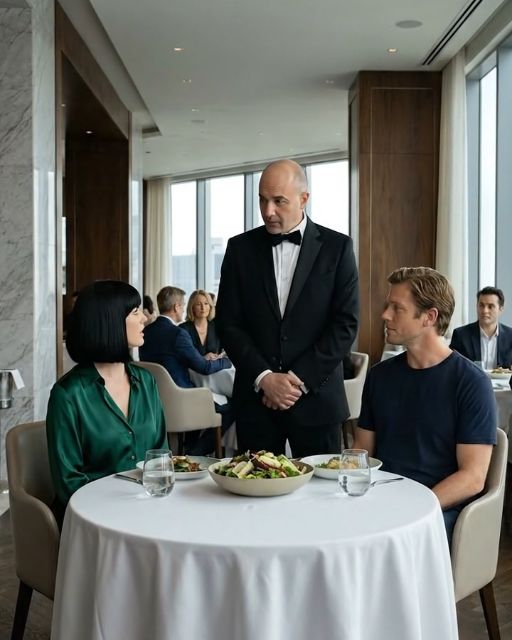
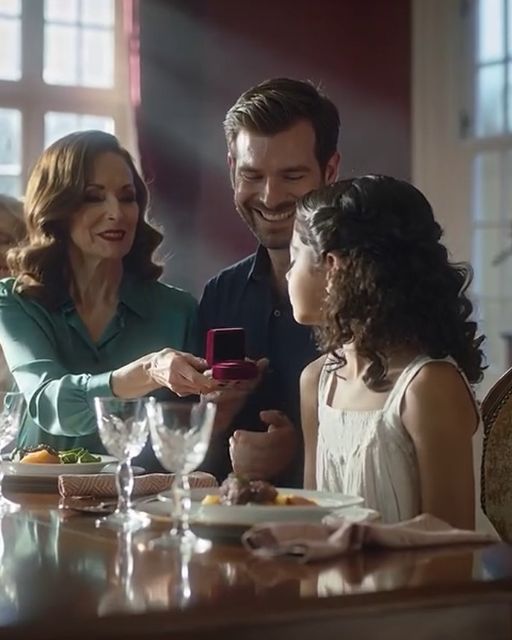
The velvet box slid across the dinner table.
My mother smiled, but it didn’t reach her eyes. She handed it to my brother, Mark.
Inside were keys.
“For the new house,” she announced. “We bought it for you.”
The room erupted. Champagne was poured. My brother was beaming, a man who just hit the jackpot.
I felt the air leave my lungs.
It wasn’t jealousy. Not at first. Then my mother turned to me, her voice softening into a weapon.
“We’d love to help you too, Sarah, but your situation is different.”
My situation?
Her eyes flickered to my daughter, Lily, sitting beside me. My eight-year-old girl, who we adopted two years ago. The one who still jumped at loud noises.
My mother leaned in, a conspiratorial whisper that everyone could hear.
“You have to understand,” she said. “She’s not really… bloodline. We have to think of legacy.”
Legacy.
The word sucked the warmth out of the room. I looked at my mother, then my father, who was suddenly fascinated by his wine glass. Mark wouldn’t meet my gaze.
Lily didn’t move. She just stared at her empty plate, her small shoulders pulled tight.
She heard it. Of course she heard it.
Later that night, tucked in her bed, she whispered the question I was dreading.
“Grandma doesn’t like me, does she?”
My throat felt like it was full of sand. “She just doesn’t understand yet,” I lied. The words tasted like ash.
The next morning, I called them. I told them family wasn’t about blood, it was about love. It was about showing up.
My mother hung up on me.
Two weeks later, the envelope arrived. Thick, official paper.
They were restructuring the family trust. I was written out. My name, just gone.
But they were sloppy. So proud of their clean cut, they never looked back at the roots.
My grandfather’s original trust. The one nobody had read in thirty years.
I found it in a dusty box in my closet, a single line buried in legal jargon.
“In absence of natural heirs, guardianship beneficiaries shall inherit equally.”
Guardianship beneficiaries.
My adoption papers for Lily. Signed, sealed, and filed with the state. A legal fact.
They had erased me.
But in doing so, they made my daughter my father’s only legal heir.
When the lawyer called to confirm it, my hands didn’t even shake.
They tried to cut a branch off the family tree.
They didn’t realize they had just handed the entire forest to my daughter.
The lawyer on the phone, a kind man named Mr. Henderson, cleared his throat. He sounded almost as surprised as I was.
“It’s ironclad, Sarah,” he said, his voice a calm anchor in my swirling thoughts. “Your grandfather was very specific.”
I thanked him, my voice a whisper, and hung up the phone. I stood in the quiet of my kitchen, the afternoon sun slanting through the window, and I didn’t feel triumphant.
I just felt tired. I felt a deep, aching sadness for the family I thought I had.
My husband, Tom, came in then. He took one look at my face and wrapped his arms around me.
I told him everything. The trust, the clause, the lawyer’s confirmation.
He held me tighter. “They did this, Sarah. Not you.”
He was right. This wasn’t a game I had started. It was a war they had declared on my daughter.
We sat down that night after Lily was asleep. We talked for hours, the weight of it all settling between us.
This wasn’t about money. It was about a little girl who deserved to be loved unconditionally.
“They’ll fight it,” Tom said, stating the obvious. “It’s going to get ugly.”
“I know,” I replied. “But we have to see this through. For her.”
We made a promise then. We would protect Lily from the fallout, no matter what.
The phone call from my mother came three days later. I knew it would.
“What have you done?” she shrieked, her voice stripped of all its usual polite varnish.
I waited a beat. “I haven’t done anything. You’re the one who removed me from the trust.”
“You schemed this! You dug up that ancient document to steal from your own family!”
The hypocrisy was breathtaking. “You mean the same way you tried to steal my daughter’s place in this family?”
There was a choked sound on the other end. “She is not your father’s heir!”
“Legally,” I said, my voice steady despite the hammering in my chest, “she is his only one. You made sure of that.”
The line went dead. I sank into a chair, the conversation leaving a bitter taste in my mouth.
Next, it was Mark. His call was softer, laced with a pleading tone I’d known my whole life.
“Sarah, you’re tearing this family apart,” he began.
“Mark, they bought you a house and told my daughter she wasn’t good enough in the same breath. I think the family was already torn.”
He sighed. “Mum and Dad are devastated. They’re talking to lawyers. Can’t you just… fix this? Tell them you’ll share it?”
The unfairness of his request stung. “They didn’t want to share with me, Mark. They wanted me out. They wanted Lily out.”
“It’s just… she’s not…” he trailed off, unable to say the word.
“She’s not blood?” I finished for him, my voice cold. “She’s my daughter. That’s the only sentence that matters.”
He had nothing to say to that. The chasm between us had grown into a canyon.
The letters started arriving soon after. Stamped with the letterhead of a slick, expensive law firm.
They were contesting the trust. They claimed my grandfather, William, could never have intended for an “outside party” to inherit.
They were trying to paint me as an opportunist. A manipulator.
Each document felt like a personal attack. Tom would read them and his face would darken with anger.
“They’re trying to slander you,” he’d say. “To make you look like the villain.”
We had to hire Mr. Henderson to represent us. The costs started mounting, a constant, nagging worry in the back of my mind.
But every time I felt like giving up, I would look at Lily.
I’d watch her drawing at the kitchen table, her brow furrowed in concentration. Or I’d see her running in the garden, her laughter the purest sound in the world.
She was the reason. She was worth fighting for.
One afternoon, she came home from school with a drawing. It was of our little family: me, Tom, and her, all holding hands under a giant, smiling sun.
“This is us,” she said, her eyes shining. “The best family.”
My heart swelled and broke all at once. How could anyone look at this beautiful, loving child and see anything other than family?
The legal process dragged on. It was a slow, grinding machine designed to wear you down.
My parents’ lawyers requested depositions. They wanted to put me on a stand and twist my words.
The stress was immense. I had trouble sleeping. I lost weight.
Tom was my rock. He took on extra work to help with the legal bills and made sure our home remained a happy, safe place for Lily.
But the fight was taking its toll on all of us in small ways.
I started thinking more about my grandfather, William. I barely remembered him; he passed away when I was very young.
He was just a face in a faded photograph on the mantelpiece. A quiet man, according to family lore.
Why had he put that clause in his trust? Was it just a standard legal phrase, or was there more to it?
One rainy Saturday, I found myself in the attic, searching for answers. I pulled out a heavy trunk that had belonged to him.
It was filled with old books and papers, smelling of dust and time. At the very bottom, beneath a stack of yellowed newspapers, I found a small leather-bound journal.
His journal.
I sat on the dusty floorboards and opened it. His handwriting was elegant, a looping cursive from a bygone era.
I read for hours, completely captivated. He wrote about his life, his work, his love for my grandmother.
And then I found it. An entry dated from long before I was born.
He wrote about his younger sister, Eleanor.
I never knew I had a great-aunt Eleanor. No one had ever mentioned her name.
According to the journal, Eleanor had fallen in love with a man my great-grandparents disapproved of. She ran away with him, and for that, she was disowned. Utterly cut off.
Years later, my grandfather found her. Her husband had passed away, and she was living in poverty with her son.
William wanted to help. He begged his parents to forgive her, to welcome her and her child back into the family.
They refused. They said her son was not a “true” member of the family. He wasn’t of their precious bloodline.
The entry was filled with my grandfather’s pain and anger.
“They speak of legacy,” he wrote. “But what is a legacy of exclusion? Of hardness? I will not let their coldness define my branch of this family. Love must be what matters. Love is the only true bloodline.”
I kept reading, my heart pounding.
He wrote about how he secretly supported Eleanor and her son for the rest of their lives. He never told his parents.
And when he drew up his own trust, he remembered the pain of that rejection. He remembered his nephew, who was cast aside for not being “blood.”
That’s when he added the clause. “In absence of natural heirs, guardianship beneficiaries shall inherit equally.”
It wasn’t an accident. It wasn’t a loophole.
It was a promise. It was a quiet rebellion against the prejudice that had broken his heart.
He was reaching through time, protecting another child from the same cruelty his sister’s son had faced.
He was protecting Lily.
Tears streamed down my face. I wasn’t just fighting a legal battle anymore. I was carrying my grandfather’s torch.
Our day in court arrived. It wasn’t a dramatic trial with a jury, but a hearing in a judge’s chambers.
It was sterile and intimidating. My parents sat across the room with their lawyer, their faces set like stone. Mark was there too, looking miserable.
Their lawyer argued first. He spoke of tradition, of intent. He painted my grandfather as a traditionalist who would be appalled by the current situation.
He painted me as a greedy daughter exploiting a technicality.
Then it was Mr. Henderson’s turn. He calmly presented the legal facts, the signed adoption papers, the clear wording of the trust.
And then he said, “Your Honor, we believe we have new evidence regarding the testator’s original intent.”
He submitted my grandfather’s journal.
He read the entries about Eleanor aloud. He read William’s words about love being the only true bloodline.
A profound silence filled the room. The air crackled with the weight of a long-buried secret.
I watched my father’s face. The mask of angry pride began to crumble. He looked smaller, older.
My mother just stared straight ahead, but a single tear traced a path down her cheek. They were hearing their own cruel words echoed back at them from the past.
The judge read the passages himself, his expression unreadable.
He looked up, first at my parents, then at me.
“The language of the trust is clear,” he said, his voice firm. “And this journal entry doesn’t just support it. It illuminates it.”
He ruled in our favor. The trust belonged to Lily.
We walked out of the courthouse into the bright sunlight. I felt a lightness I hadn’t felt in months.
Tom hugged me, lifting me off my feet. “You did it,” he whispered. “You honored your grandfather.”
A few days later, Mark came to our house. He stood on the doorstep, looking lost.
“I’m so sorry, Sarah,” he said, his voice thick with emotion. “I was a coward. I listened to them instead of listening to my heart.”
He told me he had a long talk with our parents. He told them they had lost their way, and that he wouldn’t be a part of their bitterness anymore.
“I sold the house,” he said, shocking me. “I can’t live in something that was built on so much pain.”
He explained he was putting a large portion of the money into a college fund for Lily. It was his way of making things right.
It was a start. A bridge being built over the canyon.
I never heard from my mother again. My father sent a single, short letter six months later.
“Your grandfather was a better man than I am,” it read. “I hope, one day, Lily can forgive me.”
It wasn’t everything, but it was something. An acknowledgment of the wound they had caused.
We didn’t change our lives with the money. It was Lily’s, kept safe for her future, for her dreams, whatever they might be.
But we did use a small part of it to start a foundation in my grandfather’s name.
The William and Eleanor Foundation for Adoptive Families. It provides grants to help families with the costs of adoption.
Sometimes, when I’m watching Lily play, happy and secure in the home we’ve built, I think about legacy.
My parents were so obsessed with a legacy of blood, of names on a family tree. They thought it was something to be protected, to be hoarded.
They were wrong.
True legacy isn’t something you inherit. It’s something you build.
You build it with every act of kindness, every moment of acceptance, every time you choose love over prejudice.
My grandfather knew that. He planted a seed of love and acceptance in a legal document, hoping that one day it would grow.
It took a generation, but it finally blossomed. And its name is Lily.