My dad thought he hung up the phone. He didn’t. And in that one small mistake, my whole world fell apart. I stood there in my kitchen, phone pressed to my ear, listening to my own parents talk about me. I should have ended the call. I wish I had.
“She’s such a burden,” I heard my dad say. His voice was cold. It wasn’t the voice he used when he talked to me. This was different. This was real. My mom laughed a little. It was a sharp, ugly sound. “Don’t worry,” she said. “Once we get back from the trip, we’ll convince her to sign the house over. She’s soft. She’ll do it to keep us happy.”
The house was from my grandma. She gave it to me. Not them. Me. I felt the blood drain from my face. They weren’t talking about their daughter. They were talking about a problem they needed to solve. A wallet they needed to empty.
That’s when I stopped being sad. Something else took over. It was cold and quiet and strong. They wanted me to be a burden? Fine. I would be the heaviest thing they ever had to carry. While they were sending me pictures from Italy, I was busy. I called a realtor. I called the bank. I packed one single suitcase.
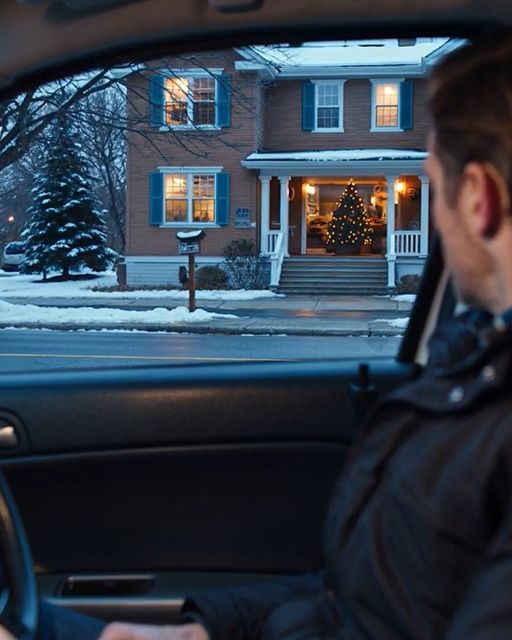
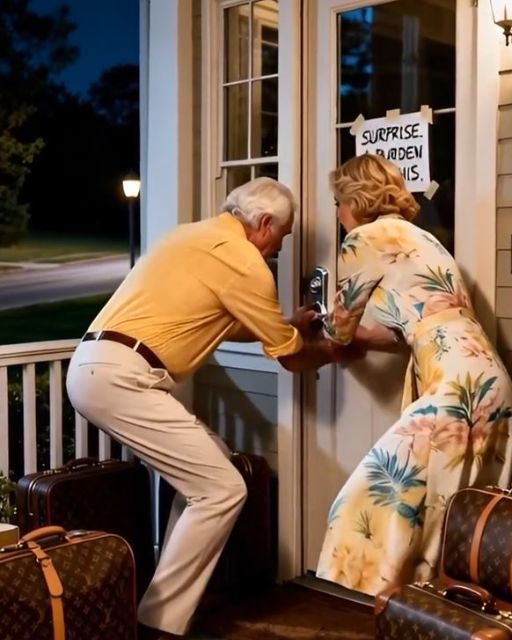
A month later, I watched from my car parked down the street. Their taxi pulled into the driveway. They looked so happy, so tanned and relaxed. My dad walked up to the front door, whistling, and slid his key into the lock. He turned it. Nothing happened. He frowned and tried again. The key wouldn’t turn.
My mom walked up behind him, looking annoyed. “What’s wrong, Harold?” she snapped. He rattled the doorknob, but the door was solid. It was a new door. That’s when my mom saw it. Taped right at her eye level was a small white envelope. My dad snatched it down, ripped it open, and his smile just melted away as his eyes flew across the first sentence.
Inside the envelope was a single sheet of paper, folded neatly. On it, I had written only a few words.
“Dear Mom and Dad, I heard your phone call. The house is no longer your burden to worry about. I sold it. -Clara.”
My dad’s face went from disbelief to a deep, blotchy red. My mom grabbed the note from his hand. Her jaw dropped. She looked at the house, then back at the note, as if she couldn’t connect the two realities.
Then she looked around, her eyes scanning the street wildly. They landed on my car. For a second, our eyes met through the windshield. Her expression was pure fury. I put the car in drive and pulled away from the curb, not looking back. My phone started buzzing almost immediately. I didn’t answer. It buzzed again. And again. The calls turned into a flood of texts.
“Clara, you answer this phone RIGHT NOW.”
“This is a joke, right? This isn’t funny.”
“You can’t do this to us! We’re your parents!”
“Where are you going to live? You have nothing without us!”
That last one almost made me laugh. I had been living on my own for years, paying my own bills. The house was the only thing connecting us, and now I saw that they viewed it as their property, with me just a temporary tenant.
I turned the phone off. The silence in the car was beautiful. I drove for two hours, heading to a small town where a friend of mine, Samuel, lived. I had already arranged to rent a room from him for a few months while I figured things out. The money from the house sale was sitting safely in a new bank account at a bank my parents had never heard of. It felt like a lifetime’s supply of breathing room.
The new owners of my grandma’s house were a young family, the Hendersons. They had two little kids. When they saw the garden my grandma had so lovingly tended, their faces lit up. They promised to take care of her rose bushes. That’s how I knew I’d made the right choice. The house deserved a family that would love it, not one that saw it as a financial asset to be liquidated.
The first few weeks were strange. I felt a phantom guilt, a lifetime of conditioning telling me I had done something terrible. I kept waiting for the other shoe to drop. Samuel was a rock. He just let me be quiet when I needed to be quiet and made me tea when I looked like I was about to cry.
My parents didn’t give up. They left voicemails. My dad’s were full of rage, threatening to take me to court, to declare me mentally incompetent. He said I had stolen their retirement. My mom’s were different. She would cry, telling me how much she missed me, how worried she was. She’d remind me of all the sacrifices she made for me. It was a performance I had seen many times before, a weapon she used to get her way.
But this time, it didn’t work. The memory of her sharp, ugly laugh on that phone call was like a shield.
One afternoon, about a month after I’d left, I got a call from an unknown number. I almost ignored it, but something made me answer. It wasn’t my parents. It was a man with a calm, professional voice.
“Is this Ms. Clara Vance?” he asked.
“Yes, who is this?”
“My name is Arthur Covington. I was your grandmother Evelyn’s attorney. I’m calling because an item in her estate has just been triggered for release. I need to schedule a meeting with you.”
I was confused. My grandma had passed away two years ago. Everything had been settled. The house was her main asset, and she had given it to me directly. “I think you have the wrong person,” I said. “Her estate was finalized.”
“Not entirely,” Mr. Covington replied patiently. “She left one final provision. It was conditional. The condition was the sale or transfer of title of the house at 124 Willow Lane. My system just received the alert. Can you come to my office next week?”
A cold dread mixed with curiosity washed over me. What had my grandma done? I agreed to the meeting. The lawyer’s office was old and quiet, filled with the smell of books and wood polish. Mr. Covington was an older man with kind eyes. He didn’t ask me any questions about why I’d sold the house. He just slid a thick, sealed manila envelope across his desk.
“Your grandmother left this for you,” he said. “Along with the contents of a safe deposit box. This envelope contains the key and the access information.”
My hands trembled as I took it. Inside was a key and a letter in my grandma’s familiar, elegant handwriting. I started reading it right there in the lawyer’s office.
“My dearest Clara,” it began. “If you are reading this, it means you no longer own the house on Willow Lane. I hope with all my heart that you sold it to start a wonderful new life. But I fear you may have sold it because you had to. I fear you may have finally seen your parents for who they are.”
Tears welled in my eyes.
“I love my son, your father, but I was never blind to his weaknesses. He and your mother have always seen the world in terms of what it can give them. They are not bad people, but they are deeply selfish. I saw how they treated you, always making you feel responsible for their happiness, always with a hand out, subtly or not so subtly. Giving you the house was my way of giving you a choice. It was a test, but not for you, my dear. It was for them. I suspected that once I was gone, they would see the house not as your home, but as their prize.”
She knew. She had known all along.
“I am so sorry, Clara. I’m sorry for any pain they have caused you. I hope you found your strength. The key in this envelope is for a safe deposit box. Inside, you will find what I was saving for you all along. Not just for your future, but for your peace of mind. Live a life that is truly your own. Don’t let their shadows darken your sun. All my love, Grandma Evelyn.”
I was openly crying now. Mr. Covington discreetly pushed a box of tissues toward me. That letter was the validation I never knew I needed. It wasn’t just me. I wasn’t crazy or ungrateful. My grandma had seen it all.
The next day, I went to the bank. The safe deposit box was heavy. Inside, it wasn’t just stacks of cash or bonds, though there was a significant amount there, enough to truly start over without any fear. The real treasure was underneath. There were old family photo albums, filled with pictures of my grandma as a young woman. There were her handwritten recipe cards for all the cakes and pies I loved as a child.
And then there was another folder. This one contained financial documents. It was a paper trail going back twenty years. It detailed loans my grandma had given my father that were never repaid. It included copies of letters from his failed business partners. It showed a pattern of poor decisions and a desperate reliance on his mother’s wealth. He had squandered every opportunity he was ever given. The European trip, I realized with a jolt, was likely paid for with the last of their credit, a final extravagant act before they came home to cash in their biggest asset: me.
This was the final piece of the puzzle. They weren’t just greedy; they were desperate and inept. And they had been planning to use me to fix their self-inflicted problems, just as my dad had always used my grandma.
Armed with this new knowledge, I felt a profound sense of peace. The guilt was gone, replaced by a quiet certainty. I found a small apartment in a lovely town by the coast. I used some of the money to put a down payment on a little storefront. Using my grandma’s recipe cards, I started planning to open a small bakery. I was going to call it “Evelyn’s.”
About six months later, they found me.
I was sweeping the front step of my yet-to-open shop when a familiar car pulled up. They both got out. They looked different. Thinner. Worn out. The expensive clothes and confident smiles were gone. My dad’s face was pale, and my mom’s eyes were puffy and red.
“Clara,” my mom said, her voice cracking. It wasn’t the fake, manipulative cry from the voicemails. This sounded real.
My dad just stood there, looking at his shoes. He couldn’t even meet my gaze.
“We lost everything,” my mom whispered. “The house we were renting… they’re evicting us. Harold lost his job. We have nowhere to go.”
The old me would have crumbled. The old me would have opened my wallet and my home and let them right back in, ready to be consumed all over again.
But I wasn’t the old me.
“Why are you here?” I asked, my voice calm and even.
“You’re our daughter,” she sobbed. “We’re your family. You can’t just throw us away.”
I took a deep breath. “I didn’t throw you away. You tried to throw me away. You saw me as a solution to your money problems. A ‘burden’ you could manipulate into signing over a house.”
My dad finally looked up, his eyes filled with shame. “We were desperate,” he mumbled.
“I know,” I said softly. And then I did something I hadn’t planned. I walked back into my shop and came back out with the folder of financial papers from the safe deposit box. I handed it to my father.
He opened it and his face went ashen as he saw the letters, the loan agreements, the proof of his entire life of failures held together by his mother’s generosity.
“Grandma knew,” I said. “She knew you’d do this. She left this for me so I wouldn’t doubt myself. So I would understand that this wasn’t my fault.”
My mom looked at the papers, then at me, and for the first time, she looked truly defeated. The game was over. All the cards were on the table.
They stood there in silence for a long time. The anger was gone, the manipulation was gone. All that was left were two broken people who had burned their last bridge.
I couldn’t let them back into my life. I knew that would destroy me. But I also couldn’t leave them on the street. That wasn’t who my grandma raised me to be.
“I will help you one time,” I said, my voice firm. “I will pay the deposit and first month’s rent on a small apartment. And I will give you the number for a financial advisor. After that, you are on your own. We are not family anymore in the way we were. We can’t be. But I won’t see you homeless.”
My dad just nodded, unable to speak. My mom cried, but this time, they were tears of what looked like genuine, heartbreaking regret.
I did what I promised. I never saw them in person again. I heard through a distant cousin that they were living in a small apartment across the state. My dad found a modest job, and my mom was working part-time at a department store. They were surviving. They were finally carrying their own weight.
Five years have passed since that day. My bakery, Evelyn’s, is the most popular spot in town. I know my customers by name. The smell of baking bread and fresh coffee fills my days. I am married to a wonderful man who respects me, a man who loves the story of my strong-willed grandmother. We are expecting our first child. My house is filled with laughter and the warmth of real, unconditional love.
Sometimes I think about my parents. I don’t feel anger anymore, just a sad sort of pity. They taught me the most painful, but most important, lesson of my life.
Family is not just about blood. It’s about respect, trust, and the people who lift you up instead of seeing you as something to be used. Sometimes, the bravest thing you can do is walk away from the people who are supposed to love you the most, in order to find the love you truly deserve and to finally, truly, come home to yourself.