My mother helped set a wedding I didn’t choose, so I escaped before dawn and carried my secret into a U.S. courthouse—then, years later, she called me “family” and begged me to come home.
Her name on my screen was a ghost.
Years of silence, then her voice, thin and cracked over the line. She said I needed to come home. She kept repeating one word.
Family.
Like it was a magic spell that could erase everything.
In the world I grew up in, a girl stopped being a child the moment her body changed. Ready never meant grown. It meant claimed.
We lived in America, but inside our house, the rules were ancient. Cousins disappeared into marriages with men their fathers’ age. The adults called it normal.
The first crack in that world appeared at school. A teacher asked me to stay behind, then left her desk drawer slightly open.
Inside was a thin pamphlet on teen rights. That night, under my blanket, the words burned into my brain.
This wasn’t destiny. It was a cage.
And the outside world had a key.
The day they chose for me arrived like a sickness. Women pinned fabric to my skin and praised my luck. My father said the chosen man’s name as casually as he’d order a coffee.
I smiled and waited for an opening.
Before sunrise, I locked myself in the bathroom. The small window above the toilet had been painted shut for years.
When the pounding started on the door, the frame finally splintered.
I squeezed through, dropped into the wet grass, and just ran.
I cut through backyards because I knew half the neighborhood would hand me back without a second thought. A city bus hissed to a stop.
The driver took one look at my torn nightgown and scraped feet. He held the door open and didn’t say a word.
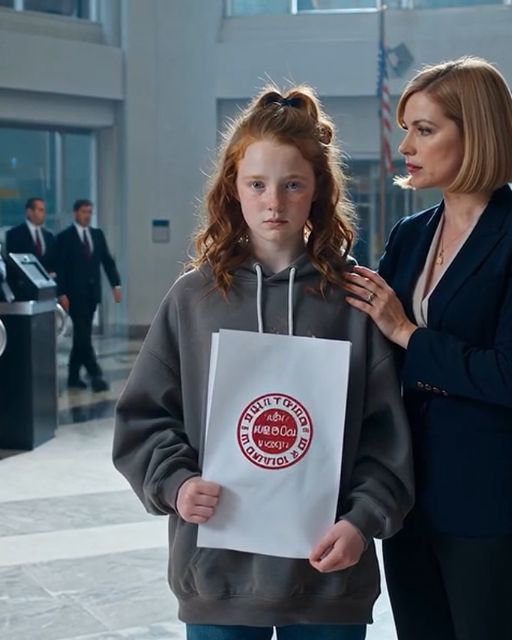
The courthouse smelled of floor polish and fear. My voice was a whisper, but I asked for protection. A clerk with kind eyes moved fast.
A county seal on a single sheet of paper said I didn’t have to go back.
But paper doesn’t stop a family that believes you belong to them.
The shelter was full. My phone kept lighting up with their calls. They found me at the school.
At first, they knocked politely. They told everyone I was sick. I needed my medicine. Their faces were masks of calm concern.
When the act failed, the knocking turned to pounding. The hallway filled with their voices, each one pitched to sound perfectly reasonable.
What broke their story wasn’t an argument.
It was a video on a security guard’s phone. Grainy footage of my father arriving with the bottles of “medicine” already in his hand.
He had them before he could claim he was just a worried parent looking for his daughter.
The truth, looping on a cracked screen.
Weeks later, the hearing. My entire extended family packed the courtroom in their best clothes, staring holes into me like I was the traitor.
My mother dabbed her eyes, mourning a daughter who had simply gotten lost.
My father’s lawyer spoke in smooth sentences about love and misunderstanding. He was so convincing.
Right up until the courtroom doors swung open.
If you want to know who walked in—and why my mother’s call years later still makes the air leave my lungs—what happened next is the part I finally put into words.
The woman who entered wasn’t a social worker or a police officer. It wasn’t the kind teacher or the silent bus driver.
It was the mother of the man I was supposed to marry.
A collective gasp sucked the air out of the room. My own family turned, their faces a mixture of confusion and horror.
Her name was Mrs. Al-Jamil. She was a woman of stature in our community, known for her quiet dignity and her husband’s immense wealth. She was supposed to be my mother-in-law.
She walked past my family’s pew without a glance. She approached the bench, her movements deliberate and calm.
The judge looked down at her, his expression unreadable. “Ma’am, do you have something to add to this proceeding?”
She nodded once, her eyes finding mine for a brief, startling moment. There was no pity in them. There was something harder. Resolve.
“I do, your honor,” she said, her voice clear and steady, cutting through the thick silence. “This was not a marriage. It was a transaction.”
My father shot to his feet. “Objection! She is distraught!”
The judge silenced him with a raised hand. “Let her speak.”
Mrs. Al-Jamil turned slightly, so the entire courtroom could see her. “My husband’s business was facing difficulty. Her father’s business needed a stronger partner. This girl was the price.”
She looked directly at my father then. “You sold her. And we were buying.”
My mother let out a small, wounded sound, like a stepped-on animal.
The lawyer tried to interrupt, but Mrs. Al-Jamil continued, her voice gaining strength. “I met her once, at a dinner. She never looked up from her plate. She was a ghost. I have seen that look before. I wore it for twenty years.”
The room was utterly still. Even the clock on the wall seemed to hold its breath.
“My son,” she said, and a flicker of pain crossed her face. “He is not a kind man. He is his father’s son. This girl would not have been a wife. She would have been a possession. Another asset to be managed.”
She finally looked at me, and her expression softened into something I couldn’t name. “She was brave enough to run. I was not.”
With that, she turned back to the judge. “Grant this child her freedom. It is the only justice that can be found in this room today.”
She walked out the same way she came in, a pillar of silent rebellion. The doors swung shut behind her, and the spell was broken.
The judge looked at my father, then at my mother, then at the sea of stony faces behind them. The lawyer’s smooth words were useless now. The truth had been laid bare by one of their own.
He granted the emancipation. He signed the permanent restraining order.
He told me I was free.
I walked out of that courthouse into a world that was suddenly vast and terrifying. I was sixteen, with nothing but a piece of paper and the clothes on my back.
Freedom didn’t feel like a victory. It felt like standing on the edge of a cliff in the dark.
The kind clerk from the courthouse, a woman named Sarah, saw the look on my face. She took me for a coffee.
She told me about the foster system, about resources, about how to get a GED. She gave me her personal number.
“You’re not alone,” she said, and for the first time, I believed it might be true.
The first few years were a blur of survival. I lived in a group home, aged out at eighteen, and moved into a tiny apartment that always smelled like burnt toast.
I worked two jobs. I mopped floors at a diner and stocked shelves at a grocery store. My hands were always raw, and my body was always tired.
But my mind was my own.
I saved every dollar I could. I enrolled in a community college, taking one class at a time. I studied social work.
I wanted to be the person I had needed all those years ago.
The loneliness was the hardest part. Holidays were just another Tuesday. Birthdays passed without a single call. I saw families in the park and felt a pang of something so deep it was almost physical.
I was an island.
Then I met Daniel. He was a history professor, quiet and gentle, with eyes that saw more than just the surface.
He didn’t push when I was vague about my past. He just listened.
One evening, I finally told him everything. The window, the bus, the courthouse, Mrs. Al-Jamil.
He didn’t look at me with pity. He looked at me with awe. “You saved yourself,” he said, taking my hand.
With him, I learned what a partnership was. It wasn’t about ownership or duty. It was about choosing to walk next to someone, every single day.
We got married in a small park with Sarah and a few friends from school as our witnesses. I wore a simple white dress I bought on sale.
It was a wedding I chose.
A few years later, our daughter, Maya, was born. The first time I held her, my entire universe rearranged itself.
This tiny, perfect being was my family. She was a new beginning. She was proof that the cycle could be broken.
The past became a distant echo. I built a life so full of light that the old shadows couldn’t find a place to hide.
I became a social worker, helping kids navigate the same terrifying system I had. I saw my story in their eyes, and I could tell them, with absolute certainty, that it gets better.
And then, after a decade of silence, my mother called.
“Family,” she’d said. “You need to come home.”
The word hit me like a stone. Family was Daniel reading a story to Maya. It was Sarah bringing over soup when I was sick. It was not the cold house of my childhood.
Daniel saw the conflict in my eyes. “Whatever you decide, I’m with you,” he told me, his hand a warm weight on my back.
I had to go. Not for her, not for them, but for the sixteen-year-old girl who ran in the dark. I needed to see that house as the woman I had become.
I drove alone. The trip took six hours, each mile stripping away a layer of my new life, leaving the old fears exposed.
When I pulled up to the house, I was shocked. It wasn’t the imposing fortress of my memory. It was just a small, tired-looking house with peeling paint and an overgrown lawn.
My mother opened the door before I could knock. She was smaller, too. The years had carved deep lines into her face, and her shoulders were stooped under a weight I was only just beginning to understand.
She just stared at me, her eyes filling with tears. “You came.”
The inside of the house was dark and smelled of stale air and sickness. The furniture was the same, but it was worn, frayed at the edges.
My father was in a bed set up in the living room. The powerful, terrifying man who had dictated my entire existence was now a withered figure, lost in a sea of blankets.
He turned his head slowly. His eyes, once burning with authority, were dull and clouded. He didn’t speak. He just watched me.
There was no victory in seeing him like this. There was just a profound, aching sadness.
My mother started talking, her voice a rushed, desperate whisper. She told me about his illness, about the medical bills, about how no one from the community visited anymore.
Then came the real story. The second twist.
“After the court case,” she began, twisting her hands in her apron, “everything changed.”
Mrs. Al-Jamil’s husband, furious at the public humiliation, had not only cancelled the “transaction,” but had used his influence to systematically destroy my father’s business.
He told everyone my father was a man who couldn’t control his own house, a man who had brought shame upon them all.
Contracts were cancelled. Friends stopped calling. The community that had been my cage became their prison.
They lost everything. The money, the status, the respect.
The word “family” she had used on the phone wasn’t a magic spell to bring me back into the fold.
It was a last, desperate plea for a lifeboat. She thought I, the daughter who had escaped, was now her only hope.
“He is your father,” she whispered, gesturing toward the silent man in the bed. “We have nothing.”
I looked at her, at the desperation etched into her face, and I saw the truth. She hadn’t called me because she missed me. She hadn’t called out of love.
She had called because she was out of options.
I thought I would feel anger. A righteous, burning fury. But I didn’t. All I felt was a vast, empty space where that anger should have been.
I took a deep breath, the stale air filling my lungs.
“I have a daughter now,” I said, my voice steady. “Her name is Maya.”
My mother flinched, as if the name was a physical blow.
“I am teaching her that she is strong,” I continued. “That her voice matters. That she belongs to no one but herself. I am giving her the childhood you and he took from me.”
My father closed his eyes. I don’t know if it was in shame or exhaustion.
“I will not give you money to rebuild this life,” I said, looking around the dim room. “This life was a cage. For me, and for you, too.”
My mother started to sob, a raw, painful sound.
But I wasn’t finished. I knelt in front of her, taking her worn, trembling hands in mine.
“But I will help you,” I said softly. “Not him. Not the idea of ‘family’ that broke us. Just you.”
I offered her a way out. A small apartment near me. A chance to be a grandmother to Maya, if she was willing to learn what family really meant. A new start, with no strings attached.
It was a choice. The one thing she had never been given.
She looked from me to the man in the bed, her face a war of duty and a flicker of a long-extinguished hope.
I didn’t wait for her answer. I gave her my number, the same one I’d had for years.
“The choice is yours,” I said.
I stood up and walked to the door. I didn’t look back.
As I stepped out into the bright afternoon sun, the air felt clean and new. I wasn’t running this time. I was walking away, whole and free.
My past was not a ghost that haunted me. It was the bedrock on which I had built my own world, a world where love is a choice, not a chain.
Family isn’t something you are born into by default. It’s something you build. It’s the people who hold the door for you when you’re running, who listen when you’re ready to talk, and who celebrate the person you chose to become. You don’t have to set yourself on fire to keep others warm. You can walk away from the ashes and plant a garden of your own.