“Hand over the money, Leah.”
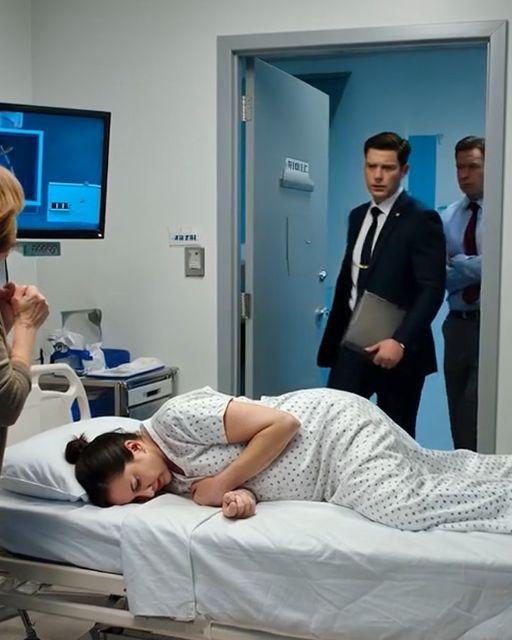
My mother’s voice cut through the sterile quiet of the hospital room. She wasn’t asking.
My father stood behind her, his body blocking the only exit. His face was a mask of grim approval.
“It’s for the baby,” I said. My hands instinctively shielded my stomach. The monitors beside me beeped a steady rhythm. My daughter’s heart.
“Your sister needs it more,” she snapped.
This wasn’t a new conversation. It was just the end of one. A war that had been raging for weeks, ever since that Sunday dinner.
My sister, Chloe, had been sobbing about her dream wedding venue. A deposit was due. Thousands of dollars they didn’t have.
And then all eyes had turned to me.
I made the mistake of being honest. I told them about the fund. The money I had scraped together after Mark died.
His settlement from the construction site barely covered the funeral. After that, I sold everything. His watch. My own jewelry. I worked until my back screamed.
Every single dollar went into a separate account. An account I watched crawl to just over twenty-five thousand dollars.
It wasn’t a savings account. It was a lifeline.
My daughter was coming into this world with a hole in her heart that would need to be fixed. This money was her one and only chance.
When I said the number out loud at that dinner table, the air in the room changed. You could feel the greed suck the oxygen out of the air.
“That’s almost exactly what we need,” Chloe had whispered.
From that night on, my phone became a weapon used against me. Texts from my brother, Ryan, telling me Mark would be ashamed. Voicemails from my mother about family obligation.
Then she came to my apartment.
“I’ll call Child Protective Services,” she said, her voice calm and cold. “I’ll tell them about your depression. They’ll take the baby from an unstable mother like you.”
That was the moment I stopped hoping.
That was the moment I called a lawyer.
Mr. Davis told me one simple thing. Our state was a one-party consent state.
So I started recording.
Every call. Every threat. Every single word went into a digital folder named after my daughter.
Now, in this hospital room, the final act was playing out. I’d been admitted for monitoring. High-risk. They knew my room number.
I had texted Mr. Davis. He told me not to worry. He had a plan.
The “maintenance man” who came to fix a ceiling tile was his guy. The nurse, Ms. Ellis, had squeezed my hand and pointed to the call button. “We’re watching,” she promised.
And now they were here.
Demanding the money that was supposed to save my child’s life.
“No,” I said, my voice shaking. “I’m not giving you a cent.”
My mother’s face twisted into something I didn’t recognize.
“You selfish girl,” she spit.
She moved faster than I thought possible.
One step.
Two fists, clenched together.
She swung.
The impact was a dull, sickening thud against the tight drum of my belly.
A universe of white-hot pain exploded behind my eyes. Then a tearing sensation, deep inside.
A warm gush of fluid soaked the sheets beneath me.
My water broke.
I screamed, a sound ripped from my lungs as I folded in on myself. The baby’s heart monitor shrieked in alarm.
My father watched, his expression unchanged. “That’s what you get.”
My phone buzzed on the bedside table. A text from Chloe.
Tell her to transfer the money so we can go.
My mother leaned over me, her face inches from mine as I gasped for air.
“Now will you pay?” she hissed.
I opened my mouth, but no sound came out.
And then the door to Room 212 slammed open.
It hit the wall with a crack that made the room shudder.
My mother froze.
Her eyes went wide with a kind of primal fear.
Because the person standing in the doorway wasn’t a doctor. It wasn’t a nurse.
It was the consequence I had arranged.
And the tiny red light on the camera in the corner of the ceiling was still on.
Still recording.
Every word.
Every sound.
Everything.
Two uniformed police officers filled the doorway, their expressions unreadable but firm.
Behind them stood Ms. Ellis, her kind face now a storm of controlled fury.
“Ma’am,” the taller officer said, his voice calm but carrying an undeniable weight of authority. He was looking directly at my mother. “Step away from the patient. Now.”
My mother blinked, the rage on her face melting into confusion.
“This is a private family matter,” she stammered, straightening up.
“It stopped being a family matter when you assaulted her,” the second officer said, his gaze flicking to my belly, the soaked sheets, and the screaming monitor.
My father, who had been a statue of silent support, finally moved. He took a half-step forward. “There’s been a misunderstanding.”
“No misunderstanding,” the first officer replied, his eyes never leaving my mother. “We have a recording of the entire encounter, including the threats and the assault.”
The color drained from my mother’s face. She looked from the officers to the corner of the ceiling, where the tiny camera was nestled.
Her mouth opened and closed, like a fish gasping for air.
Just then, a swarm of medical staff burst into the room. A doctor I’d never seen before was at my side in an instant, his hands assessing the situation.
“We’ve got fetal distress. Let’s move. Emergency C-section, now!”
The room became a blur of blue scrubs and urgent voices.
They were unhooking my monitors, prepping me for transport. The pain was a constant, crushing wave, but my entire world had narrowed to the sound of that frantic beeping.
My daughter’s heart.
Through the chaos, I saw the officers move.
I saw the glint of metal as they placed handcuffs on my mother’s wrists.
She finally found her voice again, but it was a shriek of pure venom.
“Leah! You did this! You are ruining this family!”
My father stood silently as they cuffed him too. He didn’t protest. He just looked down at the linoleum floor, a man whose foundation had crumbled to dust beneath his feet.
As they wheeled me out of the room, my gurney rattling past them, my father finally looked up.
His eyes met mine. There was no apology in them. No remorse.
There was just emptiness. A hollow space where a father’s love should have been.
That was the last thing I saw before they pushed me through the double doors and my world went dark.
I woke up slowly, floating through a fog of medication.
There was a dull, deep ache across my abdomen, a testament to the surgery.
But the first thing I felt was emptiness. The familiar weight of my baby was gone.
Panic seized me, cold and sharp.
“My baby,” I rasped, my throat raw.
A gentle hand touched my arm.
It was Ms. Ellis, sitting in a chair by my new bed. The room was quieter, softer.
“She’s here, Leah,” Ms. Ellis said, her voice a balm. “She’s a fighter.”
Tears streamed down my face. Tears of fear and relief. “Is she okay?”
“She’s in the NICU. A little girl. She’s stable, but she had a rough start. The doctor will be in to talk to you, but they want to schedule her heart surgery as soon as possible.”
The money. The reason for everything. It was still there. It was safe.
My daughter had a chance.
Later that day, Mr. Davis came to see me. He was a small, neat man with kind eyes and a will of iron.
“They’ve been charged,” he said, getting straight to the point. “Assault, attempted extortion. Your sister Chloe is also being charged as an accomplice. Her text messages were quite damning.”
He paused, letting it sink in. “The recordings are perfect. Your mother’s threats about Child Protective Services, everything. They don’t have a leg to stand on.”
I just nodded, too tired to feel anything. Not victory. Not even anger. Just a deep, profound exhaustion.
“The hospital’s legal team is also involved,” he continued. “An event like this on their property… they take it very seriously. You won’t have to worry about them again. There will be a restraining order, a permanent one.”
Never seeing them again felt like a breath of fresh air after a lifetime of drowning.
A few days passed in a haze of pain medication, antiseptic smells, and short, supervised trips to the NICU.
I would stand by her isolette, looking at her tiny, perfect form, all wrapped in wires and tubes.
She had a fuzz of dark hair, just like Mark.
I would put my hand on the plastic, wishing I could hold her, and whisper, “I’m here. Mommy’s here.”
One afternoon, Mr. Davis came back. There was a different energy about him. A spark of excitement in his eyes.
“I have some news, Leah,” he said, pulling a chair close. “It’s… unexpected.”
He told me that the story of the arrest had made the local news. A pregnant woman assaulted in the hospital by her own mother over money for her baby’s surgery. It was a shocking headline.
“A senior partner at my firm saw the story,” Mr. Davis said, leaning forward slightly. “His name is Arthur Kendrick. Years ago, he was a union lawyer. He represented the workers at the very same construction company where Mark worked.”
My heart gave a painful lurch at the mention of Mark’s name.
“Arthur said he never felt right about Mark’s case,” he went on. “The company claimed it was a simple accident, a moment of carelessness on Mark’s part. The settlement was small, just enough to make it go away quietly.”
I remembered those days. The company representatives with their sad eyes and sheaves of paperwork that absolved them of all real responsibility. I was too deep in grief to fight.
“The news story,” Mr. Davis explained, “specifically mentioned you were using Mark’s settlement money for the surgery. It bothered Arthur. He felt Mark’s life was worth more than that. So, he had our firm’s investigative team look into it. Pro bono.”
He took a deep breath. This was it. The real news.
“Leah, it wasn’t an accident. They found two former employees who were fired shortly after Mark’s death. They were willing to talk. There was a piece of heavy machinery with a known hydraulic failure. It had been reported multiple times. The company didn’t want to pay for the repairs or lose time on the project, so they covered it up.”
The room was silent. The only sound was the steady beep of my own heart monitor.
“They falsified maintenance logs,” Mr. Davis said, his voice quiet but intense. “They coerced other workers into silence. What happened to Mark wasn’t an accident. It was gross negligence. It was a wrongful death.”
I couldn’t speak. I felt like the wind had been knocked out of me. All this time, I thought I was honoring Mark by using that money for his daughter. But that money was a lie. An insult to his life.
“The construction company’s legal team contacted us this morning,” Mr. Davis said, a small, triumphant smile on his face. “The last thing they want is this story getting out, especially now that it’s connected to your current situation. They want to avoid a massive lawsuit and a public relations nightmare.”
“They’re offering a new settlement, Leah. A real one.”
He named a number that made my head spin. It wasn’t just enough for the surgery. It was enough for the best surgeon in the country. It was enough for a new life. A house. A future free from financial fear.
It was justice.
It was Mark, reaching across the veil, still taking care of his girls.
The next few weeks were a whirlwind.
My daughter, whom I named Amelia Hope, was transferred by medical jet to a specialist hospital in another state.
I held her tiny hand through the whole flight, my heart a tangle of terror and, for the first time, real, shining hope.
Mr. Davis handled everything else.
My mother and father, faced with irrefutable evidence, took plea bargains. Probation, fines, and a court-ordered restraining order that meant they could never come within 500 feet of me or Amelia for the rest of their lives.
My sister Chloe’s fiancé, a decent man who had been completely in the dark, saw the news story. He broke off the engagement immediately. He sent a check to Mr. Davis’s office to be forwarded to me. It was for the exact amount of the wedding deposit. The note attached said only, “I am so sorry. For her heart.”
I never cashed it. I didn’t need it anymore.
Amelia’s surgery was the longest eight hours of my life. I sat in a sterile waiting room, clutching a small stuffed elephant, and I prayed to a God I wasn’t sure I believed in anymore. I prayed to Mark.
When the surgeon finally came out, his face tired but smiling, and said the words, “The repair was a complete success,” I collapsed into sobs of pure, unadulterated relief.
A week later, for the first time, I held my daughter without a single wire attached to her.
She was so small, so warm in my arms. Her little chest rose and fell with the steady, strong rhythm of a perfectly whole heart.
I buried my face in her soft hair and breathed her in. She was the scent of a new beginning.
We didn’t go back. There was nothing to go back to.
The settlement money came through. I bought a small, sunny house with a little backyard in a quiet town hundreds of miles away. A place where nobody knew our story.
A place where we could just be.
Years passed. The scars on my belly and on Amelia’s chest faded from angry red to pale silver. They were just reminders of a battle we had won.
Amelia Hope is five years old now. She runs through the sprinklers in our backyard, her laughter the most beautiful sound in the world. She has Mark’s smile and my stubborn chin.
She is fearless and kind and full of light.
I’m in school online, studying to become a victims’ advocate. I want to be the person I needed all those years ago.
Sometimes, at night, when Amelia is asleep, I sit on the porch and think about my old family. I don’t feel anger anymore. I just feel a quiet pity. They were so focused on a single, lavish wedding day that they sacrificed a lifetime of love. They were so consumed by greed that they couldn’t see the real treasure right in front of them.
Their cruelty was a terrible, painful thing. But in a strange way, it was also a gift. It forced me to sever ties that were slowly strangling me. It pushed me to find a strength I never knew I possessed. It burned down my old life so that a new, better one could rise from the ashes.
The greatest life lesson I learned wasn’t complicated. It was simple. Family isn’t about the blood you share. It’s about who holds your hand when you’re scared, who fights for you when you can’t, and who reminds you of the light when all you can see is darkness. You have to be willing to protect your peace and the future of your children, even if it means walking away from the very people who were supposed to be your home. Sometimes, the most brutal endings are just the start of the story you were always meant to live.