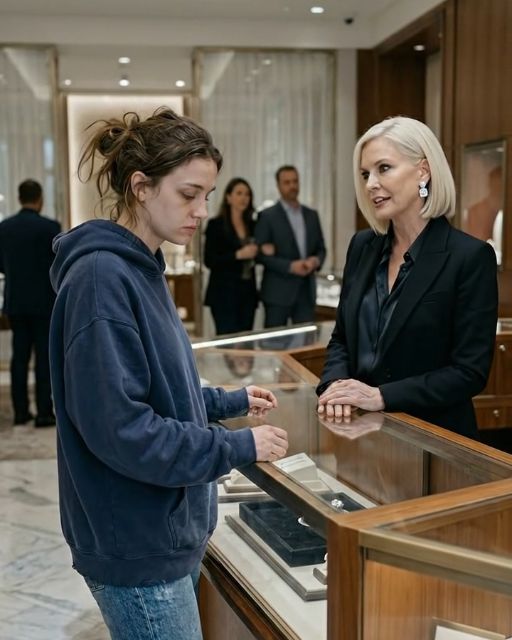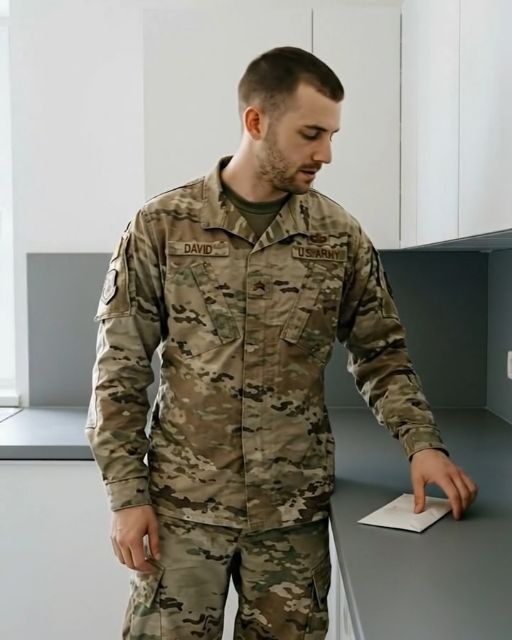

The flight from Tokyo was fourteen hours, but I felt like I was holding my breath the entire time. I told my fiancée, Jessica, that the merger was dragging on, that I’d be gone another week. It was a lie. I closed the deal in three days just so I could get home for the anniversary. The third anniversary of the day I lost my wife, Sarah, and my seven-year-old daughter, Lily, lost her voice.
I let myself in the back door, quiet as a ghost. I could hear the light chatter of women’s voices coming from the living room. Jessica was hosting a brunch for her bridesmaids, planning the final details of a wedding I was starting to dread. I just wanted to see my little girl. I slipped up the stairs, my heart aching to see Lily’s face.
As I reached the landing, I heard Jessica’s voice from Lily’s room. It wasn’t her usual sweet, melodic tone. It was sharp. Ugly.
“I said take it off, Lily! Now!”
I froze, my hand hovering over the doorknob.
“You are not wearing that filthy old thing to meet my friends. It’s embarrassing,” Jessica snapped. I knew exactly what she was talking about. The blue velvet dress. The last thing Sarah ever made for our daughter. Lily wore it whenever she felt lost. It was her armor.
A small, choked sob was the only reply. My blood ran cold.
“Oh, stop your crying,” Jessica hissed, the sound like poison. “You think that dress is magic? You think it will bring her back? Let me tell you a secret. Your dead mother isn’t coming back to save you. She’s gone. Forever. Do you understand me? You have me now.”
My knuckles turned white. I couldn’t move, couldn’t breathe. I was paralyzed by the sheer venom in her voice.
“This is my house now. My family. And in my family, we don’t wear dusty old rags made by ghosts. We wear Chanel.”
There was a sudden, violent ripping sound.
It was the sound of my world tearing in two. A gasp of pure agony came from Lily, a sound so broken it physically hurt me to hear.
“There,” Jessica said, her voice filled with a horrible satisfaction. “Now it’s just trash. Like your memories.”
I heard her sharp footsteps approaching. She was coming out. I didn’t move. I just stood there, a statue carved from rage.
The doorknob turned.
Jessica swung the door open, a bright, fake smile already plastered on her face, ready for her friends downstairs. The smile evaporated the second she saw me. Her eyes widened in shock, the color draining from her cheeks. Her mouth fell open, a silent ‘O’ of disbelief. She saw the look on my face, and for the first time, I saw real fear in her eyes.
“Mark,” she stammered, her voice a squeak. “You’re… you’re home early.”
I said nothing. My silence was louder than any shout could ever be.
“I can explain,” she started, the fake sweetness flooding back into her tone, a desperate attempt to patch a sinking ship. “Lily was just being stubborn, you know how she gets. The dress was so old and… I was going to buy her a beautiful new one.”
I stepped past her without a word. I pushed the door open to Lily’s room and my heart shattered into a million pieces.
My little girl was huddled in the corner, her small body shaking with silent sobs. On the floor, in a heap, lay the blue velvet dress. It was torn right down the middle, the delicate fabric brutalized.
I knelt in front of Lily, my own tears blurring my vision. I gently touched her shoulder. She flinched before she realized it was me. When she looked up, her eyes were wide with a grief so profound it felt like I was looking into a mirror of my own soul.
She threw her tiny arms around my neck and held on for dear life, her little body trembling against mine. I held her just as tight, rocking her gently, whispering, “I’m here. Daddy’s here. I’m so sorry.”
Behind me, Jessica was still trying. “Mark, honey, don’t be dramatic. It’s just a piece of clothing.”
I slowly turned my head, my eyes locking onto hers. The rage I had been suppressing was now a cold, hard stone in my chest.
“Get your things,” I said, my voice dangerously low. “Get them and get out of my house.”
Her face twisted in disbelief, then anger. “You can’t be serious! Over a stupid dress? I’m your fiancée! We are getting married in three weeks!”
“The wedding is off,” I stated, each word precise and final. “You have thirty minutes to pack a bag. The rest of your things will be sent to you.”
“You would throw away everything we have for her?” she shrieked, pointing a manicured finger at Lily, who buried her face deeper into my shoulder. “She doesn’t even talk! She’s a broken little doll!”
That was it. The last thread of my composure snapped.
I stood up, carefully lifting Lily into my arms. I walked right up to Jessica, my face inches from hers.
“You will never,” I seethed, “speak about my daughter again. You will never set foot in this house again. You are not the woman I thought you were. I don’t even know who you are.”
Fear was replaced by a defiant sneer. “You’ll regret this, Mark. You need me. You can’t raise her on your own. You’ll come crawling back.”
“Get out,” I repeated, my voice like ice.
I carried Lily downstairs, walking straight past the living room where her stunned bridesmaids were gathered, their champagne flutes frozen midway to their lips. I took Lily into the kitchen, sat her on the counter, and got her a glass of juice, my hands shaking.
I could hear Jessica upstairs, throwing things, slamming drawers. A few minutes later, she stomped down the stairs, a small suitcase in her hand.
She paused at the kitchen door. “I hope you and your little mute are very happy together,” she spat, venom dripping from every word.
Then she was gone. The front door slammed shut, and the house fell into a profound silence. It was the loudest, most beautiful silence I had ever heard.
I looked at Lily. She was staring at the torn blue dress, which I had gathered from the floor and brought down with us. A single, perfect tear rolled down her cheek. I gently wiped it away.
That night, I tucked her into bed and sat with her until she fell asleep. I went back to her room and picked up the pieces of the dress. It was more than fabric; it was a promise Sarah had made to our daughter. It was the last tangible piece of her mother’s love.
The next few weeks were a blur of cancellations. I called the venue, the caterer, the florist. With every call, a weight lifted from my shoulders. Explaining it to friends and family was awkward, but I just said we weren’t right for each other. I didn’t need to share the ugly details. The truth was for me and Lily.
I took a leave of absence from work. My focus was singular: my daughter. We fell into a new, quiet rhythm. We made pancakes in the morning. We went to the park. We read books on the sofa, her small head resting on my chest.
But the silence persisted. Her voice, locked away for three long years, remained a ghost in our home. I never pushed her. I just talked to her, told her about my day, about her mother, about how much I loved her.
One rainy Saturday, I decided it was time. I pulled a large box from the top of my wardrobe, a box I hadn’t opened since Sarah died. It was filled with her things, her sketchbooks, her fabric samples, her sewing kit.
I brought it downstairs and set it on the living room floor. “Lily-bug,” I said softly. “I thought maybe we could look at some of Mommy’s things today. To remember how wonderful she was.”
Lily crept over, her eyes wide with a mixture of curiosity and sadness. She sat beside me as I lifted the lid. The scent of Sarah’s favorite lavender perfume wafted out, a faint but powerful memory.
Inside were beautiful drawings of dresses and gowns. Sarah had been a designer, a brilliant one. Her dream was to open her own children’s boutique. I pulled out a thick portfolio.
We flipped through the pages together. I pointed out designs she had made. “Look, this was the dress she wore on our first date,” I’d say. “And this… this was her idea for her own wedding dress.”
Lily traced the lines of the drawings with her tiny finger, a sad little smile on her face. Then, near the back of the portfolio, I found a page that made my blood run cold.
It was a group photo from a design firm Sarah had worked at right out of college. There, in the center, was Sarah, beaming, holding a “Young Designer of the Year” award. And standing in the back row, almost hidden in the shadows, was another woman.
It was Jessica.
She looked younger, but it was unmistakably her. Her smile was tight, and her eyes, even in the faded photograph, were filled with a sharp, piercing envy. They were aimed directly at Sarah.
Suddenly, everything clicked into place with a horrifying clarity. The calculated cruelty. The way she had moved into our lives so seamlessly. The specific venom directed at anything related to Sarah. This wasn’t a new relationship. It was an old, festering wound. Jessica hadn’t stumbled into my life by accident.
I remembered now. Jessica had been a “friend of a friend” who I’d met at a party about a year after Sarah’s death. She had been so understanding, so sympathetic. It was all a lie. A long, calculated con. She had known who I was. She had sought me out.
Her goal wasn’t just to marry a wealthy widower. Her goal was to erase Sarah. To win a competition that only existed in her own mind. The house, the wedding, even me… we were just trophies. And Lily, a living, breathing reminder of Sarah’s legacy, was an obstacle to be broken. The attack on the dress wasn’t random; it was a targeted assassination of a memory.
I felt sick to my stomach. I had let this viper into my home, into my daughter’s life. I had almost given her Sarah’s place.
I closed the portfolio, my hands shaking. I had to handle this carefully. I looked at Lily, who was now holding the original sketch for her blue velvet dress. It was drawn with such love, with little notes in the margin like “extra soft lining” and “pockets for treasures.”
I pulled out the torn pieces of the dress and laid them on the floor next to the sketch.
“You know, Lily,” I began, my voice thick with emotion. “Mommy poured all of her love for you into this dress. Every single stitch was a wish for your happiness.”
I pointed to the sketch. “She wanted it to be your special armor. To make you feel safe and brave.”
I looked at the shredded fabric. “What that woman did… it didn’t break the dress, Lily-bug. It can’t. The love is still in there. We just… we just have to put the pieces back together.”
I expected her to just nod, or maybe touch the fabric. But she did something else.
She looked from the sketch to the torn dress, and then up at me. Her little brow furrowed in thought. Her lips parted.
For the first time in three years, she spoke.
Her voice was a tiny, rusty whisper. So quiet I almost missed it.
“Stars,” she said.
I froze. “What did you say, sweetheart?”
She pointed to a blank space on her mother’s sketch, then looked at me, her eyes clear and certain. A little stronger this time, she repeated the word.
“We can add stars.”
The tears I’d been holding back for three years finally came. I wasn’t just crying for the pain, or the loss, or the anger at Jessica. I was crying with pure, unadulterated joy. My little girl’s voice, the most beautiful sound in the world, was back.
The dam had broken. That one word turned into two, then a whole sentence. We sat on the floor for hours, talking. She told me she had been scared to talk, that her words felt stuck with her memories of the accident. She thought if she didn’t speak, nothing else bad could happen.
The next day, we went to a fabric store. Lily, holding my hand, walked right up to a display of buttons and picked out a handful of tiny, shimmering silver stars.
We spent the next week at the kitchen table. I’m no expert seamstress, but with Sarah’s sewing kit and a lot of patience, we began to mend the blue velvet dress. We stitched the main tear with a thread of gold, making the scar a beautiful feature, not something to hide. And then, together, Lily and I sewed on her silver stars, scattering them across the dark blue velvet like a new constellation.
It wasn’t Sarah’s dress anymore. It was our dress. It was a story of loss, but also of survival. A story of a love so strong, it could be torn apart and stitched back together, more beautiful than before.
As for Jessica, I heard through a mutual acquaintance that her life unraveled. When I canceled the wedding, the whispers started. Her bridesmaids, having witnessed my grim expression and her hasty exit, talked. Her carefully constructed facade crumbled. She lost her job, and the social circle she valued so much turned its back on her. Her cruelty had left her with nothing.
I never thought of her again. She was just a ghost, a bad dream we had woken up from.
The day we finished the dress, Lily put it on. She twirled in the living room, the silver stars catching the light. She looked at me, her face lit up with a smile that was all Sarah.
“Daddy,” she said, her voice clear and bright. “Mommy would love the stars.”
I knew she was right.
Sometimes, the worst moments of our lives are not endings, but violent, painful beginnings. They strip away the facades and force us to see what is truly important. Losing Jessica was not a loss at all; it was an act of liberation. It allowed me to finally stop mourning the past and start building a future with the incredible little girl standing right in front of me. Our healing wasn’t about forgetting the person we lost; it was about finding new ways to carry their love with us, stitching it into the very fabric of our lives, one shining star at a time.