HR emailed: ‘We track mouse movement now.’ That exact day, my work was done, so I took a walk in the nearby park. Next day: flagged for ‘2 hours inactive.’ I finished early. ‘Movement is required until clock out time,’ my boss smirked. I said ok. Next day he panicked when the client dashboard froze during a live demo, and no one could fix it except me.
He stood behind my desk, arms crossed, watching the tiny cursor on my screen wiggle like it was the most important thing in the building. I kept my mouse moving, just like he wanted.
The system outage wasn’t even my fault. It was a server issue we had warned management about for months.
But I knew the backend better than anyone. I had built most of it myself when the company was still small and scrappy.
Back then, no one tracked mouse movement. They tracked results.
I had joined three years earlier, when the team was just ten people squeezed into a shared office. We worked long hours, but it felt like we were building something real.
My boss, named Victor Halden, used to sit beside me and brainstorm ideas. He would ask for my opinion like it mattered.
Things changed after the new investors came in. Suddenly we had fancy dashboards, productivity metrics, and HR policies that read like they were written by people who never actually worked.
Victor changed too. He started caring more about reports than people.
The mouse-tracking email was just the latest sign.
That morning, when he panicked during the demo, I didn’t rush. I kept moving my mouse in slow circles.
“Can you fix it?” he asked, trying to keep his voice calm.
“I can look into it,” I replied, still wiggling the cursor.
He glanced at the screen like the movement itself might solve the problem. The irony was almost funny.
I opened the server logs and saw exactly what was wrong. The memory leak we had flagged months ago had finally hit critical levels.
We had sent three emails about upgrading the server capacity. All three were marked as “non-urgent.”
Now it was very urgent.
Victor leaned closer. “The client is waiting.”
“I understand,” I said.
I fixed the issue in fifteen minutes. It wasn’t magic, just experience.
After the demo ended, Victor called me into his glass office.
He shut the door and folded his hands. “We need everyone aligned with company policy.”
“I am aligned,” I said. “I finished my tasks.”
He frowned. “It’s about optics. If HR sees inactivity, it raises questions.”
“So the question is whether I move my mouse or whether I finish my work?” I asked.
He didn’t answer directly. He just repeated, “Movement is required.”
I nodded and walked out.
That evening, instead of going home early, I stayed at my desk. I kept my mouse moving.
I opened a blank document and stared at it while the cursor danced.
Across the room, my coworker Miriam raised an eyebrow. She had gotten the same email.
She whispered, “This is ridiculous.”
“It is,” I said. “But it’s the rule.”
The next week, productivity actually dropped. People were focused on appearing busy instead of being efficient.
I noticed small mistakes creeping into projects. Deadlines were met, but barely.
One afternoon, I saw Victor pacing near the HR office. His confident smile looked strained.
Rumor spread that one of the investors was visiting soon. They wanted to review performance metrics.
The mouse-tracking data would look impressive. Everyone’s activity levels were high.
But client satisfaction scores were slipping.
That’s when I decided to test something.
I finished my entire workload by 1 p.m. the next day. It was clean, polished, and ahead of schedule.
After that, I did exactly what policy required. I kept my mouse moving until 5 p.m.
No extra ideas. No voluntary improvements.
By the end of the week, three projects that usually benefited from my “extra touches” were delivered without them.
They weren’t bad. They were just average.
Clients noticed.
One sent an email saying, “We feel like the spark is missing.”
Victor forwarded it to the team with a polite response. But I could see the tension in his shoulders.
The investor visit arrived on a Tuesday.
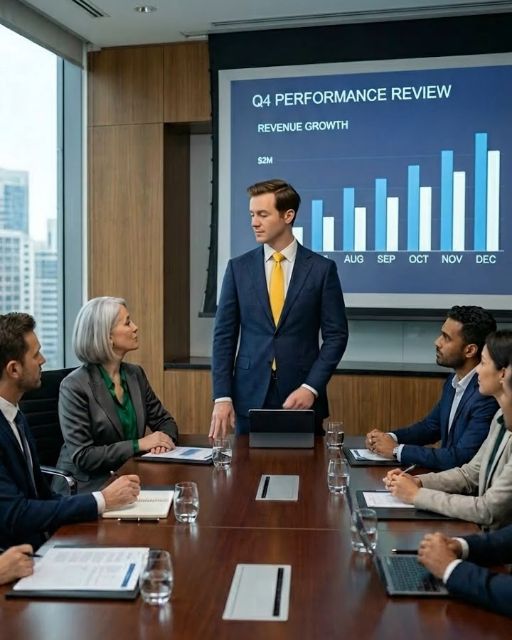
They gathered in the conference room, big screen glowing with charts and graphs. Mouse activity was up 27%.
Victor smiled proudly.
Then the investor, a calm woman named Elena Varga, asked about customer retention.
The room went quiet.
The numbers were lower than last quarter.
Elena looked around. “What changed operationally?”
Victor cleared his throat. “We implemented stronger productivity tracking.”
She tilted her head. “And did output quality improve?”
He hesitated.
I watched from the back of the room. My mouse was still moving on my desk, just in case.
Elena requested a deeper breakdown. She wanted to speak to team leads individually.
That afternoon, she stopped by my desk.
“I heard you built the original infrastructure,” she said.
“I did,” I replied.
She asked how workflow had changed recently. I chose my words carefully.
“We used to focus on finishing tasks efficiently. Now we focus on staying visibly active.”
She didn’t laugh. She just nodded slowly.
“Does that help your work?” she asked.
“It helps my cursor,” I said.
She smiled faintly.
Two days later, HR sent another email. “We are reviewing productivity tracking methods.”
Victor avoided eye contact with me all morning.
By Friday, the mouse-tracking policy was suspended “pending evaluation.”
People actually cheered softly at their desks.
Victor called me in again.
He looked tired.
“You could have brought concerns directly to me,” he said.
“I did,” I replied gently. “When I finished early.”
He rubbed his temples. “The pressure from investors… it’s constant.”
“I understand,” I said. “But pressure doesn’t mean we stop trusting people.”
There was a long pause.
Then he said something unexpected. “Elena suggested we create a small task force to improve efficiency without harming morale. She recommended you lead it.”
I blinked. I hadn’t seen that coming.
“Why me?” I asked.
“Because you seem to understand both the technical and human sides,” he said quietly.
It felt strange hearing him speak that way again, almost like the old days.
I agreed.
Over the next month, I worked with Miriam and two others to redesign our workflow.
We introduced clear outcome-based goals instead of time-based monitoring.
We set up weekly check-ins focused on obstacles, not suspicion.
Productivity improved. So did morale.
Client satisfaction scores began climbing again.
One afternoon, Elena returned for a follow-up.
She reviewed the new metrics and nodded approvingly.
“Trust scales better than surveillance,” she said simply.
Victor looked relieved.
Later that week, he stopped by my desk without calling me in.
“I owe you,” he said.
“You owe the team,” I corrected gently.
He nodded.
Then came another twist I didn’t expect.
HR announced promotions for the quarter.
My name was on the list.
I was being promoted to Director of Systems Optimization, a new role created after the task force results.
The salary increase was significant. So was the responsibility.
Victor shook my hand in front of the team.
“I learned something important this quarter,” he said publicly. “Movement isn’t the same as progress.”
People laughed softly.
I thought back to that first walk in the park.
The sun had been warm. I had felt proud of finishing early.
I almost regretted not just buying a mouse jiggler like some coworkers secretly had. It would have been easier.
But if I had done that, nothing would have changed.
A few weeks later, Miriam told me she had been considering quitting before the policy was suspended.
“Now it feels different,” she said. “Like our work matters again.”
That meant more to me than the promotion.
One evening, as I was packing up, Victor approached me again.
“I was afraid,” he admitted quietly. “Afraid of looking weak to investors.”
“You don’t look weak when you trust your team,” I said.
He nodded slowly.
The company didn’t become perfect overnight. There were still deadlines, still stress.
But there was less pretending.
I still take walks in the park when I finish early.
Sometimes I think about how small decisions create big shifts.
If Victor hadn’t panicked during that demo, he might never have listened.
If Elena hadn’t asked the right questions, the policy might have stayed.
And if I had chosen silence over honesty, I might still be wiggling my mouse for no reason.
The funny thing is, I never tried to “win.”
I just refused to confuse movement with meaning.
That simple difference changed my career.
It also changed the company culture.
A year later, we surpassed our previous revenue records.
Employee turnover dropped by nearly half.
Elena credited the shift toward trust-based management in her annual report.
Victor forwarded that report to the whole team with a short message: “Thank you for teaching me.”
Sometimes justice isn’t loud.
Sometimes it’s just a quiet correction that makes things right again.
I learned that doing your work well is important, but standing up for how work should feel is just as important.
You don’t need drama or revenge to fix something broken.
You need patience, clarity, and the courage to speak when it counts.
And here’s the truth I carry now: real progress isn’t about constant movement.
It’s about meaningful impact.
If this story resonated with you, share it with someone who needs to hear it.
And if you believe work should value results over appearances, give it a like and let others know they’re not alone.