The phone was cold against my ear.
My son’s voice was distant, rushed. The same way it always was when his wife was in the room.
“Mom, I’m on my way out, just wanted to call you quickly.”
No hello. No how are you.
Then he said it.
“We moved. To a city down south. Last week.”
A beat of silence. The hum of my refrigerator.
“Chloe got a great offer. Everything just happened so fast, we… we forgot to tell you.”
We forgot to tell you.
The words just hung there in my quiet kitchen. Like smoke.
I wasn’t his mother. I was an appointment he’d missed. An oil change he’d forgotten to schedule.
“That’s wonderful, dear,” I heard myself say. My voice was a stranger’s, calm and steady. “Good luck with everything.”
I ended the call.
The pot roast I’d been making for him was simmering on the stove. His favorite.
The basket of his son’s toys was still by the door.
I didn’t cry. Not yet.
My mind went somewhere else. Four years earlier, to my front door. My son, Alex, grinning.
“Mom, I want you to meet someone.”
Chloe walked in. Tall heels and a city smile. Her handshake was an evaluation.
“What a cozy little house,” she’d said, and the word cozy felt like an insult.
But I made my best lasagna. I used the good tablecloth. I pretended not to see the way Alex stared at her all night, like she was the only person in the world.
Six months later, they were engaged.
A year after that, they wanted my land.
The plot my husband, Frank, had bled for. The one thing he left me that grew in value every year. My safety net.
“Imagine it, Mom,” Alex had said, his hands over mine. “A big house. You on the first floor. A yard for Leo. We’ll all be together.”
They called it our family home.
So I gave them the land.
Then I did something worse. I gave them every dollar I had. My retirement. The nest egg I’d whisper to Frank’s photo about, promising I’d be careful.
The house they built was beautiful.
My room was at the back. A narrow window. A door that swelled shut in the damp.
My old armchair went to a storage unit. My mother’s dishes were “out of style.” The painting Alex made in second grade “didn’t match the aesthetic.”
One morning, a list appeared on the refrigerator.
My kitchen hours.
My laundry days.
A monthly “contribution” I was to pay. Rent. For a room on my own land.
At Christmas, I sat at the far end of their long dining table. Chloe raised a glass to her parents, calling them the “best in-laws a girl could ask for.”
As if I wasn’t there. As if I was already a ghost.
Later, I saw her post a photo from that dinner.
Her. Alex. Her parents. Leo.
The caption read: “Christmas with family.”
I wasn’t in the picture.
I wasn’t even a memory.
So when he called from that new city, a thousand miles away, and told me they forgot me… I believed him.
I hung up the phone.
I turned off the stove.
I walked past the pot roast and the basket of toys and the whole life I’d built for them.
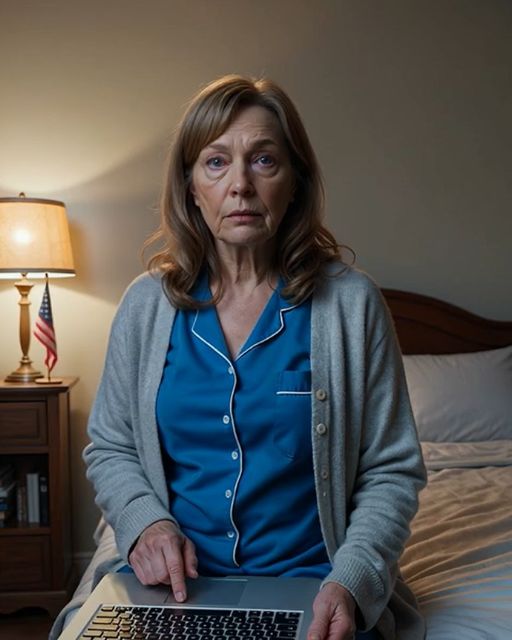
I sat on the edge of my bed and opened my laptop.
I found the folder I’d been quietly building for months.
Screenshots of texts. Scanned documents. Photos with timestamps. A hundred little cuts that, when stitched together, showed the entire wound.
I composed a new email.
The subject line was simple. His father-in-law’s name.
The body was shorter.
“Hi. It’s time. I’m ready to talk about what your daughter and my son did with my life savings.”
I attached everything.
My finger hovered over the trackpad.
Somewhere down south, my son was probably unpacking a box, thinking he’d left his old life behind with a two-minute phone call.
In my little bedroom, in the house he’d left, I clicked send.
He forgot to tell me he was leaving.
But I sent him something he will never, ever be able to forget.
The silence that followed was different.
It wasn’t the lonely quiet I’d grown used to. It was the calm before a storm.
I slept that night. A deep, dreamless sleep for the first time in years.
I woke up, made coffee, and sat on the porch that was supposed to have been “our” porch. The morning air was cool.
My phone rang at precisely 9:02 AM. It was not Alex.
The caller ID showed a number from a state two over.
A man’s voice, clipped and serious, came through the speaker. “Is this Sarah Miller?”
“Yes, it is.”
“This is Robert Peterson. Chloe’s father.”
I took a sip of my coffee. “Hello, Robert.”
There was a pause. He was probably expecting tears or accusations. I had none left to give.
“I received your email,” he said, his voice tight. “I’ve reviewed the documents.”
Another pause. I could hear papers rustling in the background.
“These are serious claims, Sarah.”
“They are facts, Robert.”
He cleared his throat. “My daughter… she can be ambitious. I will be on a flight this afternoon. I have my own lawyer meeting me there. I suggest you find one as well. We will meet tomorrow at ten.”
He wasn’t defending her. He wasn’t yelling.
He was a businessman looking at a deal gone bad.
“I’ll be there,” I said, and he hung up.
My next call was to my son. I knew he wouldn’t answer, so I left a message.
“Alex,” I said, my voice as calm as the morning. “Chloe’s father is flying in. We have a meeting with lawyers tomorrow. You should probably be there.”
Three minutes later, my phone exploded. It was Alex.
“What did you do?” he yelled, his voice cracking with panic.
“I told the truth, Alex.”
“You went to her FATHER? Mom, you have no idea what you’ve done! You’re trying to ruin my life!”
The old me would have flinched. The old me would have apologized.
But the old me was gone, left behind in a house that was never mine.
“Your life?” I asked, my voice dangerously quiet. “What about my life, Alex? The one you and your wife cashed in like a lottery ticket?”
I could hear Chloe screaming in the background. Vicious, ugly words.
“She’s going to leave me,” he whimpered, a little boy again. “This is all your fault.”
“No, son,” I said, a profound sadness washing over me. “This is all your choice.”
And I hung up on him. For the second time.
I found a lawyer that afternoon. A woman named Ms. Davis, who had kind eyes and a spine of steel. She listened to my story without interruption, her face a mask of professional calm.
When I finished, she looked through the documents I’d brought. The land transfer. My bank statements, drained to zero. The “rent” I’d paid.
She paused on one particular document. The original deed to the land.
“This is your late husband’s signature?” she asked, pointing to a line at the bottom.
“Yes. Frank bought that land the year Alex was born.”
Ms. Davis leaned back in her chair. A slow smile spread across her face.
“Sarah,” she said. “Your husband was a very smart man.”
She turned the paper towards me and pointed to a paragraph of dense, legal text.
“It’s a reversionary clause,” she explained. “Quite old-fashioned, but perfectly binding.”
My heart started to beat a little faster.
“It states that the transfer of this land is conditional. It was deeded for the express purpose of providing a multi-generational family residence with you, Sarah Miller, as a resident in good standing.”
She let the words sink in.
“The moment you were made to pay rent, the moment you were functionally removed from the ‘family’ and left behind… they violated the clause. The contract is broken.”
I stared at her, not daring to breathe.
“What does that mean?”
Ms. Davis smiled, a real, genuine smile.
“It means, Sarah, that the land, and everything on it, reverts back to you. The house they built… they built it on your property.”
The meeting was in a sterile conference room. Glass walls, a long mahogany table.
Robert Peterson and his lawyer were on one side. They looked grim.
Alex and Chloe were on the other. Chloe’s face was a thundercloud of fury. Alex just looked broken, his eyes red-rimmed and hollow.
I walked in with Ms. Davis. I sat down and placed my hands on the cool surface of the table. For the first time, I felt taller than all of them.
Robert’s lawyer started, talking about settlements and making things right. He mentioned a sum of money to repay my initial investment.
Chloe scoffed, whispering something to Alex.
Ms. Davis let him finish. Then she slid a single piece of paper across the table.
A copy of the deed. With the reversionary clause highlighted in yellow.
Robert Peterson read it first. His eyes widened slightly. He passed it to his lawyer, who read it and then slowly took off his glasses, polishing them as if to see the words more clearly.
He slid the paper to Chloe.
She glanced at it, then at her father, then back at the paper. “What is this?”
“It’s the deed to my land,” I said softly.
“It was your land,” she snapped. “You signed it over.”
“Read the clause, Chloe,” her father said, his voice flat. He sounded tired.
Alex picked it up. He read it, his lips moving silently. His face went from pale to ashen.
He looked at me, his eyes pleading. A lifetime of memories passed between us in that single glance. The boy I’d taught to ride a bike. The teenager I’d comforted after his first heartbreak. The man who had sold me out for a bigger kitchen.
“You can’t,” he whispered. “Mom, you can’t.”
“The terms were not met,” Ms. Davis said, her voice cutting through the tension. “The land, and the considerable asset built upon it, returns to my client’s sole ownership. Effective immediately.”
Chloe erupted. “This is insane! We paid for that house! We have receipts!”
“You built a house on land you didn’t truly own,” Ms. Davis countered. “A very generous, and very foolish, gift to my client.”
Robert Peterson stood up. He looked at his daughter, not with anger, but with a deep, chilling disappointment.
“You were given every advantage, Chloe,” he said. “Every opportunity. And you chose to be a thief.”
He looked at me. “My apologies, Sarah. For my daughter’s… lack of character.”
He and his lawyer walked out.
Chloe stared at the door, then at me. Her perfect mask of composure finally shattered, revealing something ugly and raw beneath.
“You’ve won,” she spat. “I hope you’re happy in that big, empty house all by yourself, you miserable old woman.”
Then she grabbed her purse and stormed out, leaving Alex sitting there alone.
He just stared at the table. He didn’t look at me.
“Alex,” I said.
He flinched.
“All I ever wanted,” I said, my voice thick with unshed tears, “was for you to be happy.”
He finally looked up. “I was,” he said, his voice barely a whisper. “I think I was.”
But he didn’t look happy. He looked like a man who had just realized he’d sold his soul for a handful of magic beans. And the beans were fake.
The next few weeks were a blur of legal paperwork.
Chloe filed for divorce from Alex almost immediately. Her father, a man who valued his reputation above all else, cut her off completely.
Alex moved into a sad little apartment across town. He lost his job, the one Chloe’s father had arranged for him. He had nothing.
I had the house. That big, beautiful monument to their greed.
I walked through it once. The rooms were empty, echoing. Chloe had taken all the furniture.
I stood in the massive living room, looking at the bare walls where my son’s second-grade painting was supposed to hang.
I didn’t feel victorious. I just felt tired.
I called a realtor the next day.
“Sell it,” I said. “Sell the house, sell the land. Sell it all.”
The market was good. The property sold in a month for a price that made my eyes water.
After paying Ms. Davis and setting aside taxes, I had more money than Frank and I had ever dreamed of.
I didn’t stay in that town. There were too many ghosts.
I bought a small condominium in a sunny coastal town three states away. It has two bedrooms and a balcony that overlooks the ocean.
I planted a garden of herbs and tomatoes in pots on the balcony. I joined a book club. I learned to play bridge.
I started to live again. Not as Alex’s mother, or Frank’s widow. But as Sarah.
About a year later, I got a letter. It was from Alex.
It wasn’t a letter asking for money or forgiveness. It was just a letter.
He told me he was working a regular job, stocking shelves at a grocery store. He said he was going to therapy. He said he finally understood what he had thrown away.
He didn’t say he was sorry. The word was too small for what he had done.
Instead, he wrote: “I remember you used to make pot roast on Sundays. I tried to make it last week. It wasn’t as good as yours.”
At the bottom, there was a clumsy drawing of a flower, just like the ones he used to draw for me in second grade.
I folded the letter and put it in a drawer.
My life is quiet now. It is peaceful. It is mine.
I learned the hardest lesson a parent can learn: you can give your children everything you have, but you cannot give them your soul. That, you must keep for yourself.
Sometimes, the most loving thing you can do is to build a boundary. Not to keep others out, but to protect the person within.
My son forgot me in his climb to the top. But in the silence he left behind, I finally found myself. And that is a treasure no one can ever take away.