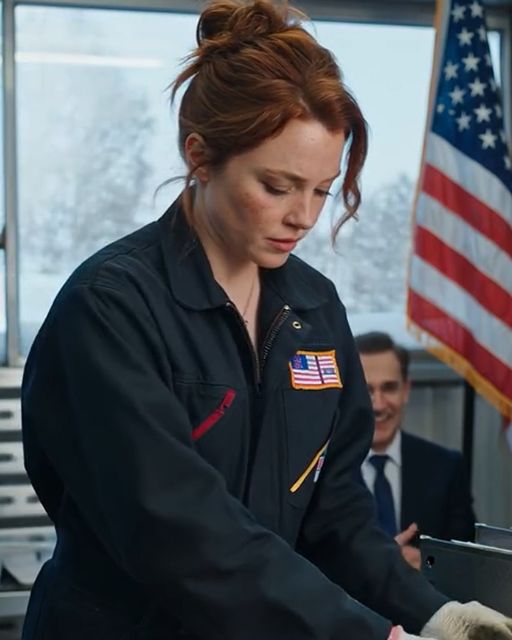
My hands were black with cutting oil. It was after midnight. The only sounds were the low hum of the heaters and the ping of cooling steel.
Ten years. Eighty hours a week. My entire adult life spent under these buzzing fluorescent lights.
I didn’t get a paycheck. I got a promise.
“One day, Sarah, this will all be yours.”
I was sorting files in the front office when a manila folder slipped from a drawer. It landed flat on the dusty concrete floor.
The word was stamped in red ink. Confidential.
My stomach went tight. A cold knot pulling deep in my gut. This was a place I wasn’t supposed to be.
But after a decade of missed holidays and third-degree burns, I figured I’d earned the right.
I broke the seal.
The paper felt thin and important in my hands. It was a transfer of ownership. A legal document, notarized and signed.
My name wasn’t on it.
My father’s signature was there. My mother’s, too.
But the shop, the legacy my grandfather built with his bare hands, wasn’t going to me.
It was going to Mark. My sister’s husband.
The guy who wore loafers to the shop floor. The one who called coolant “the blue stuff” and couldn’t tell a lathe from a mill.
My eyes scanned the page again. And again. Searching for a mistake. For my name. For an explanation.
There was nothing. Just ink on a page, erasing a decade of my life.
The anger came first, hot and blinding. Then something else washed over me. Something cold and terrifyingly clear.
I wasn’t their daughter.
I was a tool. A placeholder. The free labor you use until the real plan is ready.
I didn’t go in the next morning. I just left my keys on the office desk with a one-sentence note.
“My work here is done.”
A week later, my father called. His voice was a frayed wire.
“Sarah… The Atlas Account is about to walk. They’re saying the quality is slipping. We need you.”
I stood in my quiet kitchen, listening to him use the word “we.”
I let the silence stretch. Let him feel the weight of what he had done.
Then I took a slow breath.
“Let the new owner deal with it.”
The click of the phone ending the call was one of the most satisfying sounds I had ever heard.
It was also the most terrifying.
My entire world, my entire identity, was that shop. I knew the personality of every machine. The high-pitched whine of the Bridgeport mill when it needed grease. The way the big Cincinnati lathe would shudder just before a perfect cut.
Now, all I had was a small savings account, filled with birthday money and the odd cash my grandmother would slip me.
Two days later, my sister Clara called. She didn’t sound worried. She sounded furious.
“What do you think you’re doing?” she snapped. “You’re trying to ruin Dad.”
I laughed. It was a hollow, ugly sound. “Ruin him? He did a pretty good job of that all by himself.”
“Mark is trying his best!” she yelled. “He has a business degree! He knows how to modernize things, how to make the shop profitable. Something you never cared about!”
The words hit me harder than the betrayal itself.
So that was the story they told themselves. I was just the grease-monkey daughter who didn’t understand the numbers.
“I cared about the work, Clara,” I said, my voice dangerously quiet. “I cared about Granddad’s name on the door.”
“Well, Mark is going to make sure that name means something more than just custom parts for a few old clients,” she retorted. “He has a vision.”
Her words confirmed it. She knew. She had been part of it all along.
“I hope his vision includes learning how to read a micrometer,” I said, and hung up.
The weeks that followed were a blur of cheap coffee and online job applications. My resume was a joke.
Ten years of experience as a master machinist looked impressive. “Salary: Unpaid family labor” did not.
One interviewer at a large aerospace firm looked at my application with a puzzled expression.
“So you worked for your father for a decade… for free?” he asked, like he was trying to solve a riddle.
“I was told I was earning sweat equity,” I explained, the words tasting like ash in my mouth.
He nodded slowly, a polite smile on his face that didn’t reach his eyes. “We’ll be in touch.”
They never were.
I was overqualified for entry-level jobs and had no formal management experience for senior roles. I was stuck in a no-man’s-land built by my own family.
One afternoon, sitting in my tiny apartment and staring at a stack of bills, I thought about the Atlas Account. I thought about Mr. Henderson, the owner.
He was a machinist himself, an old-timer who started his company from nothing. He always spoke to me, not my father, when he came to the shop. He’d look over my work, nod, and say, “That’s a fine finish, Sarah. Real fine.”
He respected the craft. He respected me.
I found his number online. My heart hammered against my ribs as I dialed. I wasn’t asking for a job. I was trying to save the only thing I had left: my reputation.
“Mr. Henderson,” I started, my voice shaking slightly. “It’s Sarah. From the Miller shop.”
There was a pause. “Sarah. I was wondering when I might hear from you. I heard you’d left.”
“I did,” I said. “I’m calling because… I wanted to apologize for the quality issues with your last order. That wasn’t my work.”
He was quiet for a long moment. “I know,” he said, his voice kind. “Your work always had a signature. It was clean. The last batch was a mess. Burrs on the edges, tolerances all over the place.”
Relief washed over me, so potent it made me dizzy. He knew.
“Can I buy you a coffee?” he asked. “I’d like to hear what happened.”
We met the next day at a small diner. I told him everything. The long hours. The promise. The folder.
He listened without interrupting, his eyes thoughtful. When I finished, he stirred his coffee slowly.
“Family can be the best thing in the world,” he said. “Or it can be a cage with a gilded door.”
He told me his own story then. How he’d been pushed out of his own father’s carpentry business in favor of a cousin with “new ideas.”
“I had nothing,” he said. “Just a set of chisels and a chip on my shoulder the size of a mountain.”
He looked at me, a real smile finally touching his eyes. “That chip can be a powerful fuel, Sarah.”
Then he made an offer that changed my life.
“I have a small storage unit at the back of my main factory,” he said. “It’s got an old lathe and a mill I haven’t used in years. They’re not fancy, but they’re solid.”
He leaned forward. “I’ll let you use the space. No rent for six months. All I ask is you do a small job for me.”
My breath caught in my throat.
“It’s a prototype part,” he continued. “Tricky geometry. Two other shops have already failed. If you can make it, the contract is yours.”
He slid a blueprint across the table. It was complex. Difficult. It was beautiful.
“I can do this,” I said, my voice filled with a conviction I hadn’t felt in months.
The first day in that small workshop was like taking my first breath after nearly drowning.
The machines were old, but my grandfather had taught me on machines just like them. They were honest. They did what you told them to, if you knew how to ask.
I worked for three days straight, fueled by diner coffee and the fierce, burning need to prove myself.
Not to my family. To me.
The metal shavings felt like confetti. The smell of cutting oil was the smell of home, but a home I was building myself.
On the fourth day, I held the finished part in my hand. It was perfect. The tolerances were exact, the finish like a mirror.
I delivered it to Mr. Henderson myself. He held it, turning it over and over in his hands. He ran a thumb over a smooth, curved edge.
He didn’t say a word. He just walked over to his desk, wrote out a check, and handed it to me.
It was for the full contract. And it was more money than I had ever seen in my life.
“Welcome to the business, Sarah,” he said with a grin.
I named my new company Legacy Machining. It was a private joke. My family had tried to steal my legacy, so I would build a new one.
News traveled fast in our small industrial community. Soon, other clients from my father’s shop started calling. They’d heard I was on my own.
They all told the same story. Missed deadlines. Poor quality. And Mark, my brother-in-law, who tried to dazzle them with business jargon instead of just delivering good work.
Meanwhile, things at my old home were unraveling.
My mother called one evening, her voice thin and panicked.
“The bank called, Sarah,” she whispered. “Mark took out a second mortgage on the shop. To buy some new German machine.”
I knew the one. A state-of-the-art five-axis CNC mill. A beautiful, complex piece of engineering.
It was also completely wrong for their kind of custom work. And in the hands of a novice like Mark, it was a million-dollar paperweight.
“He said it was an investment,” my mother cried. “He said it would triple their output.”
“Is it running?” I asked, already knowing the answer.
“No,” she admitted. “He can’t figure out the programming.”
A month later, the inevitable happened. The bank, tired of missed payments and broken promises, called in their loan.
They were going to lose everything. The shop. The machines. The building my grandfather had laid the foundation for with his own two hands.
My sister Clara showed up at my workshop door. She looked different. The entitled anger was gone, replaced by a raw, hollowed-out desperation.
“You have to help us,” she pleaded. “You have to talk to the bank. Or buy the debt. You’re the only one with any cash.”
I looked at her, at the sister who had stood by and watched as my future was signed away.
“Why would I do that?” I asked, my voice flat.
“Because we’re family!” she cried, tears streaming down her face.
And then, the final, pathetic truth came tumbling out. It wasn’t just about Mark’s business degree.
“We were scared, Sarah,” she confessed. “Dad’s health isn’t good. Mark convinced them that his plan was the only way they could afford to retire. He showed them spreadsheets and projections. He made it all look so simple.”
She finally looked me in the eye. “And… he told them you wouldn’t want to be tied down. That you’d probably want to get married and have kids and wouldn’t want the stress of running the business.”
They hadn’t just replaced me. They had erased me. They’d turned my dedication into a liability and my gender into a disqualification.
“So you lied,” I said. “You all stood there and lied.”
She didn’t have an answer.
The day of the bank auction, I showed up. Not to save them, but to save a piece of my grandfather.
I saw my father standing by the open bay doors, looking lost. He was grayer, thinner. He watched as men in suits tagged the machines my grandfather had cherished.
He saw me and walked over, his shoulders slumped in defeat.
“He sold the old iron for scrap to make a down payment on the new one,” my father said, his voice a ghost. “Said it was obsolete.”
My heart ached. Those “obsolete” machines were the soul of the shop.
“I’m sorry, Sarah,” he finally whispered, the words catching in his throat. “I was a fool. I was greedy and I was a fool. I threw away the most valuable thing I had. And I’m not talking about the shop.”
I didn’t offer forgiveness. It wasn’t mine to give yet. But I did offer a solution.
I didn’t buy the business. I let the bank take it. I let Mark’s “vision” crumble to dust.
But I bought the machines. All of them. The big Cincinnati lathe. The old Bridgeport mill. Even the fancy German CNC machine, which I got for a fraction of its value.
I paid the bank directly. My parents got nothing from the sale, but their debt was cleared. They lost the business, but they kept their house.
It wasn’t an act of revenge. It was a business decision. And maybe, a small act of mercy.
Today, Legacy Machining is thriving. We have five employees and a new, larger building. The old machines from my grandfather’s shop sit proudly next to my new ones. I learned how to program that German mill, and it runs twenty-four hours a day.
My father works part-time at a hardware store. He stocks shelves and gives advice to weekend handymen. He visits my shop sometimes, but he never crosses the threshold. He just stands by the door and watches. I see the pride in his eyes now, mixed with a sadness that will likely never leave him.
Our relationship is quiet and complicated, but we’re slowly finding our way back.
My sister and Mark moved to another state. I heard their marriage didn’t survive the failure.
The other night, I was working late, just like the old days. The only sounds were the low hum of the machines and the ping of cooling steel.
My hands weren’t black with cutting oil. They were smudged with my own work, my own success.
I looked around at the shop I had built, not the one I was promised. I realized my family had given me a gift, in the cruelest way possible.
They took away the path they had laid out for me, forcing me to forge my own.
True legacy isn’t something you inherit; it’s the life you build with your own two hands. It’s the integrity you maintain when everything is taken from you. My name is on the door now, not because someone gave it to me, but because I earned it.