I didn’t answer a 9 P.M. text while my phone was on silent. It was a Thursday night in a rainy corner of London, and I was finally sitting down to a bowl of pasta after a twelve-hour shift. I had put my phone face down on the kitchen counter because I needed forty-five minutes of peace where I wasn’t an “Asset Management Associate.” When I finally checked it at 10:15, there were seventeen missed calls and a string of texts that made my blood run cold.
My boss, Mr. Sterling, was a man who had never heard of the word “kindness” or the concept of personal boundaries. He ran our firm like a military barracks, expecting absolute devotion in exchange for the privilege of a paycheck. His final text read: “Since you’ve decided your time is more valuable than the firm’s, don’t bother coming in to work. Your career is dead.”
I sat in the dark for a long time, the steam from my cold pasta rising in the dim light of the kitchen. I had worked for Sterling for four years, sacrificing holidays, weekends, and my mental health to help him build his reputation. He liked to tell everyone that he had plucked me from obscurity, which was his way of saying he hired me right out of university. He treated my loyalty like a debt that could never be fully repaid.
The next morning, I walked into the office and the silence was heavy enough to choke on. My coworkers wouldn’t look at me; they just stared at their monitors like they were watching a car crash in slow motion. Sterling was standing by my desk, his arms crossed over his chest and a sneer curled on his lip. He didn’t even wait for me to sit down before he started his performance for the room.
“If I hadn’t dragged your career out of the streets, you’d be nothing now!” he bellowed, his face turning a dangerous shade of purple. He claimed my career died the moment I ignored his text, which apparently contained a “critical update” about a client meeting. In reality, it was just a question about where I had filed a specific folder, something that could have easily waited until 8 A.M.
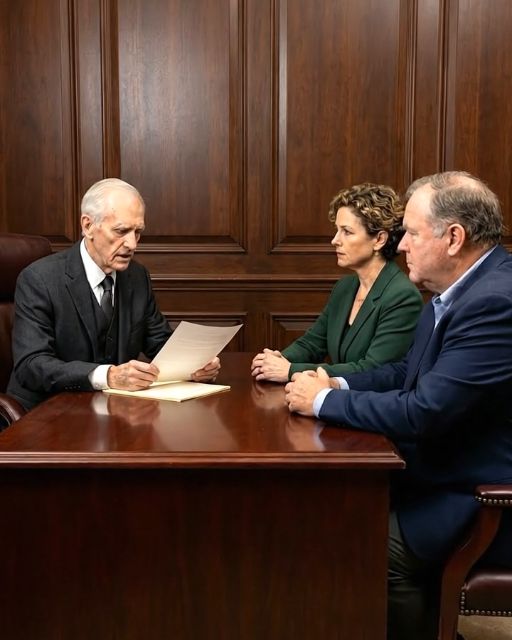
HR was already standing there, a woman named Beverly who usually looked like she had a permanent headache. She didn’t look me in the eye when she demanded my laptop and my security badge. Sterling was grinning, enjoying the sight of my professional execution in front of the people I had trained and supported. He thought he was teaching me a lesson about power, but he had forgotten that knowledge is the only thing more powerful than a title.
I didn’t argue, and I didn’t beg for my job back. I reached into my bag and pulled out a small, sealed envelope that I had prepared weeks ago, just in case this day ever came. I handed over a note to Beverly, but I looked directly at Sterling when I spoke. “You should check the company’s mail before you finish processing my exit,” I said quietly.
Sterling laughed, a harsh, barking sound that echoed off the glass walls. “What, a thank-you note? Or a list of your grievances?” he mocked. I just turned around and walked out of the building without looking back, leaving behind the laptop that contained four years of my life. I went to a small cafe across the street and ordered a black coffee, waiting for the clock to strike ten.
You see, Sterling had a habit of being sloppy when he was angry. Over the last six months, I had noticed discrepancies in the way he was handling the offshore accounts for our largest client. He thought he was clever, moving small percentages into a “management fee” account that didn’t actually exist on the official books. He assumed I was too “indebted” to him to ever look closely at the numbers he asked me to sign off on.
But I was an accountant first and a loyal employee second. I had spent my late nights not just answering his texts, but documenting the trail of breadcrumbs he was leaving behind. I hadn’t gone to HR because I knew Beverly was in his pocket, and I didn’t go to the board because they were his golfing buddies. I had gone to the one place that doesn’t care about golf or loyalty: the Financial Conduct Authority.
The “company’s mail” I referred to wasn’t a letter from me. It was a formal notice of an emergency audit and a freezing order on several of the firm’s discretionary funds. I had timed my final report to be delivered to the office’s main reception at the exact moment I knew I would be arriving for work. If he hadn’t fired me, I would have walked out anyway, but his ego had given me the perfect exit.
I watched through the cafe window as three black cars pulled up to the front of the office. Men in suits, carrying briefcases that looked much heavier than mine, stepped out and marched toward the elevators. Ten minutes later, I saw Sterling being led out through the lobby, his expensive suit rumpled and his face pale with a different kind of shock. He wasn’t the king of the castle anymore; he was a man about to find out exactly what “nothing” felt like.
But he wasn’t just a thief. The real surprise came later that afternoon when I received a phone call from the firm’s founder, a man who had retired to the south of France years ago. He told me that he had been watching the reports I’d been sending to the FCA in secret. He admitted that he had suspected Sterling for a long time but didn’t have anyone on the inside he could trust until I started flagging the “management fees.”
“I knew you were the one,” the founder said, his voice crackling over the international line. He didn’t offer me my old job back, which I was grateful for because I never wanted to see those gray walls again. Instead, he told me that the firm was being restructured into a smaller, more transparent boutique, and he wanted me to consult on the transition. He offered me a fee for six months of work that was double my old annual salary.
I sat in that cafe for hours, watching the sun set over the Thames. I realized that my career hadn’t died when I ignored that text; it had actually been born. Sterling thought he had “dragged me out of the streets,” but all he had done was give me a front-row seat to his own corruption. My value didn’t come from his approval; it came from the integrity I refused to compromise, even when I was afraid.
The rewarding part of the conclusion wasn’t the money or the sight of Sterling in handcuffs. It was the text I received from one of the junior associates later that night. It wasn’t an emergency or a demand; it was a simple message that read: “Thank you for showing us that we don’t have to be afraid.” I realized then that by standing up for myself, I had accidentally given a dozen other people the permission to do the same.
We often stay in toxic situations because we are told we are lucky to be there. We believe the lie that our success is a gift given by someone else, rather than a result of our own hard work. But a boss who demands your soul at 9 P.M. is usually a boss who is hiding something in the dark. Silence isn’t just a setting on your phone; sometimes, it’s the loudest way to say that you’ve had enough.
Your career is never in the hands of one person, no matter how much power they think they have. It belongs to you, and it’s built on the choices you make when no one is looking. I learned that my worth wasn’t tied to my response time on a Thursday night. It was tied to the fact that I knew how to count, and I knew how to stand my ground when the numbers didn’t add up.
If this story reminded you that your time is your own and your integrity is your greatest asset, please share and like this post. We spend too much of our lives being “grateful” for crumbs when we should be the ones sitting at the table. I’d love to hear your stories about setting boundaries—did you ever have a moment where saying “no” changed your life for the better? Would you like me to help you figure out how to draft a professional exit strategy or a boundary-setting email for your own difficult boss?