The kitchen knife felt wrong in my hand. Heavy.
Then my fingers went numb, and it clattered to the floor.
A tingling fire crawled up my arm. My right leg buckled. I grabbed for the counter, but my body wasn’t mine anymore. It just folded.
The world tilted sideways. My husband’s name, Mark, was a stone in my throat. When I tried to shout, a garbled sound came out.
The tile was cold against my cheek. This wasn’t supposed to happen. Not three days before our dream trip.
The next thing I knew, the fluorescent lights of the hospital room hummed above me. Mark stood by the window, refusing to meet my eyes. My daughter, Chloe, was glued to her phone.
And that’s when they told me.
“We’ve been thinking about the trip,” Chloe started, her voice unnaturally high.
Mark cleared his throat. “Anna, the agency said we can’t get a refund. It’s… a lot of money to just throw away.”
My heart hammered against my ribs. A slow, sickening drumbeat. The words came out of his mouth, but they didn’t make any sense.
“The vacation is paid for,” he said, forcing a smile that didn’t reach his eyes. “You just focus on getting better. The kids and I will go as planned.”
He said it like he was being practical.
Like leaving his wife, half-paralyzed in a hospital bed after a major medical event, was the logical thing to do.
They were talking about money. My money. The savings I had put aside from my own account for this one perfect family memory.
I stared at their faces, searching for a hint of doubt, a flicker of guilt.
There was nothing. Just impatience. The eagerness to get to paradise.
They left the next morning. I watched the clock on the wall tick. I imagined them checking their bags, hailing a cab, boarding the plane.
My good hand, my left hand, felt like a lead weight as I reached for the phone on the bedside table.
My fingers were clumsy, but I managed to dial the number.
It was one single phone call.
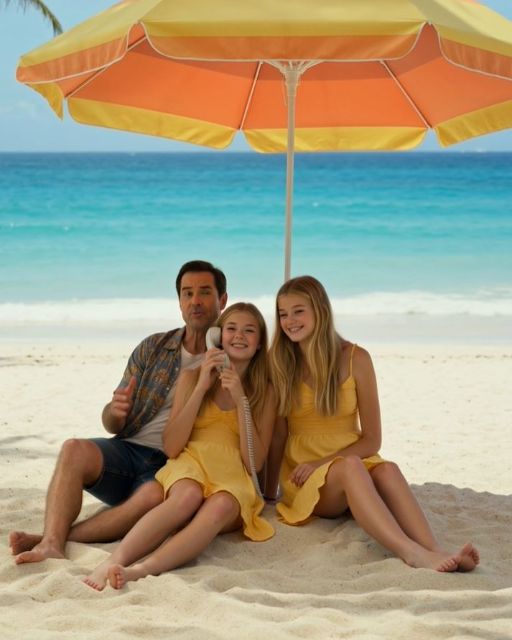
A week later, they came back. I saw the photos they posted. Sun-kissed skin, white sand, turquoise water. They looked so happy.
They walked through the front door of our home, dragging their suitcases behind them, calling my name.
But the house was empty.
The furniture was gone. The pictures were off the walls. Everything that was mine, everything I had paid for, had vanished.
On the clean kitchen counter, where I had collapsed just days before, sat a single white envelope.
Inside were the divorce papers my lawyer had filed. And a court order keeping him away.
My husband told me to get better.
So I did.
The person I called from that sterile hospital room was my younger brother, Daniel. We hadn’t been close in years, not since I married Mark. Mark never liked him, said he was a drifter, irresponsible.
But I knew Daniel had a spine made of steel and a loyalty that ran deeper than any disagreement we’d ever had.
He answered on the second ring.
“Anna? What’s wrong?” he asked, his voice instantly sharp with concern.
The words tumbled out of my mouth, slurred and broken. I told him about the stroke, the hospital, the vacation.
There was a long silence on the other end of the line.
When he finally spoke, his voice was dangerously quiet. “He left you there?”
“Yes,” I whispered, and a single, hot tear traced a path down my temple.
“Okay,” he said, the word a promise. “Okay, Annie. Don’t you worry. I’m on my way.”
Daniel lived five states away. He was at the hospital in less than ten hours.
He walked in looking tired but furious, his eyes sweeping over me, the machines, the drab room. He sat on the edge of the bed and took my good hand in his.
“What do you want to do?” he asked simply.
He didn’t say, “You should leave him.” He didn’t offer advice. He just asked me what I wanted.
In that moment, a lifetime of being a wife and a mother, of putting everyone else’s needs first, fell away. For the first time, I thought only of myself.
“I want out,” I managed to say, the words clearer this time. “I want it all gone.”
A slow smile spread across his face. “Good. Because I already called a lawyer.”
While my family was sipping cocktails on a beach, Daniel became my general. He sat in my hospital room with a laptop and a notepad, coordinating everything.
He found the best divorce attorney in the city, a woman named Sarah who was as compassionate as she was terrifying.
He hired a moving and storage company. He documented every single item in the house that had been purchased with my inheritance from our parents. The furniture, the art, the car. All of it.
I spent my days in grueling physical and speech therapy. I learned to lift a plastic cup. I learned to say my own name again.
At night, Daniel would show me pictures Chloe was posting online. Chloe and Mark parasailing. My other child, my son Ben, looking uncomfortable in the background of a family selfie.
Each photo was a splash of cold water. It washed away any lingering doubt, any shred of nostalgia for the life I thought I had.
It fueled my resolve.
By the time I was discharged, the house was an empty shell. Daniel had arranged for me to move into a bright, accessible apartment across town. It was small, but it was mine.
The day my family returned, I was sitting in my new living room, looking out at a small park. My phone started ringing. And ringing. And ringing.
First Mark. Then Chloe.
I let them go to voicemail. Mark’s messages were a tornado of confusion, then outrage.
“Anna, what is this? Where is everything? This is insane! You need to call me right now!”
“Are you out of your mind? You can’t just do this! This is our home!”
“I’m calling the police, Anna! You’ve clearly had some kind of breakdown!”
Chloe’s were laced with a whiny, self-pitying disbelief.
“Mom? What’s going on? Dad is freaking out. All our stuff is gone. This isn’t fair.”
I listened to them once, then deleted them. Daniel brought me a cup of tea, and we sat in silence for a while.
“Ready for the fight?” he asked.
I took a sip, my hand still a little unsteady. “I’m ready.”
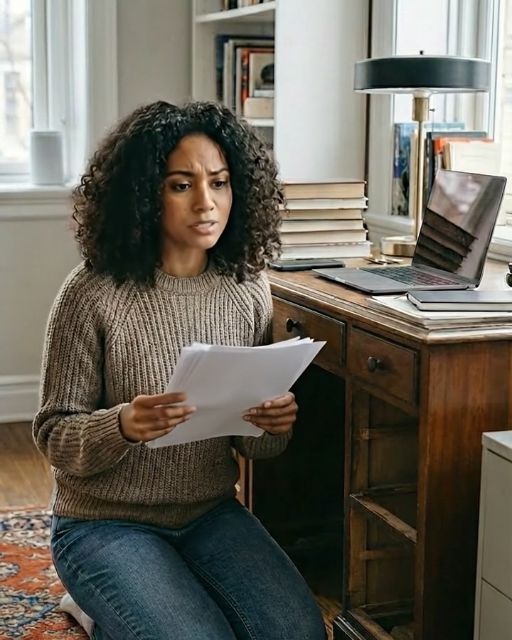
The legal battle was as ugly as I expected. Mark’s lawyer tried to paint me as mentally incompetent, an unstable woman who had acted rashly after a medical crisis.
They argued that I had abandoned my family. They demanded half of everything.
But my lawyer, Sarah, was brilliant. She presented the facts with cold, hard clarity.
She showed the judge the timeline. The date of my stroke. The date my husband and daughter boarded a flight to a tropical resort.
She showed them the social media posts. The smiling, carefree photos posted while I was in the ICU, relearning how to walk.
Mark’s argument that he was just being “practical” about the non-refundable trip fell apart under the harsh courtroom lights. He looked small and selfish.
But the real turning point came from an unexpected place.
My son, Ben.
He was seventeen, a quiet boy who always lived in his sister’s shadow. I had been heartbroken that he went on the trip, that he had left me, too.
One afternoon, Sarah called me. “Anna, you need to come to my office. Your son is here.”
I found Ben sitting in a chair, his hands knotted in his lap. He wouldn’t look at me.
“I didn’t want to go,” he said to the floor. “I told Dad it was wrong. He said I was being dramatic. He said… he said you were a burden, and we all deserved a break from it.”
The words hit me harder than the stroke. A burden.
Ben finally looked up, his eyes swimming with tears. “I fought with him the whole time we were there. I have texts, Mom. I saved them.”
He pulled out his phone. He had recorded a conversation with Mark. In it, my husband’s voice was clear, angry, and dismissive.
“Your mother will be fine,” Mark’s voice crackled from the phone’s speaker. “She’s always dramatic. This is what insurance is for. I’m not flushing ten thousand dollars down the toilet for a little dizzy spell.”
A little dizzy spell.
That was the moment the last bit of love I had for my husband died. It wasn’t a slow fading. It was a sudden, violent death.
This was the first twist. The betrayal wasn’t just neglect; it was a deep, cutting contempt he’d been hiding for years.
Ben’s evidence was a bombshell in court. Mark’s credibility was destroyed.
But there was a second twist waiting, one that even my own brother didn’t know about.
Mark’s entire case rested on the idea that our finances were intertwined, that he was entitled to half of the “marital assets.” He believed my inheritance had been spent on our lifestyle over the years and what was left was community property.
He was wrong.
My father had been a savvy businessman. When he left me my inheritance, it came with a stipulation from his own lawyer: I was to set up a private trust.
For twenty-five years, I had made quiet, careful investments. I had a portfolio, a collection of assets that Mark knew nothing about.
The money for the vacation, the money for the house furnishings – that was all from a joint account I contributed to from my part-time job as a landscape designer. It was a smokescreen.
My real wealth, the money my father had left me to secure my future, was untouchable. And it had grown. A lot.
When Sarah presented the trust documents in court, Mark’s jaw literally dropped. The color drained from his face. He looked at me, truly looked at me, for the first time in years.
He didn’t see his wife. He saw a stranger. A stranger with a fortune he could never touch.
The judge awarded him next to nothing. The house was sold, and since I had made the down payment from my trust, I received the vast majority of the proceeds. He was ordered to pay me alimony, a bitter irony that was not lost on me.
He was left with his clothes, his car, and the consequences of his choices.
The aftermath was quiet.
Mark and Chloe moved into a small, two-bedroom apartment. The life of country clubs and expensive dinners was over. Chloe had to get a job waiting tables to pay for her car.
She called me once, crying. She said she was sorry. She said she didn’t realize.
“You realized,” I told her, my voice calm and even. “You just didn’t care. There’s a difference.”
I didn’t hang up on her. I listened. I told her that if she ever wanted to build a real relationship, one not based on what I could provide for her, the door was open. But she would have to be the one to walk through it.
Ben came to live with me. Our relationship, once strained by the typical teenage distance, began to heal.
We talked. He told me about the pressure he felt from his father and sister. I told him about the loneliness I had felt in my own marriage for years. We were two broken pieces of a family, slowly fitting ourselves back together.
My recovery was long. My right side never fully regained its strength. My speech sometimes slurs when I’m tired.
But my life began.
I started a small non-profit that helps stroke survivors and their families navigate the immediate aftermath of a medical crisis. I use my own money to ensure that no one is left alone in a hospital room because their family decided a vacation was more important.
Daniel moved closer. He and Ben became thick as thieves, working on old cars in my garage. My little apartment was filled with more laughter than my big, empty house ever was.
One day, about two years later, I was at a coffee shop, sketching a garden design for a new client. A man walked past my table, and for a second, I didn’t recognize him.
It was Mark.
He looked older. Tired. The expensive suit was gone, replaced by a worn-out polo shirt. He was thinner. He saw me and froze.
I braced myself for an argument, for a bitter word.
But he just looked at me, a deep, hollow sadness in his eyes.
“You look good, Anna,” he said quietly.
“I feel good, Mark,” I replied. And it was the truest thing I had ever said.
He nodded, gave me a sad, small smile, and walked away.
I watched him go, and I felt nothing. No anger, no pity, no love. Just… nothing. He was a stranger who I used to know.
A crisis doesn’t always come to destroy you. Sometimes, it comes to clear the path. My stroke didn’t break my life; it saved it. It burned away a lie and showed me what was real. It took away my ability to walk straight, but it taught me how to stand on my own.
That day, I lost a husband and a daughter. But I found my son, I found my brother, and most importantly, I finally found myself. And that was a trade I would make again in a heartbeat.