The phone on the nightstand wouldn’t stop vibrating.
A family group chat, dead for months, was suddenly lighting up my screen. Mom. Dad. My brother. All typing at once.
I didn’t need to look. I already knew.
Hours earlier, I’d sent my last message to them. “Then remove my name from every family loan.”
That one sentence had done it.
I left home to get away from borrowed dreams and overdue bills. My dad told me I’d come crawling back. My mom worried about what the neighbors would think.
I went wherever the service sent me.
Years later, the war zone felt more real than my own hometown. The dust, the heat, the constant hum of engines. It had a rhythm. It made sense.
Then one morning, the world went white.
There was a noise like the sky tearing in half.
I woke up under fluorescent lights. I heard doctors use words like “spinal injury” and “no promises.”
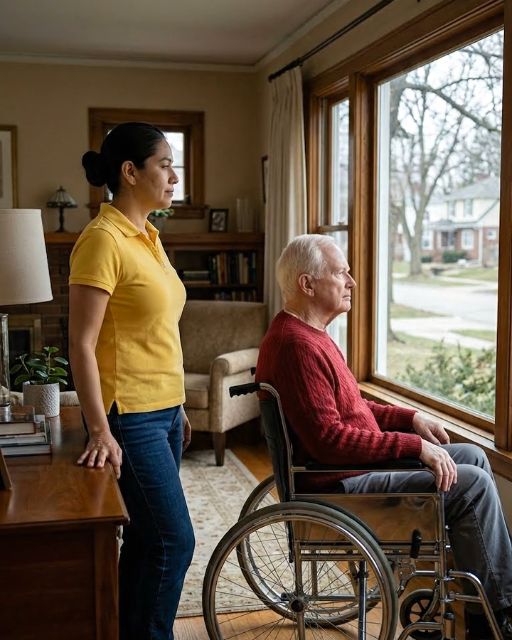
They flew me back to a veterans hospital that smelled like bleach and stale coffee. My legs were just… there. But my arms got strong.
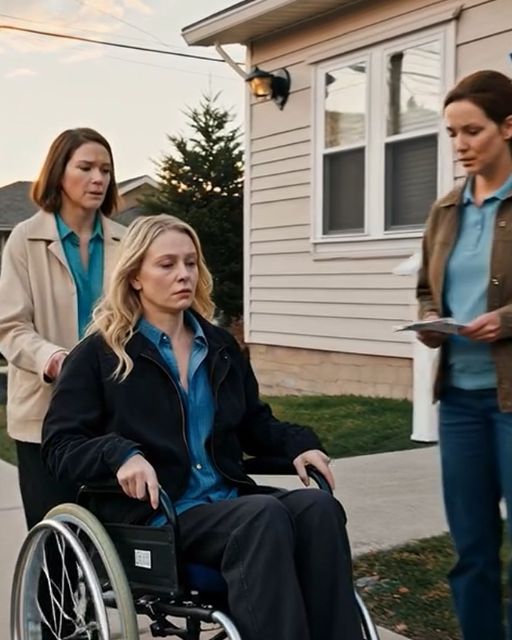
I sent my family one picture from rehab. Me, in the chair. No uniform.
Dad’s reply was instant. “Don’t expect us to take care of you.”
Mom added, “You’d better still have your savings.”
My brother just liked her message.
Not, “We’re glad you’re alive.”
Just money.
I drove myself to their house weeks later. The streets seemed smaller. The paint on the front door was peeling.
My old bedroom was gone. They had turned it into my brother’s home gym.
My things? They’d “donated” them.
That night, on a cheap mattress in their living room, I heard them whispering down the hall.
“He has to sign,” my dad said. “We’re out of time.”
“If he uses his credit again,” my mom replied, “the bank will approve us.”
My brother’s voice cut through the dark.
“He won’t. He’s not the same.”
He was right about that.
At dinner, they didn’t even wait for me to finish eating. The loan papers slid across the table, stopping next to my plate.
“You lived here rent-free,” my dad said. “You owe us.”
My mom tried to smile. “You don’t have kids, no wife. You can spare it.”
I just stared at them. I felt the weight of every physical therapy session, every scar under my shirt.
I didn’t shout. I barely moved.
“No.”
The silence that followed was heavier than anything I’d ever felt overseas.
My dad’s fist hit the table. The water glasses jumped. “You’re ruining this family.”
My mom’s voice cracked. “After everything we did for you.”
I looked from his face to hers.
“You didn’t lose me because I left,” I said, my voice flat as steel. “You lost me when you treated me like a bank account.”
I rolled myself out of that house.
The night air smelled like fresh-cut grass. It smelled like freedom.
And for the first time since I came back, I could finally breathe.
I found a cheap motel off the highway. The kind where the ice machine is always broken.
The room smelled like pine cleaner and regret.
For two days, I just sat there. I stared at the textured ceiling.
The silence was deafening. It was different from the silence in the desert.
This was the sound of being completely alone.
My phone buzzed again. A single text from my brother, Mark.
“You don’t know the whole story.”
I ignored it. It felt like another hook, another attempt to pull me back in.
On the third day, I knew I had to move or I would sink.
I remembered a pamphlet from the VA hospital. A number for a veterans’ outreach program.
My hands were shaking when I dialed. I almost hung up twice.
A gravelly voice answered on the second ring. “Veterans Support. George speaking.”
I tried to talk, but the words got stuck. I was a soldier trained for anything, but asking for help felt like a defeat.
George just waited. He didn’t rush me.
Finally, I managed to say, “I need a place to stay.”
An hour later, a rusty pickup truck pulled up to my motel room.
A man with a graying beard and kind eyes got out. He didn’t offer a handshake or a pitying look.
He just nodded at my chair. “Let’s get you loaded up.”
The place George took me to wasn’t a shelter. It was a large, old house with a wide porch and a ramp.
“Transitional housing,” he explained. “For guys getting back on their feet.”
Inside, it smelled like coffee and sawdust.
Four other men lived there. All of them vets. None of them asked me what happened.
They just made room for me at the dinner table.
My first week was a blur of quiet routine.
I had a small, clean room. A bed that was actually comfortable.
No one whispered about me in the hallways.
George ran the place with a gentle but firm hand. He had lost a leg in a war fought long before mine.
He saw everything.
One afternoon, he found me in the garage, staring at a broken lawnmower.
“You know how to fix things?” he asked.
“I used to,” I said. “Before.”
He rolled over a stool and a box of tools. “Hands still work, don’t they?”
So I started tinkering.
First the lawnmower. Then a wobbly fan. Then the house’s ancient dishwasher.
My hands remembered the logic of circuits and gears. The world shrank to the problem in front of me.
It was better than therapy. It was a purpose.
I started spending my days in the garage. The other vets would bring me things to fix.
A radio that only got static. A watch that had stopped ticking the day its owner came home.
I charged them nothing. The challenge was payment enough.
To get parts, I started going to the public library to use their computers.
The building was quiet, a calm I hadn’t felt in years.
The librarian was a woman named Sarah. She had warm eyes and a smile that wasn’t forced.
She saw me struggling to reach a book on a higher shelf one day.
Instead of just getting it for me, she showed me the library’s grabber tool.
“Empowerment is better than assistance,” she said with a small wink.
I found myself going to the library even when I didn’t need parts.
We would talk. About books. About the town. About everything but the war and the chair.
She saw me. The person. Not the patient or the soldier or the problem.
My phone started buzzing again. My family had found my number.
My mother would leave long, tearful voicemails. “We’re going to lose the house, Samuel. Is that what you want?”
My father’s messages were short and angry. “You owe us. Don’t you forget that.”
I deleted them without listening to the end. But they left a bitter taste in my mouth.
One day, another text from Mark. “They’re getting desperate. Watch out.”
It was a warning. But a warning about what?
A few months passed. I had saved up a little money from my disability checks.
I’d also started a small side business. “Sam’s Fix-It Shop,” run out of George’s garage.
People from town heard about the vet who could fix anything.
My confidence grew. I was building something. For me.
Sarah and I started having coffee after the library closed.
She told me about her dream of opening a small bookstore cafe.
I told her about my dream of having a workshop of my own.
We were two people talking about the future. It was a language I was slowly relearning.
Then one Saturday, they showed up.
I was in the garage, rewiring a vintage lamp, when their car pulled into the driveway.
My dad, my mom, and Mark. They got out and stood there, looking at the house as if it were a slum.
George came out onto the porch. He stood at the top of the ramp, his arms crossed.
“Can I help you?” he asked. His voice was calm, but it had an edge like broken glass.
My father, Richard, pointed a finger at me. “We’re here to see our son.”
“Looks to me like he’s busy,” George said, not moving an inch.
I wheeled myself to the garage doorway. My heart was pounding.
“What do you want?” I asked.
My mother, Carol, started to cry. It was the same performance from the voicemails.
“Samuel, please. The bank is going to foreclose. We have nowhere to go.”
“That’s not my problem,” I said. The words were cold, but I felt a fire in my chest.
My father’s face turned red. “After everything we did for you? We raised you! We put a roof over your head!”
“A roof you charged me for the second I came back,” I shot back.
That’s when Mark stepped forward. He wouldn’t look at me.
“Just sign the papers, Sam. Make it easy.”
“Easy for who, Mark? For you? So you can keep your home gym?”
The silence stretched. The other vets from the house had come out onto the porch, standing behind George.
They weren’t threatening. They were just… present. A silent wall of support.
My father took a step closer. His voice dropped to a hiss.
“You don’t understand what’s at stake. We put everything into this.”
“Everything into what?” I asked, confused. “Your bad credit? Your bills?”
Richard’s temper finally snapped.
“The business! The gym! We started it for Mark!” he yelled.
My mother gasped, putting a hand to her mouth. “Richard, don’t.”
But it was too late. The words were out.
Something clicked in my head. A memory from years ago.
“The money to start it,” I said slowly, looking at my father. “Where did you get it?”
He flinched.
“Don’t you dare,” my mother whispered.
I looked at Mark. His face was pale. “You told me you don’t know the whole story.”
“Tell me now,” I demanded.
My father just stood there, defeated. It was my mother who finally broke.
Her voice was a thin, reedy whine. “We borrowed from your deployment savings account. We were going to pay it back!”
The air left my lungs.
The money I had saved. The money I had earmarked for a down payment on a small house, for a future.
They hadn’t just asked for my help. They had stolen from me.
“You took my money,” I said. The words were quiet, but they echoed in the driveway.
“We invested it!” my father insisted. “The gym was supposed to be a sure thing! But the economy…”
His excuses faded into noise.
The loan they wanted me to co-sign wasn’t for their house. It was a desperate, final attempt to save the business they had started with my stolen money.
They weren’t just asking me to bail them out. They were asking me to go into debt to cover up their crime.
I looked at each of them. My father, the blustering failure. My mother, the master of emotional manipulation.
And my brother. The one who got the home gym, the business, the life I was supposed to have a stake in.
“Was it your idea, Mark?” I asked.
He finally looked at me. There was no remorse in his eyes. Just resentment.
“They did it for me,” he said. “You were over there, playing hero. I was here.”
That was it. That was the moment everything broke for good.
I took a deep breath.
“Get off this property,” I said to them. My voice didn’t shake.
“Samuel…” my mother began.
“Now,” George’s voice boomed from the porch. It wasn’t a request.
My father opened his mouth to argue, but he saw the look on George’s face, and the faces of the men behind him.
He saw that I wasn’t alone anymore.
They got back in their car. Defeated.
As they drove away, I didn’t feel anger. I didn’t feel hatred.
I just felt… nothing. They were strangers.
I rolled back into the garage and picked up the lamp I was fixing. My hands were steady.
The next few months were the best of my life.
My little repair business took off. I moved out of the transitional house and into my own small, accessible apartment.
It had a garage that I converted into a proper workshop.
Sarah and I had our first official date at a small diner. We talked for hours.
She opened her bookstore cafe six months later. I built all her bookshelves.
One evening, I got a call from a distant aunt.
She told me my parents had lost the house. The gym had gone under.
Mark had moved to another state, not leaving a forwarding address.
My aunt expected me to be sad. Or maybe triumphant.
I was neither. Their story was over. Mine was just beginning.
I hung up the phone and looked around my apartment. It was a space I had built. Filled with things I had fixed.
Sarah came over that night with pizza. We sat on the floor and she read to me from an old book.
I realized then that the world hadn’t gone white on that dusty morning in Afghanistan.
It had just been wiped clean. Ready for a new picture to be drawn.
My old family had taught me the value of a dollar.
But George, and the guys at the house, and Sarah… they taught me the value of a person.
Family isn’t about the blood you share. It’s about the people who show up to help you clean up the blood you’ve shed.
It’s about the people who hand you the tools, not the bill.
And for the first time, I was truly home.