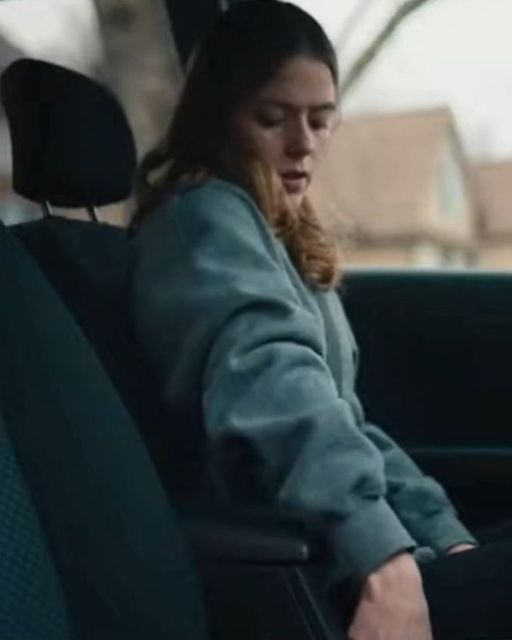
Dave is a gentle giant. He teaches high school math. He cries during Hallmark movies. He brings me coffee in bed every single morning. Yesterday, I borrowed his station wagon to haul some mulch. The passenger seat belt was jammed. I reached deep into the crevice between the seats to dig out a coin or a pen. My fingers brushed against cold plastic.
It was a burner phone. A cheap, prepaid Nokia.
My stomach turned to water. I sat in the driveway, holding the device. I thought: One of the young teachers. Maybe the secretary. I was ready to see hearts, dirty texts, plans for a motel meetup. My hands were shaking so hard I dropped it twice.
I pressed the power button. It didn’t have a passcode.
I went to the inbox. Empty.
I went to the call log. Empty.
I went to the “Drafts” folder.
There was only one saved draft. It wasn’t a message to a lover. It was a list of names.
Brenda Miller.
Karen Smith.
Lisa Johnson.
I stopped breathing. Brenda Miller was the girl who went missing from our town in 1996. Karen Smith vanished in 1999. Beside each name was a set of GPS coordinates. And at the very bottom of the list, typed out just ten minutes ago, was a new name: Susan.
My name.
I heard the front door of the house open. Dave stepped onto the porch. He was smiling. He was holding two cups of coffee. He saw the phone in my hand. He didn’t stop smiling. He just set the coffee down on the railing and reached into his back pocket for his…
Own phone. His regular smartphone.
My heart was a hummingbird trapped in my ribs.
He held up his phone, its screen bright in the afternoon light. He swiped it open and showed me a news article from a neighboring county. The headline read: “Jane Doe Identified After 25 Years.”
His smile was gone now, replaced by a deep, hollow sadness.
“They found her, Susan,” he said, his voice cracking. “They found Sarah.”
I stared at him, my mind a blank slate of terror and confusion. Sarah was his older sister. She had run away from home when he was just a teenager. That was the story he always told. The story his parents told.
“She didn’t run away,” he whispered, his eyes welling up. “She disappeared. Just like the others.”
He sank down onto the porch steps, his big shoulders slumping. He looked broken.
I slowly walked toward him, the burner phone feeling like a block of ice in my hand. “Dave, what is this?”
He gestured to the cheap Nokia. “That’s my real work. My life’s work.”
He explained. He explained for what felt like an eternity, the sun dipping below the rooftops as his story unspooled.
When his sister Sarah vanished, the police treated it as a runaway case. A troubled teen. His parents, ashamed and grieving, went along with it. But Dave knew his sister. She wouldn’t have left without a word.
He was just a kid, but he started looking. He collected newspaper clippings. He mapped out where she was last seen. He spent his weekends walking the woods behind their old house.
Years passed. He went to college, became a teacher, met me. But he never stopped looking.
Then Brenda Miller went missing. The details were eerily similar. A quiet girl, last seen walking home from the library. A few years later, Karen Smith vanished from a park just two towns over. Then Lisa Johnson, from the college campus.
He saw a pattern no one else did. The police departments didn’t connect them. They were different jurisdictions, years apart. But Dave connected them.
The burner phone was his private investigation hub. It was untraceable. He used it to collate his research, to log potential sites. The GPS coordinates weren’t where the bodies were. They were the last known locations, the points from which the darkness had swallowed them.
“I keep it separate from my life,” he said, looking at me with pleading eyes. “From our life. I didn’t want this to touch you.”
The pieces started to click into place, but one still jaggedly refused to fit.
“But my name, Dave,” I choked out. “Why is my name on that list? It says it was added ten minutes ago.”
His face went pale. He snatched the phone from my hand, his fingers trembling now. He stared at the screen, his jaw tightening.
“I didn’t put it there,” he said, his voice a low, dangerous rumble I had never heard before. “I swear on my life, Susan. I didn’t type your name.”
We both sat in silence as the implication washed over us. It was a cold, terrifying wave.
Someone else knew about his secret investigation.
Someone else had access to that phone.
And that someone was now threatening me.
We went inside, the coffee on the porch railing forgotten. The safe, cozy world of our little house suddenly felt like a fragile glass box.
“Who?” I whispered, looking around as if the walls themselves might be listening. “Who could possibly know?”
Dave’s mind was racing. “I’m careful. I never leave it lying around. It’s always in the car, tucked deep. The only… the only time…” He trailed off, his eyes widening in horror.
“The only time what, Dave?”
“Yesterday,” he said, his voice barely audible. “We had Mark over to watch the game. I left my jacket on the chair in his den when I went to the kitchen. The phone was in the inside pocket.”
Mark. Our best friend. Mark, who had been the best man at our wedding. Mark, who taught history at the same school and came over for burgers every other weekend. It was impossible. It was laughable.
“No,” I said, shaking my head. “Not Mark. He loves us. He’s like a brother to you.”
“He was gone for a few minutes,” Dave pressed on, ignoring me, piecing it together. “Said he needed to grab something from his garage. He could have… he could have taken it from the jacket, gone to his car, added your name, and put it back.”
It felt insane. A plot from a bad movie. Mark was cheerful, a little goofy, always ready with a bad pun. He wasn’t a monster.
“But why?” I asked. “Why would he do this?”
Dave stood up and started pacing. “He knows I’ve been getting closer. I told him a few weeks ago that I’d found a new potential search area for Sarah, up by the old quarry.” He stopped and looked at me. “The quarry is less than a mile from where Brenda Miller was last seen.”
My blood ran cold.
“I must have said something that spooked him,” Dave murmured, his face a mask of dawning agony and betrayal. “He’s warning me. He’s telling me to back off, or you’re next.”
The next twenty-four hours were a blur of quiet, suffocating panic. We acted normal. We had to. Mark called to see if Dave wanted to grab a beer. Dave’s voice was steady as he made an excuse, a skill I never knew he possessed.
That night, neither of us slept. We lay in bed, staring at the ceiling, every creak of the house a potential threat. Dave held my hand so tightly his knuckles were white.
“We go to the police,” I said into the darkness.
“And say what?” he countered, his voice raw. “That our best friend typed my wife’s name into a secret phone I’ve been using for an illegal private investigation? They’ll think I’m the crackpot. They might even think I’m the killer, trying to frame him. We have no proof. It’s just a name on a screen.”
He was right. We had nothing.
The next day, Dave called in sick to work. I did the same. We turned our dining room into a command center. He brought in a dusty box from the attic, filled with old maps, files, and notes. It was twenty-five years of hidden grief and relentless obsession laid bare on our table.
“He’s a history teacher,” Dave said, thinking out loud. “He’s meticulous. He plans things. There has to be a link. A historical link, maybe.”
We looked at the dates the women disappeared. They seemed random. Different months, different years. We looked at the locations. They were spread out across three counties.
“What did they have in common, Dave?” I asked, looking at the faded photographs of the missing women. Sarah, Brenda, Karen, Lisa. They were all pretty, all with kind eyes. They looked like people you’d know.
“Nothing,” he said, frustrated. “Different ages, different schools, different lives.”
Then my eyes landed on a detail in one of the files. It was a witness statement from the Brenda Miller case. A kid had seen a car near the woods where she was walking. An older model sedan, maybe a beige color. He remembered it because it had a small, circular sticker in the back window. A historical society emblem.
“Dave,” I said, my voice shaking. “Mark drives his grandfather’s old sedan sometimes. The restored one he’s so proud of.”
Dave’s face went rigid. “The beige one.”
“It has a sticker,” I continued, my heart pounding. “For the Tri-County Historical Preservation Society.”
We stared at each other. It was thin. It was circumstantial. But it was the first thread we’d ever had.
Dave pulled out a map and circled the four locations where the women were last seen. He stared at it, his brow furrowed.
“It’s not random,” he said softly. “Look. This is the site of the old ironworks. This is near the old revolutionary war encampment. This one is where the original town settlement was. And this… this is where they found Sarah. It’s the site of a forgotten colonial-era trading post.”
He looked up at me, his eyes filled with a terrible understanding. “Mark. His passion. His lectures on ‘preserving local history.’ He’s not preserving it. He’s marking it. He’s burying his victims at historical sites. His own private, twisted museum.”
The horror of it was absolute. Mark wasn’t just a killer. He was a collector.
A plan began to form. A dangerous, stupid plan, born of desperation. We couldn’t go to the police with a theory about historical sites. We needed more.
Dave called Mark. He kept his voice light, casual. “Hey, man. Susan and I are going for a hike tomorrow up near the old quarry. The spot I was telling you about. Figured I’d do some exploring. You should come.”
There was a pause on the other end of the line. “The quarry? Yeah, sure. Sounds good. I’ll meet you guys at the trail head around noon.”
The next morning felt like my last. I wrote a letter to my parents and left it on my nightstand. Dave checked the small, powerful hunting knife he kept in his tackle box. He hadn’t used it in years.
We drove to the quarry, the silence in the car thick with everything we couldn’t say.
Mark was already there, leaning against his car. Not the beige sedan, but his modern SUV. He was smiling, wearing hiking gear. He looked exactly like our friend Mark.
“Ready for an adventure?” he said cheerfully.
We started down the trail, Dave in the lead, me in the middle, and Mark behind me. Every step felt heavy. The crunch of leaves under his boots behind me was the only sound I could hear.
Dave led us off the main path, toward a rocky, overgrown area. “I read this was part of the original quarry,” he said, his voice strained. “Part of the town’s history.”
He was baiting the hook.
Mark’s eyes lit up with a familiar, academic gleam. “That’s right! Most people don’t know that. They blasted this section out in the 1880s.”
We walked further, the air getting colder.
“It’s amazing what you can find if you just dig a little,” Dave said, looking right at Mark. “The secrets the earth keeps.”
Mark’s smile faltered, just for a second. “You’d be surprised.”
We reached a small, secluded clearing, surrounded by a sheer rock face on one side. It felt like a trap.
Dave stopped. He turned around to face Mark. My hand went to my pocket, where my phone was already dialing 9-1-1, ready to hit send.
“I know it was you, Mark,” Dave said, his voice quiet but heavy as stone.
Mark just chuckled. It was a hollow, ugly sound. “Know what? That you’re a weirdo who spends his weekends chasing ghosts?”
“You took them,” Dave said. “Sarah. Brenda. All of them. And you put them in your ‘historical sites.’”
Mark’s face changed. The friendly mask dissolved, revealing something cold and empty underneath. “She shouldn’t have laughed at me,” he said, his voice flat.
“Who?” Dave asked, his hands clenched into fists.
“Sarah,” Mark hissed. “We were kids. I told her I liked her. I wrote her a poem about the history of the stars. And she laughed. She told her friends I was a creep.” He took a step closer. “People don’t appreciate history, Dave. They mock it. They forget it. I make sure they become a part of it. A permanent part.”
It was the confession. My thumb hovered over the call button.
“And Susan?” Dave growled. “You were going to make her a part of it, too?”
“You were getting too close,” Mark sneered. “Poking around. I had to get you to stop. Threatening your perfect little wife seemed like the easiest way. I was hoping you’d just drop it. But you’re not that smart, are you?”
In that moment, Mark lunged. Not at Dave, but at me.
He was fast, but Dave was faster. He tackled Mark, and they went down in a tangle of limbs. I screamed and hit the call button, shouting our location into the phone.
It was a clumsy, brutal fight. Not like the movies. Just two men, one fueled by decades of grief, the other by a cold, dark madness. Dave was bigger, but Mark was fighting with a terrifying desperation. He pulled a rock from the ground and swung it.
It connected with Dave’s shoulder, and he roared in pain.
I grabbed a heavy, dead branch from the ground and swung it with all my might at Mark’s back. He staggered, turning his furious eyes on me. That was the opening Dave needed. He got on top of him, pinning him to the ground just as the faint sound of sirens echoed through the trees.
The aftermath was a storm. The police arrived. Mark, pinned under a grieving, enraged giant, confessed to everything. He led them to the sites. He gave the families the closure they had been denied for decades.
Our town was broken, but it began to heal. The man who had organized the historical society parades, the friendly teacher who judged the middle school science fair, was a monster.
Dave became a different kind of man. The secret he’d carried alone for so long was finally out. He met with the families of the other victims. They cried together. They shared stories. They found solace in their shared loss.
Our life was never the same. The quiet trust of our early years was replaced by something different. It was something forged in terror and truth. It was stronger. Deeper.
We think we know the people we love. We see the gentle giant who cries at movies, the husband who brings us coffee in bed. We don’t see the silent burdens they carry, the secret wars they wage in the quiet corners of their hearts. I thought I had found a terrible secret in my husband’s car. I thought I had discovered a monster.
Instead, I found a hero. And in helping him face his oldest demon, I found a strength in myself, and in our love, that I never knew was possible. Trust isn’t about never having secrets; it’s about what you do when they finally come into the light.