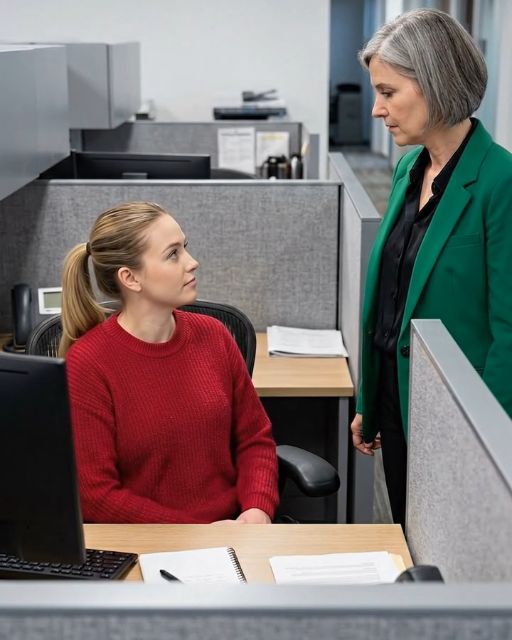
My new neighbor, Debra, moved in a month ago and immediately started complaining about my yard. Specifically, my grandmother Agnes’s sprawling, old-fashioned rose bush. “It’s an eyesore,” she snapped, “and it’s blocking my perfectly good sun.”
I, Chelsea, told her politely that it was sentimental. My grandmother planted it decades ago. Debra didn’t care. She sent passive-aggressive texts, then official-looking letters from the city about “overgrowth.” My blood was boiling.
Finally, I decided to trim it back severely, just to shut her up. I grabbed my trowel and started digging around the old roots, clearing away decades of debris.
That’s when my trowel hit something hard. Not a rock. It felt hollow.
I dug frantically, uncovering a small, ornate metal box, green with age. It was locked. My hands trembled as I pried it open with a screwdriver.
Inside, nestled on yellowed velvet, was a single, fragile piece of paper. An old birth certificate. My eyes scanned the names. The baby’s name was Debra. My jaw dropped. The parents listed were Agnes… and a man I’d never heard of. My grandmother had a secret child. And that child was my horrible new neighbor.
My mind went completely blank. It was like the world had tilted on its axis.
Debra. My aunt?
It couldn’t be. The woman who left notes on my car about parking two inches over the line. The woman who reported my recycling bin for being out too early.
I stumbled back into the house, the metal box clutched in my hand. My heart was a drum against my ribs. I sat at the kitchen table, staring at the delicate, looping script on the certificate.
Agnes Miller and Arthur Finch.
I knew my grandfather’s name was Robert. He had passed away before I was born. But who was Arthur Finch?
I called my dad, my grandmother’s only other child. His voice was cheerful on the other end.
“Hey, kiddo! What’s up?”
I didn’t know how to start. “Dad… I was trimming Grandma’s rose bush.”
“Finally giving in to that neighbor, huh? Probably for the best.”
My throat felt tight. “I found something. Buried under it.”
I explained about the box, the velvet, the piece of paper inside. I read the names aloud. There was a long silence on the other end of the line. So long, I thought the call had dropped.
“Dad? Are you there?”
His voice, when it came, was thin. “That’s impossible, Chelsea.”
“It’s right here,” I said, my own voice shaking. “A birth certificate. For a baby named Debra. Born sixty-two years ago.”
I heard him take a shaky breath. “Debra… your neighbor is named Debra?”
“Yes.” The single word hung in the air between us.
“My mother… she never said anything,” he whispered. “Nothing at all.”
He told me he’d be over in an hour. I hung up the phone and felt a profound sense of loneliness. My grandmother, the woman who taught me how to bake, who smelled of lavender and vanilla, was suddenly a stranger.
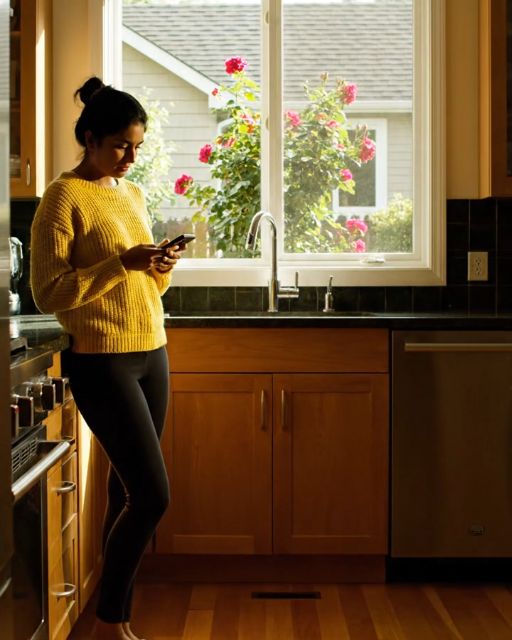
I looked out the kitchen window. The rose bush, thick with thorns and pale pink blossoms, seemed different now. It wasn’t just a plant. It was a guardian. It had been holding a secret for over half a century.
My father arrived, his face pale and drawn. He held the birth certificate with hands that were not quite steady.
“Arthur Finch,” he read, his brow furrowed. “I’ve never heard that name in my life.”
We spent the rest of the afternoon in the attic, a place I hadn’t been in years. It was dusty and hot, filled with the ghosts of forgotten things.
My dad pulled down a heavy trunk. “Grandma’s keepsakes,” he said. “Maybe there’s a clue in here.”
We sorted through old report cards, yellowed newspaper clippings, and dried corsages. Then, at the very bottom, we found a stack of letters tied with a faded blue ribbon.
The letters were addressed to my grandmother. The return address was a military base.
The handwriting was bold and masculine. They were all signed, “Yours always, Arthur.”
My dad and I sat on the dusty attic floor and read them, one by one. A story unfolded in front of us, a story my grandmother had taken to her grave.
Arthur Finch was her first love. They met the summer she was seventeen. He was a mechanic from the “wrong side of the tracks,” as he put it in one letter. Her parents, my great-grandparents, had forbidden the relationship.
They met in secret. Their favorite spot was a small, empty lot at the edge of town. The very lot where my house, her house, now stood.
In one letter, Arthur wrote about planting a rose bush together. “A climbing rose,” he wrote. “So our love can grow all the way to the stars, Aggie.”
My heart ached. The rose bush. It wasn’t just hers. It was theirs.
Then came the letter where she told him she was pregnant. His reply was filled with pure joy. He wasn’t scared. He was ecstatic. He promised to save up, to come back and marry her, to build a small house for their family right there, next to their rose bush.
But he was deployed before he could. The letters kept coming, filled with love and plans for the future.
And then they stopped.
We found the last piece of the puzzle in a small, separate envelope. A telegram. It was cold and official. It expressed the Secretary of War’s deepest regrets. Arthur Finch was killed in action.
My grandmother was eighteen, pregnant, and her love was gone forever.
Tears streamed down my dad’s face. “She was all alone,” he said, his voice thick with emotion.
My great-grandparents, in their shame and grief, had sent her away to a home for unwed mothers. They arranged a closed adoption. They made her give up her baby, Arthur’s baby.
They made her promise to never speak of it again.
When she came back, she was a different person. Quieter. Sadder. A few years later, she met and married my grandfather, a kind and stable man. They had my father. She was a good wife, a wonderful mother. But a piece of her heart had been buried with Arthur.
Buried right under that rose bush.
Now I understood. The hostility from Debra wasn’t just about blocked sunlight. It was something deeper.
The next day, I knew what I had to do. I couldn’t just knock on her door and drop a bombshell like this. I needed to approach it carefully.
I saw her in her yard, yanking weeds with a vengeance. I took a deep breath and walked over.
“Debra,” I said, my voice softer than I intended.
She stood up, wiping sweat from her brow. Her eyes were hard. “What do you want? More excuses about that monstrosity?” she said, gesturing to the roses.
“I wanted to ask you about your family,” I said, ignoring her jab. “You’ve never mentioned them.”
Her face closed off completely. “That’s none of your business.”
“Were you adopted?” I asked gently.
She froze. Her whole body went rigid. “How did you know that?” she whispered.
“I found something,” I said. “Something that belonged to my grandmother.”
I held out the small metal box. She looked at it, then at me, her eyes filled with suspicion. I opened it and showed her the birth certificate.
She snatched it from my hand. Her eyes scanned the paper, her breath catching in her throat. She looked from the name Agnes Miller to her own name, Debra.
“This is some kind of sick joke,” she spat, her voice trembling. “You’re making this up.”
“I’m not,” I insisted. “I also found letters. From your father.”
Her composure finally cracked. A single tear rolled down her cheek, and she wiped it away angrily.
“My father?” she choked out. “I never had a father. Or a mother. I had people who took me in. They gave me a roof and food, but they never… they never loved me.”
My heart broke for her. All the anger I’d felt toward her vanished, replaced by an overwhelming wave of sadness.
“His name was Arthur,” I said softly. “And he loved your mother very much. They both loved you.”
She just shook her head, unable to speak, and ran back into her house, slamming the door behind her.
I left the box on her porch.
For the next few days, there was silence. I didn’t see her. Her curtains stayed drawn. I started to worry. I began to think I had made a terrible mistake, that I had opened a wound that could never be closed.
Then, one evening, there was a soft knock on my door. It was Debra. Her eyes were red and swollen. She was holding the box and a stack of letters. My letters.
“I… I read them,” she said, her voice barely a whisper. “All of them.”
I led her inside to the kitchen. We sat at the table, the same table where my grandmother used to sit.
“I bought this house on an impulse,” she told me, looking around the room. “I was living across the country, but I saw it online. I felt this… this pull. I had to be here. I didn’t understand why.”
She paused, looking out the window at the rose bush.
“When I saw that bush,” she continued, “I hated it. It felt so happy. So full of life. It reminded me of everything I never had. A home. A real family.” Her voice cracked. “But I couldn’t stop looking at it either.”
We talked for hours. She told me about her lonely childhood, always feeling like she didn’t belong. She had searched for her birth parents once, years ago, but hit a dead end with the sealed adoption records. She eventually gave up, resigning herself to a life without roots.
My dad came over, and I introduced them. “Dad, this is Debra. Your sister.”
It was awkward at first, two strangers connected by a secret. But my dad, bless his heart, just opened his arms. Debra hesitated for a moment, then fell into his embrace, sobbing. She was finally home.
In the weeks that followed, our lives changed. Debra became a part of our family. She had Sunday dinners with us. She came to my son’s baseball games. We found she had my grandmother’s laugh and Arthur’s stubborn streak.
One Saturday, Debra came over with a pair of gardening gloves and a smile.
“I think this bush could use some care,” she said, nodding toward the tangle of roses. “From both of us.”
We spent the entire afternoon working side-by-side. We didn’t trim it back. We nurtured it. We carefully pruned the dead branches and tied up the healthy ones. We worked manure into the soil around its ancient roots.
As we worked, we found a small, flat stone hidden in the overgrown grass at its base. Moss had covered the inscription, but we gently scraped it clean.
Carved into the stone were two sets of initials: A.M. + A.F.
Agnes and Arthur.
Debra traced the letters with her finger, her eyes welling up. “They really did love each other,” she said.
“And they loved you,” I replied, putting my arm around her shoulder.
The rose bush was no longer a point of contention. It was our connection. It was a monument to a love that was lost but never forgotten. It was a testament to the fact that roots, both for flowers and for families, run deeper than you can ever imagine.
Sometimes, the things that irritate us the most are just trying to get our attention. They are signposts pointing us toward a truth we need to uncover. Debra’s fight against the rose bush was really a fight against her own unknown history. Her anger was a homing beacon for her heart.
By digging into the dirt, by being willing to look beneath the surface of my own frustration, I didn’t just find a box. I found a long-lost aunt. I gave my dad a sister. And I gave a woman who had spent her whole life feeling adrift an anchor, a family, and a home. The greatest treasures are not always buried deep in the earth, but deep in the past, waiting for the right person to bring them into the light.