When I was 6 my dad got a job overseas and him and mom left me and my brother with my widowed grandpa. It was supposed to be a “short-term venture” in Dubai, a way to build a nest egg so we could have the perfect life in the UK. My brother, Callum, was only four at the time, barely old enough to understand why our bedrooms were being packed into boxes. We moved into Grandpa’s drafty old cottage in the Peak District, and for a long time, the only connection we had to our parents was a grainy Skype call once a week.
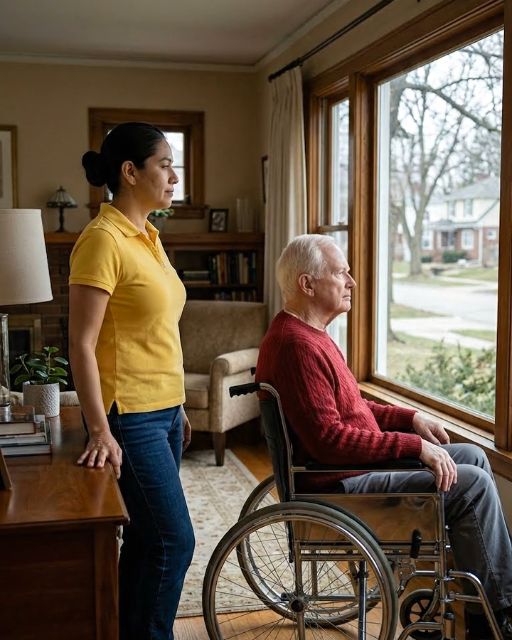
The family got back when I was 15. By then, the house in the suburbs had been bought, the cars were shiny and new, and my parents walked back into our lives like they had just been away for a long weekend. But the gap between us was a canyon that no amount of expensive toys or fancy dinners could bridge. Grandpa had become our world; he was the one who taught me how to ride a bike, who sat through every school play, and who held Callum when he had night terrors.
Grandpa passed away last year, and with him went the only real buffer between us and the people who shared our DNA but not our history. My parents, now in their late fifties, had begun to struggle with the rising costs of their lifestyle and some poorly timed investments. They had grown accustomed to the best of everything, but the “nest egg” was starting to look more like an empty shell. Last Tuesday, Callum called me over to their house for what he described as a “family summit” to discuss the future.
Recently my sibling told me they wanted to split our parents’ bills among the 3 of us. He had this spreadsheet pulled up on his laptop, looking all professional and logical, showing the mortgage, the insurance, and their mounting medical costs. He looked at me with this earnest, almost pleading expression, saying it was our duty as their children to make sure they lived out their golden years in comfort. I felt this cold, hard knot forming in my stomach as he talked about “repaying the debt” we owed them for our upbringing.
I refused. I looked them straight in the eyes and asked, “Did you ever stop to think about who actually paid the bill for our childhood?” My parents sat there on their Italian leather sofa, looking shocked, while Callum started to argue that they had sent money every month for our keep. I stood up, my hands trembling just a little, and told them that money doesn’t buy the nine years of silence they left in that cottage.
I walked out of that house and drove straight to the old cottage, which was currently sitting empty while we decided whether to sell it. I had the keys in my pocket, and as I stepped inside, the smell of woodsmoke and old peppermint hit me like a physical wave. I went to the small study where Grandpa used to keep his ledgers and his “important papers.” I wasn’t looking for money; I was looking for the truth that had been tucked away in the back of my mind for nearly two decades.
In the bottom drawer of his desk, tucked under a stack of old garden catalogues, I found a bundle of letters that had never been opened. They were all addressed to Grandpa, postmarked from Dubai, and dated between the years 2006 and 2012. My heart hammered against my ribs as I tore the first one open, expecting to find checks or bank transfers. Instead, I found desperate pleas from my mother, begging Grandpa to let them come home and find work in England.
It hadn’t been my parents’ choice to stay away for nine years; it had been Grandpa’s. As I read through the letters, a different story began to emerge, one that painted the man I worshipped in a much darker light. Grandpa had been struggling financially after Grandma died, and he had used our parents’ guilt against them. He had convinced them that the UK economy was in a total collapse and that if they came back, they would be homeless and unable to feed us.
He told them in his replies—copies of which were tucked into the same file—that Callum and I were “thriving” and didn’t even ask about them anymore. He told them that coming back would “disrupt our stability” and that they should stay overseas and keep sending the bulk of their earnings to his “investment account” for our future. He wasn’t just being a loving guardian; he was an architect of isolation who had effectively sold our childhood back to our parents at an exorbitant price.
I sat on the floor of that dusty office, the letters scattered around me like autumn leaves, feeling the entire foundation of my life shift. My parents hadn’t been selfish career-chasers; they had been terrified, young parents who thought they were protecting us from a poverty that didn’t exist. They stayed in a place they hated, working for people they despised, because they believed the man they trusted most in the world. Grandpa had used that money to keep his cottage and his pride, while we grew up thinking our parents had abandoned us.
I realized then why my parents were so obsessed with luxury once they finally got back. They were trying to prove to themselves that the sacrifice was worth it, trying to buy back the love they thought they had lost. They were flashy and demanding because they were overcompensating for a decade of being told they weren’t needed. I had spent fifteen years resenting the wrong people, and my brother had been carrying a weight of responsibility that was never his to bear.
I drove back to my parents’ house, the bundle of letters sitting on the passenger seat. When I walked back inside, they were still sitting in the same spots, looking like they had been frozen in time. Callum started to snap at me for being “disrespectful,” but I just laid the letters on the table in front of them. “I found these in Grandpa’s desk,” I said quietly. “I think we all need to read them before we talk about money again.”
The silence that followed was heavy and thick as my mother picked up the first letter, her eyes filling with tears the moment she recognized her own handwriting from twenty years ago. As they read, the anger in the room dissolved into a profound, soul-crushing grief. My dad put his head in his hands and let out a sound that I will never forget—a broken, jagged sob for the life he thought he had chosen but had actually been tricked into.
We spent the rest of the night talking, really talking, for the first time in our lives. My parents apologized for not being brave enough to check the facts for themselves, and I apologized for the years of coldness I had shown them. We realized that Grandpa, in his fear of being alone and poor, had robbed four people of their best years. He wasn’t a monster, just a desperate, selfish man who didn’t know how to ask for help without using a lie as a lever.
The rewarding conclusion wasn’t about the bills or the spreadsheet. We decided to sell the cottage and the flashy cars and move into a smaller, more manageable house together—all of us. We realized that we didn’t need the Italian leather or the shiny status symbols to be a family. We needed to make up for the nine years of missed birthdays and school plays by simply being present in the same room. We used the equity from the cottage to clear their debts and set up a modest, honest life where no one had to prove their worth with a checkbook.
Callum and I took over the utility bills and the groceries, not because we “owed” them for our upbringing, but because we wanted to take care of the people who had sacrificed so much based on a lie. The dynamic shifted from one of resentment to one of genuine partnership. I finally stopped looking at them as strangers who had abandoned me and started seeing them as the survivors they were. We aren’t perfect, and there is still a lot of healing to do, but for the first time, the house feels like a home.
I learned that the “truth” we hold onto so tightly is often just one side of a very complicated story. We judge people based on the gaps they leave in our lives, without ever realizing that someone else might be standing in that gap, holding the door shut. It’s easy to be angry, but it’s much harder to be curious enough to find out what’s actually happening beneath the surface. Forgiveness isn’t about forgetting what happened; it’s about understanding why it happened so you can finally let go of the weight.
Family isn’t built on the money sent home or the luxury of the house you live in. It’s built on the honesty you share and the willingness to face the uncomfortable parts of your history together. Sometimes you have to tear down the old stories to build a new one that actually has room for everyone. I’m glad I walked back into that cottage, and I’m glad I was brave enough to look in that bottom drawer.
If this story reminded you that there is always more to the story than what you’ve been told, please share and like this post. We all have family secrets and misunderstandings, and sometimes a little bit of grace can go a long way. Would you like me to help you find a way to start a difficult conversation with your own family or look into a history that’s been bothering you?