The phone vibrated against the cheap motel nightstand.
A number I had deleted but would never forget. Her number.
I answered. It wasn’t her voice. It was his.
He was breathing hard, the words catching in his throat. “We have a problem.”
I said nothing. I let him choke on the silence. He was the one who put a hand on her shoulder and smirked as I walked out the door with a single bag.
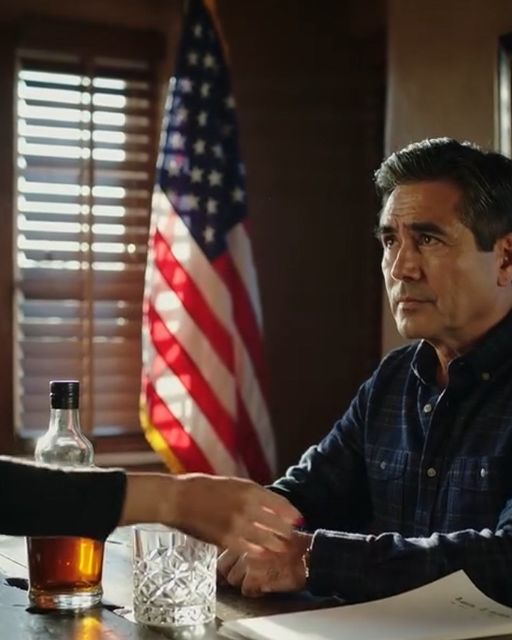
Just twenty-four hours ago, she slid the papers across the table. Her diamond bracelet caught the light, a final, cold flash of the life I’d built and was now being evicted from.
I signed my name. I gave up half a billion dollars without a fight.
Now, her new man was on my phone, his voice fraying at the edges.
“The servers,” he stammered. “They’re all down. The whole system is dark. We’re losing millions by the minute.”
My system. My code. My architecture.
He tried to sound like he was in charge. “We need you to log in. Just fix the security protocol. We will compensate you, of course.”
The sound of my empire collapsing was the first real music I had heard in a year.
I thought about the silent little backdoors I’d coded into the foundation. Not for sabotage. For memory. A way to always find my way home.
“I’m on my way,” I said, and hung up.
The rain was a solid sheet against the windshield, blurring the city lights into long, weeping streaks. They thought they had taken my company. They had only stolen the keys to a car they didn’t know how to drive.
The boardroom was a vacuum.
The same executives who watched me leave without a word now stared at me like I was a ghost at a funeral. Their funeral.
He stood by the main monitor, his perfect suit stained with sweat at the collar. She was next to him, smaller than I remembered, her face pale as ash. She wouldn’t meet my eyes.
I didn’t acknowledge them. I walked to the head of the table, to my old terminal.
My fingers found the keys.
Three commands. That’s all it took.
The massive screens around the room flickered, then blinked back to life. A wave of audible relief washed through the room. Fools.
They were all looking at the restored data streams, the stock tickers stabilizing, the green lights blinking.
They weren’t looking at the bottom of the screen. At the single line of text that had just appeared.
OWNERSHIP PROTOCOL INITIATED. FOUNDER CLAUSE EXECUTED.
The company name on every asset file, every account, every digital deed, changed. It dissolved her name and replaced it with mine. Legally. Irreversibly. The original incorporation bylaws I wrote had a dormancy clause. An algorithm that knew its creator.
The silence that fell next was heavier than stone.
I turned to leave.
Her voice was a whisper. “You planned this?”
I stopped at the door and looked back at her, at him, at the ruins of their short-lived kingdom.
“No,” I said. “You did.”
Outside, the storm had broken. The air was cold and clean. I walked into the street with nothing. And everything.
I didn’t go back to the motel. I just walked.
The city smelled of wet pavement and a second chance.
For the first time in years, I wasn’t thinking about server loads or quarterly projections. I was just a man on a sidewalk, feeling the cool night air fill my lungs.
The victory in the boardroom felt hollow now. It was a necessary move, a correction. It wasn’t a balm for the wound she had left.
Clara. Her name was a ghost on my lips.
We met when I was coding in a garage, living on instant noodles and ambition. She saw something in me, she’d said.
Or maybe she saw something in the code, a future she could cash in on. I didn’t want to believe that, not even now.
My phone buzzed again. This time it was my old lawyer, frantic, ecstatic.
I sent it to voicemail. I didn’t need a lawyer to tell me what I already knew.
The company, my company, was mine again. The legal challenges would be a storm, but a storm I had built the ship to withstand.
I found a small, all-night diner and slid into a booth.
The waitress brought me coffee without me having to ask. She looked tired but kind.
I ordered pancakes. It felt like something a normal person would do.
I hadn’t felt like a normal person in a decade. I had been a CEO. A husband. A brand.
Now I was just Mark. A guy in a diner with nothing but the clothes on his back and a multi-billion-dollar corporation tied to his digital signature.
The irony almost made me laugh.
The next few days were a blur of legal meetings and system audits.
I didn’t go back to the main office. I worked from a small, rented space downtown, a place with brick walls and a window that actually opened.
I brought in a skeleton crew of my most trusted old-timers. People who had been with me from the garage days.
One of them was Sarah, a brilliant programmer I’d mentored years ago. She’d quit a month after I was pushed out.
“I knew you’d be back,” she said, not with a triumphant smile, but with a quiet, steady confidence. It meant more than any cheering crowd.
We found what he, Julian, had been doing.
He was gutting the company from the inside out. Shady deals, shell corporations, transferring assets offshore.
He hadn’t been trying to run my company. He had been trying to bleed it dry and disappear.
Clara had been the key. Her signature, her majority stake, gave him the access he needed.
She wasn’t his partner. She was his tool.
That thought didn’t bring me joy. It brought a deep, weary sadness.
I spent my nights on a pull-out couch in that new office, surrounded by whiteboards and the hum of servers.
It felt more like home than the sterile mansion I had shared with Clara ever did.
We were untangling Julian’s mess, shoring up the foundations. We were saving the company. My company.
One week after that night in the boardroom, she showed up at my new office.
It wasn’t the Clara from the boardroom, dressed in power and prestige.
This was a different woman. Her clothes were simple, her face was bare of makeup, and her eyes were filled with a storm of their own.
She looked lost.
Sarah tried to stop her at the door, but I nodded. “It’s okay. Let her in.”
We stood there in the middle of the room, the ghosts of ten years of marriage between us.
“He’s gone,” she said, her voice small.
I just waited.
“He took everything, Mark. Not just from the company. From me.”
She explained how Julian had convinced her to liquidate her personal assets, to pour everything into a new “investment venture.” A venture that, of course, only existed on his laptop.
The diamond bracelet was gone. The penthouse was mortgaged to the hilt. The accounts were empty.
He hadn’t just stolen my company. He had systematically erased her.
“He played me,” she whispered, and for the first time, I saw the woman I had first fallen in love with. The one who could be vulnerable, the one who wasn’t shielded by layers of wealth and status.
“Why are you telling me this, Clara?” I asked, my voice softer than I intended.
“Because I need you to know,” she said, looking me in the eye. “He told me you were the one draining the company. That you had offshore accounts. He said pushing you out was the only way to save it.”
She handed me a thin file. “He said this was the proof. I believed him.”
It was a lie. A carefully constructed, intricate lie, complete with forged documents and fake transaction logs. A lie designed to turn her against me.
“I was a fool,” she said. “I was so caught up in the life, in the money. I let him convince me that you’d stopped caring. That you only cared about the code.”
A part of me, the angry, wounded part, wanted to shout. To tell her that wasn’t an excuse.
But looking at her, I saw the truth. Maybe I had stopped caring about us. Maybe I had let the code become my whole world.
I had built the walls of our cage, and Julian had simply handed her the key.
“What do you want from me?” I asked.
“Nothing,” she said, shaking her head. “I don’t deserve anything. I just want to stop him.”
She told me where he was. A private airfield. He was planning to leave the country tonight.
“The authorities are looking for him, but he’s good at this. He’ll slip away,” she said. “He thinks he’s won.”
I looked at the file in my hands. The evidence of his fraud.
Then I looked at her. She wasn’t asking for a handout. She was asking for justice.
This was never just about the money. It was about what was right.
“Okay,” I said. “Let’s stop him.”
I didn’t call the police. Julian was too slippery for that. He’d have lawyers and loopholes to crawl through.
I called Sarah. “I need you to do something for me. Something off the books.”
We used my system, the one that saw everything, to track him.
His new passports were fake, but the digital signatures were real enough to get flagged. His plane ticket was bought with cryptocurrency, but the transaction was on a blockchain I could trace.
He thought he was a ghost in the machine. But I had built the machine.
We found the account where he’d stashed the money. A digital vault in a country with no extradition treaty.
It was protected by layers of military-grade encryption. It would take an army of hackers a decade to crack.
But Julian had made one mistake.
He used a security question for his final password recovery. A question he thought no one could ever answer.
“What was the name of his first failed startup?”
Clara knew the answer.
It was a detail he’d shared with her late one night, a moment of supposed vulnerability to win her trust. A story about his humble beginnings.
She typed the name into the recovery field on my laptop.
Access Granted.
On the screen, his entire stolen fortune appeared. Hundreds of millions of dollars.
With a few keystrokes, I didn’t steal it back. That would have made me no better than him.
Instead, I set up an anonymous, automated transfer.
Every single cent was routed to a dozen different international charities. Children’s hospitals. Environmental funds. Disaster relief organizations.
The transfers were instant and irreversible.
We left him with exactly one dollar. Enough to see the transaction reports, to know what had happened.
Enough for him to know he had been beaten at his own game.
Clara watched the confirmation messages flash on the screen, her expression unreadable.
There was no triumph in her eyes. Only a profound sense of closure.
“Thank you,” she said, her voice barely a whisper.
“It’s done,” I said.
We sat in silence for a moment. Two strangers who had once shared a life.
“What will you do now?” I asked.
“I don’t know,” she admitted. “Start over, I guess. Get a job. A real one.”
She stood up to leave.
“Clara,” I said, stopping her.
I walked over to my desk and wrote on a piece of paper. It was the name and number of a friend of mine who ran a non-profit.
“She can help you get on your feet. It’s not charity. You’d have to work for it.”
She took the paper, her fingers trembling slightly.
“Why, Mark? After everything?”
I thought about all the anger, the betrayal, the pain of the last year. I thought about the hollow victory and the lonely nights.
“Because revenge doesn’t build anything,” I said. “And I’m tired of breaking things. I want to build again.”
She nodded, a single tear tracing a path down her cheek. Then she turned and walked out of my life.
I never saw Julian again. I heard stories. He was spotted working low-wage jobs in foreign countries, a ghost haunted by the fortune he’d held for a few days. His reputation was ruined. He had nothing.
Clara took the job. She started at the bottom, answering phones.
Years later, I read an article about her. She was running a whole division of the non-profit, helping people who had lost everything get a second chance. She looked happy. She looked real.
My company thrived. We rebuilt it on a foundation of trust and innovation, not just profit margins.
Sarah became my COO. We focused on creating things that helped people, that made a difference.
The money was still there, more than I could ever spend. But it wasn’t the point anymore.
I learned that you can have everything you ever wanted and still feel empty. I had built an empire of ones and zeroes, but I had forgotten to build a life.
The real founder’s clause wasn’t hidden in my company’s bylaws. It was hidden in my own heart.
It was the quiet understanding that your true worth isn’t what you own. It’s what you create, what you rebuild, and the grace you show when you have every right to show none.
You can lose a fortune, a company, a person you love. But what you can’t lose is the ability to start again, to type a new line of code, not just on a screen, but for your own life. That is the one thing no one can ever take from you.