The first clod of dirt hit the casket.
My phone buzzed against my hip.
I stared at the three empty chairs in the front row. The space my parents were supposed to fill. The space my sister was supposed to fill.
My screen lit up with my mother’s name.
“We need to talk now.”
Followed by thirty-six missed calls. They had chosen my sister’s engagement party over this.
My husband, Mark, was a firefighter. He laughed easy. When the headaches started, he told me not to worry.
Then he collapsed at the station.
My world shrank to the hum of machines and the smell of antiseptic. To a doctor saying a word I could never un-hear.
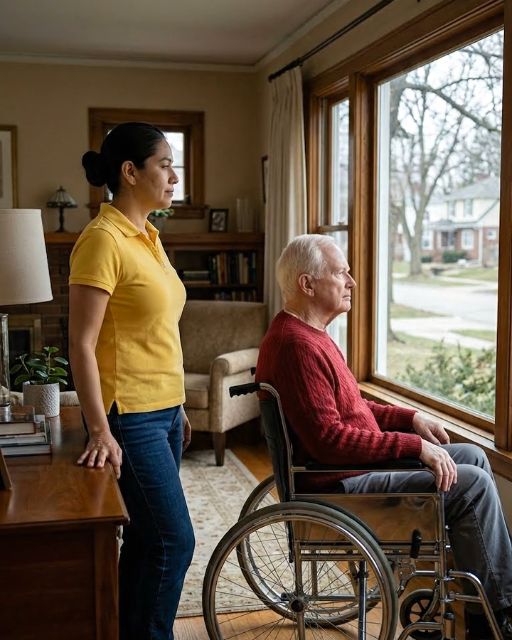
Our living room became a sickroom. Pill timers, scribbled notes. I learned how to lift him without causing pain. How to keep my voice steady when he apologized for being a burden.
My parents called, but their voices felt a thousand miles away.
My sister, Jessica, showed up with hugs and promises. “I’ve got you,” she’d said. I almost believed her.
But the months bled into a year.
The visits thinned. The calls stopped. The conversations started circling around the word “after,” as if Mark were already a ghost while he was still holding my hand.
One night, my phone was dead, so I used Jessica’s to order a prescription refill.
A message from my mom lit up her screen.
“Have you talked to Sarah about what we discussed? Time is running out.”
My blood went cold. I put the phone down and didn’t ask.
A week after the funeral, my doorbell rang.
Through the peephole, I saw them. My parents and Jessica, standing shoulder to shoulder. A united front of practiced sadness.
I let them in.
They brought a casserole. They stepped into the house Mark and I built, a house they hadn’t seen in six months.
His academy photo hung by the stairs, his smile steady, his eyes warm. They didn’t look at it.
I didn’t scream. I didn’t cry.
I walked to the hall closet, to the small lockbox he’d asked for in his last lucid week.
I took out the single sealed envelope.
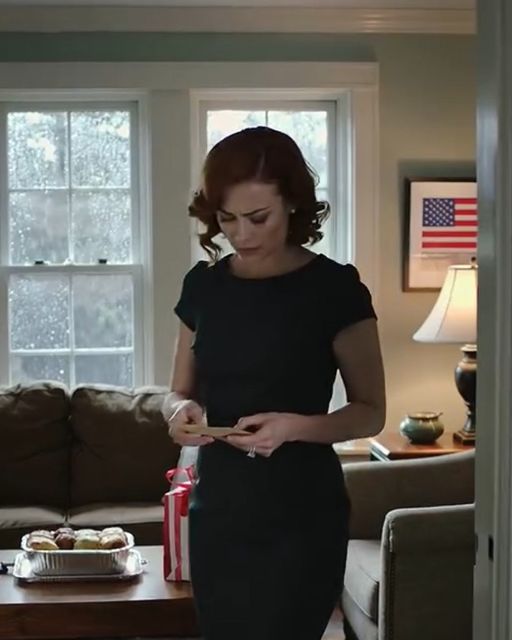
My name was on the front, written in his careful, familiar hand. I placed it on the coffee table in front of them.
My mother inhaled, preparing a speech.
Jessica leaned in, her eyes hungry.
I just watched them. I waited for them to recognize the handwriting and understand what they had done, long before I ever broke the seal.
My mother cleared her throat, the sound unnaturally loud in the quiet house. “Sarah, honey. We know this is an impossible time for you.”
Her voice was smooth, rehearsed.
My father nodded, his face a mask of solemn concern. He put a hand on my mother’s shoulder.
“We just want you to know we’re here for you now,” Jessica added, her gaze flicking from me to the envelope. “Whatever you need.”
The casserole sat on the kitchen counter, its aluminum foil lid gleaming under the lights. It felt less like a comfort and more like an admission ticket.
“What is that?” Jessica asked, finally pointing a perfectly manicured finger at the letter.
“It’s from Mark,” I said. My voice was flat, a stranger’s voice.
“He wrote it a few days before.” I couldn’t bring myself to say the word ‘died’.
A flicker of something – impatience, maybe – crossed my mother’s face before she smoothed it away. “Oh, Sarah. How thoughtful of him.”
She patted the sofa cushion next to her. “Come, sit with us.”
I didn’t move. I felt like a statue in my own living room.
“We need to talk about the future,” my father said, taking the lead. “About practical things.”
“This house, Sarah,” my mother began, her tone gentle, but with an edge of steel. “It’s so big. Just for you.”
I stared at her. The audacity was breathtaking.
“We’ve been worried sick,” Jessica chimed in. “All these memories, it can’t be healthy for you to be here alone.”
The word “alone” was a weapon, and she wielded it expertly.
“Your father and I were thinking,” my mother continued, “that selling might be the best option. A fresh start.”
“You could get a nice little apartment near us,” Jessica said, her smile wide and predatory. “We could take care of you.”
There it was. The reason for the casserole. The reason for the united front.
My mind flashed back to the text message. “Time is running out.”
It wasn’t about Mark’s life slipping away. It was about a deadline for them.
“Jessica has an amazing opportunity,” my father said, his voice swelling with pride. “Her fiancé, Richard, is starting a new business. A sure thing.”
“He just needs a bit more capital to get it off the ground,” my mother explained. “We’re all pooling our resources to help them. For their future.”
My future was a ghost. Theirs was a business plan.
“The market is very good right now,” my father added, as if he were a real estate agent and not my father. “You’d get a great price.”
They had it all figured out. My grief was just an obstacle in their financial planning.
I looked from my mother’s eager face to my sister’s hopeful one. I saw no trace of sorrow for the man I had lost.
I saw only the reflection of the house in their eyes. The square footage. The dollar signs.
I finally reached for the envelope. The paper felt warm, as if it still held a trace of his touch.
Their conversation stopped. Three pairs of eyes were fixed on my hands.
My fingers fumbled with the seal. For a moment, I didn’t want to open it. I wanted to keep this last piece of him for myself, away from their prying eyes.
But I knew I had to. This was a final act.
I pulled out the single folded sheet of paper. His handwriting, a little shakier than I remembered, filled the page.
I started to read it silently to myself.
“My Sarah,” it began.
“If you’re reading this, it means I lost the fight. I’m sorry. I’m so sorry I had to leave you.”
Tears pricked my eyes, hot and sudden.
“Don’t you dare be sorry for being a burden,” he wrote, as if he could hear my thoughts. “Those last months, taking care of me… that wasn’t a burden. That was love. The purest kind.”
I could hear his voice in the words. Calm, steady, and full of a love so deep it ached.
He wrote about the day we moved in. How we painted the living room the wrong shade of blue and laughed until we cried.
He wrote about the creaky third step on the stairs that we never fixed. He said it was the house’s way of saying hello when we came home.
He wrote about watching thunderstorms from the porch swing, with our old dog, Buster, hiding under his feet.
There was nothing about money. Nothing about assets.
It was just a map of our life together, drawn in words.
“What does it say?” Jessica demanded, her voice sharp with impatience. “Is it about the… arrangements?”
I looked up from the page, my vision blurry. “It’s a letter.”
“A letter?” My mother sounded disappointed. “Is that all?”
My grief was hardening into something else. Something cold and clear.
“He wants me to live, Mom,” I said quietly. “He wants me to be happy.”
But as I folded the letter, my fingers felt something else tucked inside. A smaller, thicker piece of paper. And something hard and metallic.
I carefully slid them out.
It was another note, folded tightly around a small, old-fashioned key.
Mark’s writing on this one was hurried, almost a scrawl.
“For the lockbox,” it said. “The real one. In the attic. I love you more than all the stars.”
The real one?
The lockbox in the closet was one I had bought at the pharmacy, at his request. He’d seemed so weak that day.
I remembered him saying something about his old footlocker, the one from the fire academy. I’d dismissed it as rambling, a side effect of the heavy medication.
He hadn’t been rambling. He’d been giving me instructions.
“Sarah? What is that?” my father asked, standing up to get a better look.
“I’ll be right back,” I said, my voice barely a whisper.
I stood up and walked out of the living room, leaving them with the letter and their own poisoned silence.
I took the attic stairs two at a time. The air was thick with the smell of dust and old wood.
In the far corner, behind a stack of boxes filled with Christmas ornaments, was his old navy-blue footlocker.
My hands were shaking as I knelt down. The small key slid into the rusty lock with a soft click.
I lifted the heavy lid.
It wasn’t full of old uniforms or keepsakes. It was full of files. Meticulously organized.
The top file was labeled with my sister’s name.
My heart hammered against my ribs. I pulled it out and opened it.
Inside were printouts. Screenshots of text messages. Copies of emails.
My stomach churned as I read.
There were messages between Jessica and Richard, her fiancé. They discussed the house’s estimated value, the potential profit.
“She’ll be a wreck,” Richard had written. “Easy to convince. We just need to play the loving family.”
Then I saw the emails between Jessica and my mother.
They talked about how to approach me. When the “right time” would be.
They had been planning this for months. While I was changing Mark’s sheets and spoon-feeding him broth, they were strategizing.
Then I saw the one that broke me.
A text from my mother to Jessica, dated six weeks ago. The day the doctor told us Mark only had a few weeks left.
“Doctor said it won’t be long now. We need to be ready to act as soon as it’s over. Richard’s investment deadline is firm.”
He knew.
My strong, brave husband, in his final days, knew.
He must have seen the messages on Jessica’s tablet one afternoon when she’d left it behind. In a moment of clarity, through the fog of pain and medicine, he had seen their true hearts.
He hadn’t told me. He had protected me from it.
He chose to spend his last days filling our home with as much love as he could, shielding me from the ugliness that was waiting at the door.
He was protecting me still.
Underneath the file was his official will. It was simple. Everything he had was left to me. The house, the savings, his pension.
And beneath that, one last document. It was a letter of commendation he had been writing for a young recruit at his station, a kid named Ben. It was full of praise, encouragement, and belief in the young man’s future.
That was my Mark. Building people up, even as his own body was failing him.
I closed the footlocker, my movements slow and deliberate. The grief was still there, a giant hole in my chest. But now it was surrounded by a wall of ice-cold certainty.
I walked back down the stairs, holding the file against my chest.
They were all standing when I entered the living room, their faces a mixture of confusion and annoyance.
“Finally,” my mother said. “What on earth were you doing up there?”
I walked to the coffee table and set the file down next to his letter. I didn’t open it.
“You wanted to know what Mark wrote to me,” I said, my voice as steady as a rock.
They all leaned in, their greed undisguised.
“He told me to live a good life,” I said, looking each of them in the eye. “To fill this house with laughter again.”
I paused, letting the words sink in.
“And he told me he knew.”
A tiny, almost imperceptible shift in their expressions. Jessica’s smile tightened.
“Knew what, dear?” my mother asked, her voice syrupy sweet.
“He knew about Richard’s ‘business opportunity’,” I said. “He knew you were waiting for him to die.”
The color drained from Jessica’s face. My father took a step back.
“That’s a horrible thing to say!” my mother gasped, placing a hand over her heart in a gesture of fake shock.
I didn’t raise my voice. I didn’t need to. The truth was its own thunder.
“You sat in this very room,” I said, my gaze locking on my sister. “You held his hand and told him you would take care of me. And then you went home and calculated the commission on selling his house.”
“Sarah, you’re grieving. You’re not thinking clearly,” my father tried, his voice placating.
“Oh, I’m thinking more clearly than I have in a year,” I countered. “Thirty-six missed calls on the day of his funeral. Not one of them was to ask how I was. They were to tell me you needed to talk.”
I pointed to the casserole on the counter. “You didn’t come here to comfort me. You came here to collect.”
“We are your family!” my mother shrieked, her composure finally cracking.
“No,” I said, the word hanging in the air between us. “Family doesn’t leave three empty chairs at a funeral.”
I walked to the front door and opened it wide.
“Get out of my house.”
For a moment, nobody moved. Then, the bravado crumbled. Jessica wouldn’t meet my eyes. My father looked at the floor. My mother glared, her face twisted with fury and defeat.
They left without another word.
I closed the door behind them, and the silence that filled the house was different. It wasn’t empty anymore. It was peaceful.
I walked back to the coffee table and picked up Mark’s letter. I threw the file from the attic into the fireplace. I didn’t need it. Mark had given me all the proof I ever needed.
The casserole went into the trash.
The weeks that followed were hard, but they were mine. I found a new rhythm of life, punctuated by the quiet hum of the house Mark and I had made a home.
One afternoon, I found the letter of commendation for the young firefighter, Ben. I drove down to the station.
I found him polishing the chrome on one of the engines. He was young, with kind eyes.
When I gave him the letter, his eyes filled with tears.
“Captain Mark was the best man I ever knew,” he said, his voice thick with emotion. “He… he believed in me when no one else did.”
We talked for an hour. He told me stories about Mark I’d never heard, stories of his quiet courage and his goofy sense of humor at the station.
Leaving the firehouse that day, I felt a piece of my heart stitch itself back together. Mark’s goodness was still alive. It was still out in the world, doing its work.
A few months later, I got a call from a second cousin I hadn’t spoken to in years. She’d heard through the family grapevine what had happened.
She told me that Richard’s “sure thing” had been a complete scam. He had taken my sister’s money, my parents’ retirement savings, and disappeared. They had lost everything.
I didn’t feel joy at the news. I just felt a profound and weary sadness for them. They had traded love for money, and in the end, they were left with neither.
That evening, a thunderstorm rolled in. I sat on the porch swing, a cup of tea in my hands, and watched the lightning split the sky.
Mark’s letter was in my pocket. He had asked me to live, to be happy.
He hadn’t just left me a house. He had left me a fortress, built of his love and foresight. He had given me one last gift: the truth.
The rain washed the world clean. And for the first time since he was gone, I smiled, knowing I was safe in the home we had built together. My life was not over. It was a new chapter, one I would write myself, honoring the man who had loved me enough to protect me even from beyond the grave. True family are the people who show up, and the greatest love is the one that shelters you long after the storm has passed.