I expected to find my daughter tending to her tomato plants.
Instead, I found an occupation.
I opened the front door to the farmhouse and the sound hit me first. A blaring television, and a chorus of voices barking orders.
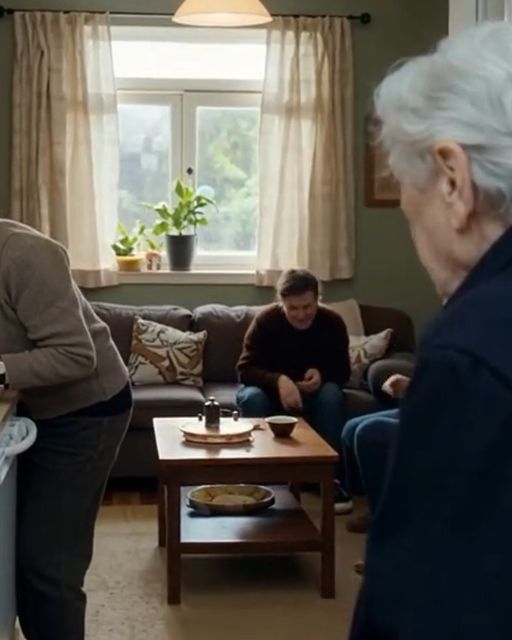
Eight people were sprawled across the living room I had paid for. My living room.
And my daughter, Sarah, stood at the sink. Her hands were plunged in soapy water, and silent tears streamed down her face.
I knew in that instant this wasn’t a visit. It was an invasion.
And I knew something they didn’t.
My name is Carol. I’m a seventy-year-old retired accountant, and I know how to read the fine print.
A year and a half ago, my daughter’s life shattered. Her husband of eighteen years didn’t leave bruises. He left dust where her soul used to be.
He convinced her she was worthless, then walked away with everything.
She showed up at my apartment with two suitcases and the eyes of a ghost.
I had forty-five thousand dollars saved. My entire nest egg.
I found a small property just outside the city. Two acres. A little house with a big kitchen window. I put every last cent into it.
And I put every inch of it in her name only.
No husband. No joint ownership. No one could ever sign her life away again.
For a while, it worked.
She sent me photos of pies cooling on the windowsill. Her voice on the phone lost its tremble.
She was starting to look like my daughter again.
Then she met Mark in a grocery aisle.
He was gentle. Attentive. Everything her ex-husband wasn’t.
Four months later, they had a backyard wedding with plastic chairs.
Then his family started to arrive.
First, it was his mother, Helen, with two suitcases because her landlord “raised the rent.”
Then a sister after a fight with a boyfriend. Another sister whose apartment was being “renovated.”
Soon his brother, his wife, and their kids showed up for the “country air.”
Somehow, Helen ended up in the master bedroom. For her back, she said.
My daughter slept on the couch.
She spent eight hundred dollars on their groceries in two weeks. She cooked. She cleaned. She flinched when they yelled her name.
That Saturday, I took her outside to the old swing set.
“Tell me,” I said.
And it all came out.
The guilt trips about “family.” Helen’s speeches about a “good daughter-in-law” serving everyone else first.
Mark telling her she was “overreacting.”
Her voice dropped to a whisper. “Maybe this is how normal families are. Maybe I’m just selfish.”
My blood ran cold.
I shook my head. Thirty years of accounting teaches you to see numbers, not guilt.
“Sarah,” I said, my voice level. “This house is yours. Legally yours. I put it in your name before you ever met Mark.”
I let the words sink in.
“It is a separate asset. No one in that house gets a say unless you give it to them.”
I saw it then. Not a smile.
Something harder.
The first spark of a spine knitting itself back together.
We walked back to the house.
Helen didn’t even look up from the television. “Perfect timing, Sarah. Make me some fresh coffee. This table is sticky.”
Feet on the coffee table. Crumbs on the floor they didn’t own.
I stepped all the way inside. I closed the door behind me with a firm click.
I walked across the room and stood directly in front of the screen.
Eight annoyed faces stared back at me.
I felt my daughter’s trembling hand on my back, steadying itself.
I looked Mark’s mother straight in the eye and opened my mouth.
“The coffee maker is broken,” I said.
My voice was calm, the same one I used to use for audits. It didn’t carry emotion. It carried facts.
Helen’s painted-on eyebrows furrowed. “What are you talking about? It was working this morning.”
“It’s broken,” I repeated. “As are the stove, the washing machine, and the television.”
A collective groan went through the room. Mark’s brother, Derek, actually sat up.
“What did you do?” he grumbled.
I gave a small, thin smile. “Nothing. But as the owner of this property, I’m notifying all tenants that these amenities are no longer available for use.”
The room went silent. You could hear the hum of the refrigerator.
Mark finally stood up, a placating smile on his face. “Carol, I think there’s a misunderstanding. This is Sarah’s house.”
“I’m glad you understand that,” I replied, not moving from my spot. “But I think you misunderstand the nature of ownership.”
I turned my head slightly to look at Sarah. “Sarah, honey. Do you consider these people your tenants or your guests?”
Sarah swallowed hard. I could feel her hand gripping the back of my blouse.
“They were… guests,” she whispered, her voice fragile but clear.
“Then the visit is over,” I announced to the room. “I expect everyone to have their belongings packed and be off this property by six o’clock this evening.”
Helen let out a sharp, derisive laugh. “You can’t be serious. Where are we supposed to go?”
“I don’t know, Helen,” I said, my voice still level. “I’m an accountant, not a travel agent. But I do know you won’t be staying here.”
Mark’s face had lost its gentle mask. It was tight with anger. “You have no right. I’m her husband.”
“You are,” I conceded. “But you are not a signatory on the deed. You are not on the mortgage, because there is no mortgage. This house was purchased in cash, by me, and gifted solely to my daughter before you were in the picture.”
I saw the flicker in his eyes. The calculation. The dawning horror that he’d misread the balance sheet.
“This is ridiculous,” his sister Fiona snapped, getting to her feet. “After everything we’ve done for Sarah! Welcoming her into our family!”
I almost laughed. “Welcoming her into her own home, you mean?”
The argument exploded then. They all started talking at once. Shouting about family, about loyalty, about the cruelty of throwing them out on the street.
Helen was the conductor of this chaotic orchestra. “A good woman would never do this to her husband’s family! Sarah, you should be ashamed!”
Sarah flinched. I felt it.
I turned to her, ignoring all of them. “Sarah,” I said softly. “Look at me. Did you invite them to live in your bedroom? To sleep on your couch? To spend your money and eat your food while you cleaned up after them?”
Her eyes met mine, and the tears were gone. They were replaced with a slow-burning fire.
“No,” she said. It was louder this time. “No, I didn’t.”
She stepped out from behind me. She was no longer hiding.
“Mom is right,” she said to the room of stunned faces. “The visit is over. You have until six.”
Mark rushed to her, grabbing her arm. “Honey, don’t listen to her. We can talk about this.”
I saw the last remnant of the old Sarah, the one who would have caved, flicker in her eyes. But then she pulled her arm away.
“There’s nothing to talk about, Mark,” she said, her voice shaking but firm. “Get your family, and get out of my house.”
The next three hours were a storm of passive aggression and outright hostility.
They slammed doors. They dragged suitcases across the hardwood floors, leaving scratches.
Helen spent the entire time on her phone in the yard, talking loudly about her “ungrateful, cold-hearted daughter-in-law.”
I made coffee for Sarah and me using the perfectly functional coffee maker. We sat at the kitchen table and watched them.
Mark tried one last time. He cornered Sarah by the back door while I was in the other room.
“You’re really going to choose her over me?” he pleaded, his voice cracking with manufactured pain. “Over our marriage?”
I heard Sarah’s reply, and it made my seventy-year-old heart swell with pride.
“This was never about her, Mark. It was about me. I’m choosing me.”
At five forty-five, a beat-up van and two cars pulled into the driveway. They loaded the last of their things in a flurry of muttered curses.
As they were about to leave, Helen marched up to the front porch where we stood.
“You’ll regret this,” she spat, her eyes full of venom. “Family is everything. You’ve just thrown yours away.”
“No, Helen,” I said quietly. “She’s just clearing out the clutter.”
They drove away in a cloud of dust and resentment.
The silence they left behind was the most beautiful sound I had ever heard.
Sarah sagged against the doorframe, and for the first time that day, she let out a sob. But it wasn’t a sob of sadness. It was a sob of pure, unadulterated relief.
We spent the next day cleaning. It wasn’t just tidying up; it was an exorcism.
We scrubbed away the sticky rings on the coffee table. We washed sheets that didn’t smell like her. We threw out half-eaten bags of chips and strange brands of shampoo left in the shower.
It was while I was taking out a bag of trash from the bedroom Helen had occupied that I found it.
A small, spiral-bound notebook had fallen out of a trash can and slid under the bed.
My instinct was to toss it, but my accountant’s curiosity got the better of me. Something about the whole situation still didn’t add up. The speed of the invasion, the coordination of their stories. It was too neat.
I sat on the edge of the freshly made bed and opened it.
The first few pages were just lists. Groceries. To-do items. Then I saw the names.
There were columns. Under one heading, “Prospects,” were a handful of women’s names. Next to each name were notes. “Recently divorced.” “Low self-esteem.” “Owns home outright.”
My daughter’s name, Sarah, was on that list. It was circled.
My blood ran cold for the second time in a week.
I kept reading. It was Helen’s handwriting. It was a playbook.
There were notes on Mark’s approach: “Be gentle. Listen. Contrast with ex. Mention family values early.”
There were schedules for the family’s arrival. “Fiona, week 3, ‘boyfriend fight’.” “Derek and Brenda, month 2, ‘need fresh air for kids’.”
It was all there, a meticulously planned operation. They were predators. This was what they did. They found vulnerable women with assets and moved in like a swarm of locusts, consuming everything until their host was a shell.
The final entry sent a shard of ice through my heart.
“Target asset liquidation: 6-8 months. Convince S. to add M. to deed for ‘security,’ then apply for home equity loan. Exit.”
They weren’t just going to live off her. They were going to steal her home. The one thing I had bought to keep her safe. They were going to leave her with nothing but debt.
I closed the notebook, my hand trembling with a rage I hadn’t felt in thirty years.
I walked into the living room, where Sarah was arranging a vase of flowers from her garden. She looked up and smiled, a real smile that reached her eyes.
I hated that I had to be the one to wipe it away.
I sat her down and explained what I had found. I watched her face crumble, not with sadness, but with a profound, chilling violation. The last bit of her lingering doubt about Mark, the faint hope that maybe he was just weak-willed, evaporated.
“They never cared about me,” she whispered. “It was all a lie.”
“Yes,” I said. “And it’s called fraud.”
My accounting brain kicked into high gear. This wasn’t a family drama anymore. This was a crime.
I spent the next two days on the phone. I called an old friend, a forensic accountant, who put me in touch with a lawyer named Arthur who specialized in elder and dependent adult fraud.
Arthur was a bulldog in a rumpled suit. He listened to our story, read Helen’s notebook, and his eyes lit up with a grim sort of excitement.
“This is incredible,” he said, tapping the notebook. “This is the smoking gun we’ve been looking for.”
He explained that another woman, a widow named Eleanor, had come to him a year ago with a nearly identical story about Mark’s older brother, Derek, and the same family members. They had used the same playbook on her, but she had caught on too late. They had managed to get her to co-sign for a massive loan before they disappeared, leaving her on the brink of foreclosure.
But Eleanor had no hard proof. It was her word against theirs. The case had stalled.
“But with this,” Arthur said, holding up the notebook, “and Sarah’s testimony, we can establish a pattern of behavior. This isn’t a domestic dispute. This is a conspiracy to commit fraud.”
That was the moment everything shifted. Sarah sat up taller. The victim was gone. In her place was a survivor, and she wanted justice.
Arthur’s team moved quickly. They found the family shacked up in a cheap motel two towns over, likely scouting for their next target.
When they were served with the lawsuit, they tried to dismiss it. Mark even had the audacity to call Sarah, crying, begging her to drop it. He said his mother was just a little “over-organized” and that her notes were just “fantasy.”
Sarah listened to him, silent, and then said two words before hanging up.
“See you in court.”
The legal battle was draining, but we had the truth, and a very angry bulldog of a lawyer, on our side. Eleanor joined the suit. Her testimony, so similar to Sarah’s, was devastating for their case. Helen’s notebook was dissected by handwriting experts and laid bare their entire predatory enterprise.
The karmic reward wasn’t a sudden bolt of lightning. It was the slow, grinding machinery of justice.
The court froze their assets, which, it turned out, included money they had squeezed from Eleanor. They were ordered to pay restitution. Facing criminal charges, they crumbled. Mark and Derek took plea deals. Helen, the architect of it all, refused to admit guilt and ended up with the harshest sentence.
The day the final judgment came down, Sarah and I didn’t celebrate. We sat in her garden, next to the thriving tomato plants.
She had started a small roadside stand. Her pies and jams were famous in the county. She was saving her own money now, in her own bank account.
The house was truly hers, washed clean of its ghosts. It was more than a home; it was a fortress she had successfully defended.
She turned to me, her hands smelling of soil and basil. “You know, Mom,” she said. “The worst part wasn’t the cleaning or the cooking. It was that little voice in my head they planted, the one that said I was selfish for wanting my own life.”
I reached out and took her hand. “That voice is gone now.”
“It is,” she said, a peaceful certainty in her eyes. “I finally read the fine print.”
Life teaches you that love and legal documents have a lot in common. Both require you to pay attention to the details. A mother’s love isn’t just about providing a roof over your child’s head; it’s about giving them the blueprint to build their own foundation, brick by brick. It’s about teaching them that their name, standing alone on a deed, is worth more than any promise from a man who shows up with a smile and an empty suitcase. The most important assets we have are our own strength and our own self-worth, and no one, no matter how much they claim to love you, ever has the right to sign them away.