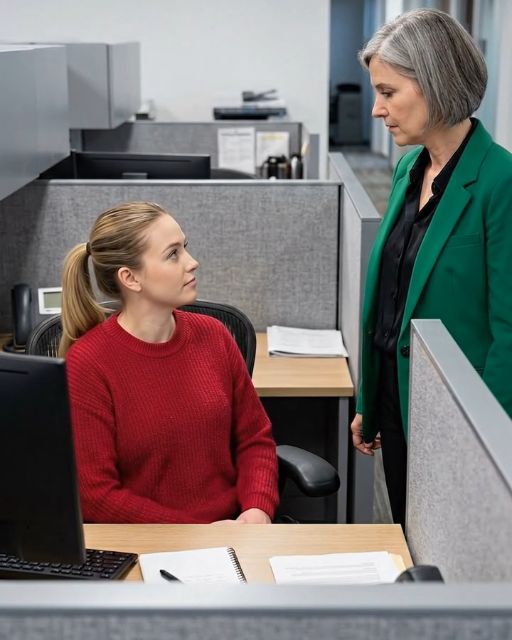
“That tree needs to go, Debra. Or I’ll make you regret it.” My neighbor, Brittany, stood on my lawn, arms crossed, glaring at the old oak.
She’d been bugging me for months. She wanted to expand her garage, and claimed the century-old oak in my backyard was “on her property line.”
It wasn’t. My grandpa planted that tree.
It was my favorite spot. I refused.
That’s when the legal letters started.
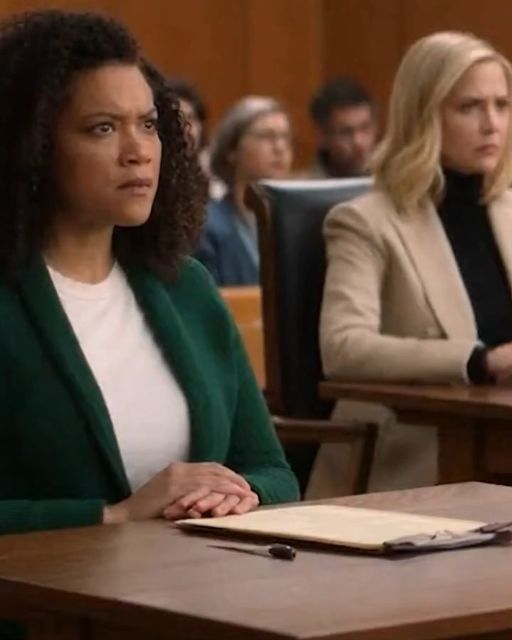
It escalated fast. Soon, we were in court, her lawyer flashing old maps and talking about property infringements.
I felt sick to my stomach. My lawyer presented my deeds, but Brittany’s team was aggressive.
Just when I thought I was going to lose the tree, the judge leaned forward.
“There’s an older document, counsel,” he announced, holding up a yellowed parchment. “It seems this tree isn’t just a boundary marker. It’s actually protecting something historically significant.
Something buried right underneath where Ms. Brittany wanted to build her garage.” My jaw dropped as he turned to Brittany, “And that ‘something’ is… the original foundation stone of the Mill Creek Postal Station, circa 1888.”
The courtroom went silent. You could have heard a pin drop on the worn carpet.
My lawyer, a mild-mannered man named Mr. Davies, slowly took his glasses off and cleaned them, a sure sign he was as stunned as I was.
Brittany’s lawyer, a slick man in a suit too expensive for our small town, just stared, his mouth slightly ajar.
Brittany, however, found her voice first. “The what? That’s ridiculous! There’s nothing there but dirt and roots.”
Judge Harrison fixed her with a gaze that could have melted steel. “According to the town’s founding charter, which I had the clerk retrieve, the very first federally recognized structure in this settlement was that postal station.”
He continued, looking at the old document. “It was decommissioned in the early 1920s, but its foundation was to be preserved as a historical landmark.”
“And your grandfather,” he said, now looking directly at me, “seems to have planted this oak tree almost directly on top of it. Perhaps intentionally.”
My mind raced back to stories Grandpa used to tell, sitting under that very tree. He’d talk about the “old bones of the town” and how we had to respect them.
I always thought he was just being poetic.
Brittany scoffed, a harsh, ugly sound. “So what? It’s a pile of old rocks. I have a building permit.”
“A permit that is now invalid,” the judge said flatly. “You cannot build on a designated historical site. In fact, no one can.”
He slammed his gavel down, a sharp crack that echoed the breaking of my tension. “Case dismissed. Furthermore, I am ordering the county historical society to perform a non-invasive survey of the area. All costs to be deferred pending the survey’s outcome.”
I walked out of the courtroom in a daze. Mr. Davies patted my shoulder.
“Well, Debra,” he said with a little chuckle. “I’ve been practicing law for forty years. That’s a first.”
When I got home, Brittany was in her yard, yanking weeds out of her perfectly manicured flower bed with a vengeance. She wouldn’t even look at me.
The next week, a small team from the historical society arrived. They set up polite little yellow ropes around the base of my oak tree.
It felt like the tree was a celebrity, cordoned off from the paparazzi.
Brittany watched from her kitchen window, her face a thundercloud. Every time I went outside, I could feel her eyes on me.
The lead archaeologist, a kind woman named Dr. Albright, explained the process. They would use ground-penetrating radar first.
“We don’t want to disturb the roots of this magnificent tree unless we absolutely have to,” she said, patting the rough bark.
I spent the next two days watching them work from my porch, a cup of tea growing cold in my hands.
The old oak stood silent and proud, its leaves rustling in the breeze, holding its secrets close.
Then, on the third day, Dr. Albright knocked on my door. Her face was lit up with excitement.
“We found it,” she said, her voice a hushed whisper. “The radar signature is clear as day. The foundation is almost perfectly intact.”
But that wasn’t all.
“There’s something else, Debra,” she said, showing me a fuzzy image on her tablet. “A strong metallic reading. Right in the center of the foundation.”
“It looks like a box,” she added. “A metal lockbox.”
The news spread through our little town like wildfire. A real-life treasure hunt was happening in my backyard.
The historical society had to get a special permit to excavate. It was a slow, painstaking process.
They treated every inch of dirt like it was sacred, carefully brushing it away, sifting it for artifacts.
Brittany’s anger seemed to grow with every passing day. Her beautiful yard, which was once her pride and joy, started to look neglected.
She’d stopped gardening. She just watched.
One afternoon, I was watering my petunias when she finally spoke to me, her voice dripping with venom.
“You must be so proud of yourself,” she hissed over the fence. “Making this whole circus up to stop my garage.”
I was stunned. “I didn’t make anything up, Brittany. You saw the judge’s documents.”
“Forged, probably,” she muttered. “Anything to keep a person from improving their property. You and that stupid tree.”
I just shook my head and went back inside. There was no point in arguing with someone so blinded by their own wants.
Finally, the day came. They had cleared the dirt away and there it was, a small, heavily rusted iron box nestled against a large foundation stone.
Dr. Albright invited me to be there when they opened it. Mr. Davies came, too, out of sheer curiosity.
By order of the court, Brittany and her lawyer were also required to be present. She stood by her fence, arms crossed, a permanent scowl on her face.
A specialist locksmith had been called in. It took him nearly an hour to work on the ancient, corroded lock.
With a final, gritty click, the mechanism gave way.
The lid creaked open.
Inside, wrapped in oilcloth that had mostly disintegrated, was a stack of papers and a small, leather-bound ledger.
Dr. Albright, wearing white gloves, carefully lifted the top document. It was a letter, the ink faded but still legible.
She began to read it aloud. It was from the town’s first postmaster, a man named Silas Croft, written to his brother in 1890.
He wrote about the hardships of the new settlement, the pride he had in his small postal station, and his hopes for the town’s future.
It was a beautiful piece of history, a direct voice from the past. I felt a lump form in my throat.
Then Dr. Albright picked up the ledger. She opened it to the first page.
“These seem to be the original property records for this entire block,” she said, her brow furrowed in concentration.
Mr. Davies leaned in closer. “The very first plats drawn up?”
“It appears so,” she confirmed, turning a page carefully.
She stopped, tracing a line with her gloved finger. “That’s… odd.”
“What is it?” I asked, my heart starting to beat a little faster.
“According to this original survey map,” she said, “the boundary line between your property and Ms. Brittany’s is not where we think it is.”
She pointed to the map in the ledger, then gestured toward Brittany’s yard. “The original line is actually ten feet further… that way.”
She was pointing straight at Brittany’s prized rose garden.
A collective gasp went through our small group. Mr. Davies’s eyes went wide.
Brittany’s lawyer stepped forward. “That’s preposterous. Our current deeds are legally binding.”
“Perhaps,” Dr. Albright said softly, “but this is the foundational document. It precedes everything else.”
But the biggest shock was yet to come. Underneath the ledger was one more folded document.
It was another letter, but this one was different. It was dated 1952.
The handwriting was angry, scrawled across the page. It was written by my grandfather.
I had never seen his handwriting before, but I knew it was his. The letter was addressed to the town planning board, a letter he had apparently never sent.
He wrote about being cheated.
He wrote about a wealthy new developer in town who was buying up land and using his influence to have the property lines “re-surveyed.”
My grandfather, a simple carpenter, didn’t have the money or the power to fight him. He claimed the man had stolen nearly fifteen feet of his land through doctored papers and a handshake deal with a crooked surveyor.
He had lost the land where his vegetable garden used to be. The land that now contained Brittany’s perfect roses and the corner of her house.
At the end of the letter, he named the developer.
My blood ran cold as Dr. Albright read the name aloud.
It was Arthur Sterling.
Brittany’s grandfather.
The silence that followed was deafening. I looked over at Brittany.
All the color had drained from her face. She looked not just angry anymore, but terrified. She knew.
Somehow, she must have known.
Her whole life, her family’s prosperity, was built on a lie. A theft from my family.
And in her greed to take even more, to take my beautiful oak tree, she had led everyone right to the evidence that would expose it all.
We were back in court a month later. It was a completely different affair.
The town’s historical documents, the letters, and the original ledger were presented as evidence. Experts verified their authenticity.
It turned out, the story was even worse than we thought. Arthur Sterling had done the same thing to two other families on our block, families who had long since moved away.
He had bullied and swindled his way into building a small fortune, which he passed down to his children, and eventually, to Brittany.
Brittany’s lawyer tried to argue that the statute of limitations had passed, that the current deeds were all that mattered.
But Judge Harrison was having none of it.
“This court is not just a place of law, but a place of equity,” he said, his voice ringing with authority. “What we have here is evidence of a fraud so profound it has affected generations.”
He looked at Brittany, who was staring at the floor. “You came into this court demanding a piece of your neighbor’s land. It turns out, you’ve been living on it all along.”
His final judgment was swift and stunning.
He ruled that the original 1888 property lines were to be immediately restored.
Brittany not only lost the case, but she legally lost a ten-foot-wide strip of her own yard, running the entire length of the property.
She was also ordered to pay for all my legal fees, the entire cost of the archaeological dig, and a punitive fine to the town’s historical preservation fund.
The next week, the surveyors came. I watched from my porch as they hammered a new boundary stake right through the middle of Brittany’s award-winning rose garden.
Another stake went in just inches from the corner of her house. Her house was now technically encroaching on my property.
She didn’t come out. I just saw the curtains in her window twitch.
A few weeks later, a “For Sale” sign went up in her yard. I heard she was moving to the city, unable to face the whispers and stares of the town she and her grandfather had cheated.
I never saw her again.
That fall, I sat under the great oak, its leaves turning to gold and amber. The air was crisp, and the afternoon sun felt warm on my face.
The area where the foundation had been excavated was now a beautiful little historical garden. I’d worked with the town to install a small bronze plaque telling the story of the Mill Creek Postal Station and Silas Croft.
People from town would stop by to see it, to read the plaque and to look up at the magnificent tree that had guarded the truth for so long.
My grandfather hadn’t been a fighter, not in the way Brittany was. He was a quiet, gentle man. But he had fought back in his own way.
He couldn’t win in a courtroom, so he planted a seed. A seed of life and hope, right on top of the evidence of the injustice done to him.
He put his faith in nature, in the slow, powerful growth of roots, to protect his family’s truth. And a century later, it had.
The tree hadn’t just been a tree. It was a guardian. A silent witness. It was my grandfather’s legacy and the keeper of our family’s honor.
Sometimes, the deepest roots are the ones you can’t see. They are the roots of family, of truth, and of justice. And if you stand up for them, even when you feel small and powerless, you might just find that they are stronger than any lie, and that they will, in their own time, find their way to the light.