The three dots in our family group chat appeared.
Then vanished.
Then appeared again.
My sister, Chloe, typed first. “We don’t have time for pointless awards. We’re going to the concert.”
My mom followed, softer. “Honey, we already have plans.”
Then my dad. “Don’t blame us if we don’t go.”
I read the words. I didn’t fight. I didn’t explain that it was a national award, that it mattered.
I just typed a single word back.
“Alright.”
I placed my phone face down on the hotel bed. The silence in the room was absolute.
Outside the window, the whole city pulsed with light. Inside, it felt like a vacuum. I told myself the empty seats wouldn’t matter. I lied.
Downstairs, the ballroom was a sea of clean suits and blinking cameras. Three enormous screens hung dark above the stage, waiting.
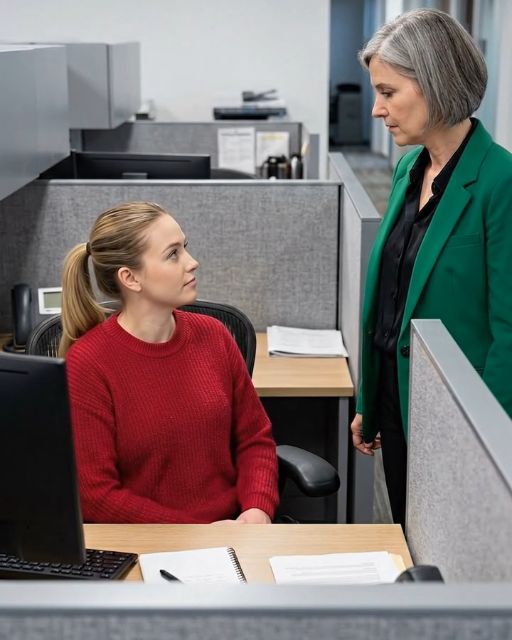
My director, Diane, was at our table. She gave me a steady, reassuring smile. She was the first person who ever made me feel like my work wasn’t invisible.
The two chairs beside me stayed empty.
They belonged to my family.
The program moved forward. Speeches blurred into applause. My hands felt cold.
Then they announced the public safety segment.
A video started playing on the giant screens. A dispatcher’s voice. The city grid at night. It explained the software I built, the one that cut down emergency response times. The one that saved lives.
The host walked back to the microphone.
He said my full name.
My heart tried to crawl out of my throat. The applause felt like a physical force, pushing me forward.
I walked toward the lights. I accepted the heavy glass plaque. I smiled for the cameras because that’s what you do.
My mind wasn’t there. It was across town, in the arena.
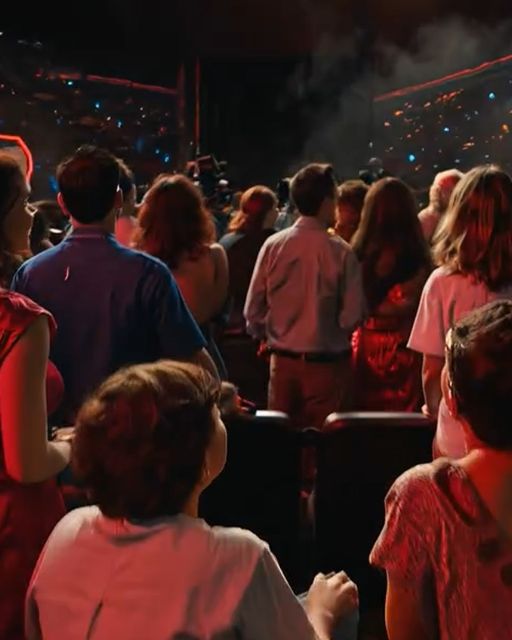
I could see them. My family, surrounded by thousands of people, waiting for the band’s encore. Bored, looking at the massive screens overhead.
Ads for cars. Ads for drinks.
And then, without warning—my face.
Not a little picture. Not a name in a list. My face, twenty feet high, looking right down at them. A close-up from the live feed. My name printed in bold letters beneath it.
I pictured the strangers in the rows around them turning. Pointing.
I imagined someone leaning over to my sister.
“Hey, isn’t that…?”
The ceremony ended. My team hugged me, their cheers loud and real.
I walked out to the quiet lobby to get my phone.
It wasn’t buzzing.
It was vibrating so hard it was shaking against the counter.
A wall of notifications. Coworkers. Old friends. Relatives I hadn’t heard from in years.
And buried in the flood—
Missed call.
Missed call.
Missed call.
Four numbers, over and over.
I opened the family chat.
“ANNA!!”
“We just saw you on the screens!”
“People were staring at us!”
“We’re so proud!”
My mom’s texts were a frantic jumble. My dad’s were stunned. Chloe used a dozen exclamation points.
I scrolled up.
Past their sudden pride.
Past their shock.
I kept scrolling until I found my own message from that afternoon. My invitation.
And right below it, the replies.
“We don’t have time for pointless awards.”
“Don’t blame us if we don’t go.”
The screen blurred. The truth hit me with the force of a physical impact.
They weren’t proud of me.
They were proud of being seen with me.
I slid my phone into my pocket without replying. The vibration against my leg felt like a frantic, desperate tapping. A demand for attention.
Diane found me by the grand entrance. She held two glasses of champagne.
“I thought you might need this,” she said, her voice warm.
I took the glass. The bubbles fizzed against my tongue.
“Thank you, Diane. For everything.”
She looked at the empty space beside me, then back at my face. She didn’t have to ask.
“Their loss,” she said simply. “They missed seeing you shine.”
Her words were a comfort, a small anchor in the storm raging inside me. My team came over, all smiles and congratulations. We took photos. We laughed.
For a few minutes, I could almost forget the hollow space in my chest. I could pretend their validation was enough.
But it was a performance. Just like smiling for the cameras on stage.
Later, back in the quiet of my hotel room, I took the plaque out of its velvet box. It was heavy. Solid. Real.
I placed it on the desk and stared at my reflection in the glass.
The woman staring back looked tired.
I picked up my phone again. The messages had escalated.
Mom: “Anna, please call us back. Are you mad? We tried to call.”
Chloe: “OMG my friends are blowing up my phone!! They all saw you!”
Dad: “We can’t believe it. On the Jumbotron! We’re heading back to the hotel now. Let’s celebrate.”
Let’s celebrate.
The words felt like a joke. They wanted to celebrate the reflection, not the achievement. They wanted to bask in the borrowed glow of the spotlight.
I thought about all the years leading up to this. The late nights I spent staring at a screen, fueled by coffee and a belief that I could make a difference.
The family dinners I missed. The holidays I cut short.
Every time, they’d sigh and say, “Still working on that computer thing?”
Chloe was the artist. Her paintings hung on every wall in their house. They went to all her gallery openings, beaming with pride, even when she didn’t sell a single piece.
My work was different. It was invisible. It was just lines of code, abstract algorithms. They couldn’t see it or touch it.
So to them, it wasn’t real.
Until a camera made it real for them.
I turned my phone off. I couldn’t face them. Not tonight.
The next morning, I woke up to a gentle knock on my door. I assumed it was room service.
I opened it to find my mother, father, and Chloe standing there, holding a box of pastries and three large coffees.
They looked awkward. Unsure.
“We thought we’d bring breakfast,” my mom said, forcing a bright smile.
I stepped aside and let them in. The silence was thick with everything unsaid.
Chloe was the first to break it, of course.
“So, that was insane last night,” she said, pulling a croissant from the box. “You’re basically famous now.”
My dad nodded, looking around the room as if seeing it for the first time. “The concierge knew who you were. He called you ‘the city’s hero’.”
I just sipped my coffee. I waited.
“We’re sorry we missed the ceremony,” my mom said, her voice soft and placating. “The concert tickets were non-refundable. You know how it is.”
I looked at her. I finally found my voice.
“You said the award was pointless.”
The words hung in the air, sharp and undeniable.
My dad shifted his weight. “Anna, come on. We didn’t mean it like that.”
“How did you mean it, then?” I asked. My voice was quiet, but it didn’t shake.
“We just…” Chloe started, gesturing vaguely with her pastry. “We don’t get it. All that coding stuff. It goes over our heads.”
“It’s not that we aren’t proud,” my mom added quickly. “It’s just… hard to explain to people.”
That was the core of it. They couldn’t brag about something they didn’t understand. A painting, they could point to. A concert, they could hear. My work was a ghost in the machine.
“I try to explain,” I said, the exhaustion of a hundred failed conversations seeping into me. “I’ve tried for years.”
My dad let out a frustrated sigh. “Anna, we just didn’t know it was this big of a deal. We didn’t know you’d be on every screen in the city. If we had known it was going to be a spectacle, of course we would have been there.”
And there it was. The honest, brutal truth.
It wasn’t about my work. It was about the spectacle.
The conversation went in circles after that. They apologized for the words, but not for the sentiment behind them. They wanted to move on, to post a smiling family photo on social media with the award.
I let them take the picture. I smiled.
It was easier than fighting.
But something inside me had shifted. A quiet, sad acceptance. The validation I had been chasing from them my whole life was a mirage. I could see it clearly now.
I went back home the next day. The plaque sat on my passenger seat.
The city felt different. People on the street would do a double-take. The barista at my local coffee shop gave me my latte on the house.
It was strange. I had been the same person last week, doing the same work. The only thing that had changed was that people now knew about it.
A few days later, a strange number called my phone. I usually let unknown callers go to voicemail, but something made me answer.
“Is this Anna Park?” a man’s voice asked. It sounded strained, emotional.
“Yes, this is she.”
“My name is Marcus Thorne. I’m on the city council. I was at the awards dinner the other night.”
I tensed up, expecting a work-related call.
“Mr. Thorne, it’s nice to hear from you.”
“Please, call me Marcus,” he said. There was a pause. “I’m not calling in any official capacity. I’m calling to thank you.”
“Thank me for what?”
I could hear him take a shaky breath. “Last Tuesday, my wife, Eleanor, had a massive stroke. She collapsed at home. I was halfway across town.”
He continued, his voice thick with emotion. “Our daughter called 911. The dispatcher told her later that the system flagged the call as a top-tier priority. It mapped the fastest route, bypassing a traffic accident that would have held up the ambulance for ten minutes.”
He stopped for a moment. I held my breath.
“The paramedics got to her in four minutes, Anna. Four. The doctors at the hospital said that those ten minutes… they were the difference. The difference between a full recovery and… something else.”
The world seemed to fall away. This wasn’t an abstract concept anymore. This wasn’t a statistic on a screen.
This was a life. A family. Eleanor and Marcus Thorne.
“She’s going to be okay,” he said, his voice cracking. “She’s coming home tomorrow. And it’s because of you.”
Tears were streaming down my face. I couldn’t speak.
“I saw you on that stage,” he said. “And I just… I had to find your number. I had to tell you. Your family must be so unbelievably proud.”
The line clicked off.
I stood in my quiet apartment, the phone still pressed to my ear.
My family.
That was the real award. That phone call. That was the validation that mattered more than any plaque, any news story, any face on a giant screen.
My work wasn’t invisible. It was silent. It worked in the background of the city, in the space between a frantic call and the sound of a saving siren.
It didn’t need to be seen. It just needed to work.
That night, my phone buzzed with a message from the family chat. It was my dad.
It wasn’t a frantic text. It wasn’t full of exclamation points.
It was a link to a local news article. The headline read: “Councilman Credits New City Tech for Saving Wife’s Life.”
The article mentioned me by name. It told Marcus Thorne’s story.
Below the link, a single message from my dad appeared.
“I read this. I get it now.”
A few seconds later, my mom.
“We are so, so sorry, Anna. We were wrong.”
Then, Chloe.
“What you do isn’t pointless. It’s everything.”
I looked at their words. For the first time, they felt real. They weren’t born from the shame of being seen as unsupportive. They were born from understanding.
They had finally seen my work. Not on a Jumbotron, but through the eyes of a grateful husband.
I typed back, my fingers steady.
“Thank you.”
The next Sunday, we had dinner at my parents’ house. It was quiet. Different.
No one mentioned the award. No one asked for a picture.
Instead, my dad asked me to explain how the software worked. He listened, really listened, asking questions. Chloe asked if there was a way to use similar tech to help find missing pets. My mom just watched me, a new kind of pride in her eyes. One that wasn’t for a crowd. It was just for me.
Our relationship didn’t magically heal overnight. There was still a scar there, a reminder of the night they chose a concert over me.
But it was a start. A real one.
The plaque is not on my mantelpiece. It’s in my office, sitting on a bookshelf next to photos of my team.
Sometimes, I look at it. But I don’t see the bright lights or the stage.
I see a man named Marcus, waiting for his wife to come home. I see the invisible lines of code reaching across the city, connecting people in their most desperate moments.
Your value is not measured by the people who show up to your celebration. It is not defined by the applause or the public recognition. It is forged in the quiet hours, in the difficult work that no one else understands. True validation comes not from being seen, but from the impact you have when no one is looking at all.