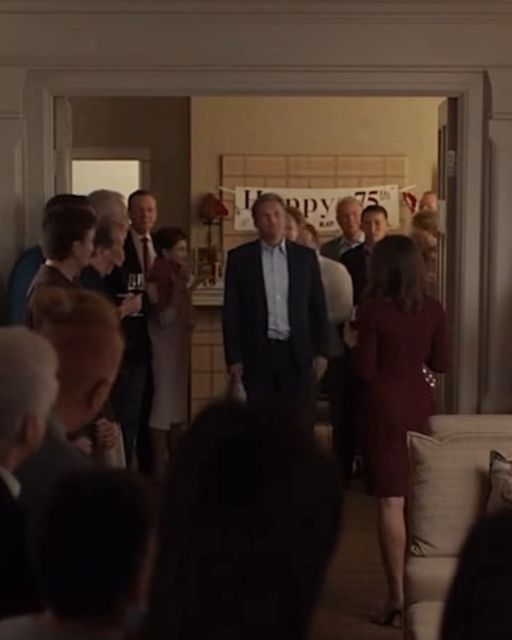
I’ve been separated from my ex-wife for nearly a decade. We had no kids, no real reason to keep in touch, so we drifted apart like strangers. Out of the blue, I received an invitation to her father’s 75th birthday party. I almost tossed it aside, but something in me said to go. Maybe it was respect, or maybe just curiosity.
When I pulled up to the family home, memories I hadn’t thought of in years came flooding back. Her mom used to bake pies that made the whole house smell like autumn. Her dad would sit on the porch humming old tunes. I adjusted my collar and knocked on the door.
The moment I stepped inside, the room fell awkwardly quiet. Dozens of eyes turned toward me—her cousins, aunts, even her sister—all whispering behind barely cupped hands. My ex-wife, Nora, stood near the fireplace, wine glass in hand, frozen. She didn’t smile. She didn’t say anything.
I gave a small wave and tried to brush it off. “Hey… long time.”
No one responded.
Just then, I felt a gentle tap on my shoulder. I turned around slowly—then felt my knees nearly give out.
It was her. My mother.
But my mother had passed away four years ago. Or at least, I thought she had.
Standing in front of me was a woman who looked exactly like her—same soft eyes, same gray-streaked hair, same scent of lavender and old books. I stammered, “Mom?”
She gave me a smile that nearly undid me. “No, sweetheart. I’m your aunt. Your real mother’s sister.”
I didn’t know I had an aunt.
Nora stepped forward, clearly emotional now. “I didn’t know if it was right to tell you. But when we split, your family left some things behind. This letter… it’s for you.”
I took the envelope with trembling hands. Inside was a note in my mother’s handwriting—explaining that she had a twin sister who left the country after a falling out decades ago. No one had spoken of her. She’d returned recently and connected with Nora, who invited her to the party in hopes I’d come too.
I stood there, letter in hand, unsure what to say. A million questions bounced around in my head, but my mouth wouldn’t cooperate.
My aunt—her name was Celia—put her hand on my arm gently. “Let’s sit down. I’ve got a lot to explain, and I owe you that much.”
So we went to the back porch, away from the noise and stiff glances. The same porch where my ex-father-in-law used to teach me how to play chess. I stared out at the overgrown garden while she began talking.
“I left England when I was 22,” Celia said. “Your mother and I—we loved each other, but we had different lives in mind. I married someone your grandparents didn’t approve of. So I left. We wrote letters, off and on. Then after a while… silence.”
I listened quietly. I could feel the old splinters in the porch bench pressing into my palms. I didn’t care.
She continued, “I heard about her passing late. I was in Canada then. I didn’t come to the funeral. Regret eats at you, you know?”
I nodded, though I wasn’t sure if I was agreeing or just too numb to disagree.
“I found Nora online last year. Reached out. She responded kindly. Said she still had your mom’s keepsake box in storage. So we met.”
I looked over at the party inside. The stiff air made sense now. They weren’t just shocked I showed up—they were shocked she had.
“She looked just like her,” I whispered.
Celia smiled sadly. “I’m told that often. Sometimes too often.”
I laughed a little, more out of nerves than anything. “So why now? Why bring me into this today?”
Celia leaned in. “Because you’re family. Because she wanted you to have this.”
She handed me another small envelope—this one sealed in wax. The initials “E.B.” were stamped on it. My mother’s initials.
I didn’t open it right away. I just stared at it like it might dissolve in the wind.
Later that night, after I’d left the party early and sat in my car for a good hour, I finally opened the second letter. My hands shook.
Inside, my mother had written something different—something she hadn’t said in her will or last words in the hospital.
She wrote, “If Celia ever finds you, listen. Don’t harden yourself to the people who come late. We don’t always arrive when we should—but that doesn’t mean we don’t love you. Forgive me for the silence. I hope you’ll find pieces of me in her.”
That one sentence—“Don’t harden yourself to the people who come late”—knocked the air out of me.
The next week, I met Celia for coffee.
It wasn’t a smooth conversation. I asked hard questions—about why she left, why she didn’t try harder to stay in touch, why I had to meet her through my ex-wife at some awkward party instead of when my mom died.
She took every question with grace. Sometimes tears welled up in her eyes. Sometimes she admitted, “I don’t know,” and honestly, I preferred that to excuses.
Over the months, we saw each other more. I learned she was staying in a little cottage near the coast, not far from where my mother used to take me fishing as a boy. She had a garden with dying sunflowers and a crooked fence that reminded me of childhood.
Then came the twist I hadn’t expected.
One afternoon, Celia gave me a box. “I was waiting until we knew each other a bit more. But this belonged to your father.”
I blinked. “My father?”
She nodded. “Before your mother passed, she gave it to me. Said you weren’t ready then. Said one day, maybe.”
Inside the box were journals. Dozens of them. My father’s handwriting filled each page. Notebooks dated back to 1985, before I was even born.
I spent the next few nights reading them. Slowly.
And in those pages, I met a version of my father I’d never known. He wrote about fears. About wanting to be better. About how hard it was watching my mom fall ill. And about me—about how proud he was when I stood up to a bully in third grade, how he wept when I graduated high school even though he “acted tough.”
I had spent most of my life believing my parents were just… regular. There. Around. Nothing special. But reading his words, and reconnecting with Celia, changed that.
It changed me.
Nora reached out again one afternoon, asking if I’d like to meet for lunch. I hesitated, but said yes. We sat in a small café near where we used to live. She looked older, tired maybe, but there was a softness to her I didn’t remember from the end of our marriage.
“I hope you’re not angry,” she said, stirring her tea. “About the party. About Celia.”
“I was confused,” I said honestly. “But not angry.”
She nodded. “She reminded me so much of your mom. I didn’t know how to explain it. I thought… maybe it would be healing. For both of you.”
I looked at her for a long time. “You were right.”
We talked for over an hour. Caught up a little. There were no sparks, no regrets. Just closure. The kind people say you can’t buy or fake. It just arrives quietly, like fog rolling in over the hills.
As winter came, Celia invited me for Christmas. Said she was roasting a chicken instead of turkey, and asked if I liked mince pies. I laughed and told her I’d eat anything that didn’t come in a microwavable tray.
That night, as we ate together in her tiny cottage with mismatched chairs and a fireplace that barely worked, I realized something strange.
She felt like home.
Not the home I lost, or the one I tried to recreate with Nora. But a new kind of home. A space where stories lived, even if they came late. A space where healing wasn’t loud, but quiet and slow, and sometimes showed up wrapped in wax-sealed letters and forgotten journals.
In spring, Celia got sick.
Not serious at first—just tired, a few dizzy spells. But then came the diagnosis: early-stage lymphoma.
My heart sank. After finally finding this woman who felt like a link to my mother, to my past, I was being asked to watch her fade.
But this time, I didn’t run from it. I didn’t shut down.
I was there.
Through the hospital visits, the long days of chemo, the nights when she couldn’t sleep and asked me to read my father’s journals aloud, I was there. We cried together. Laughed, even. She made me promise not to wait too long to forgive people. “We’re all late to something,” she whispered once.
She responded well to treatment. She’s still fighting. But every time I leave her place, she hugs me tightly like she’s saying goodbye.
And maybe she is. Or maybe she’s just teaching me something.
To show up.
Even late. Especially late.
Because the thing about people who come late is, they chose to come at all. That takes something. Humility. Courage. Love.
The last letter in my mother’s keepsake box was shorter than the others.
It said, “When you feel lost, look backward. But when you feel alone, look sideways. Family isn’t always ahead of us—it’s beside us. And sometimes, it shows up at a birthday party with a lavender scent and old stories waiting to be heard.”
I keep that letter in my wallet now.
Just in case I ever forget.
Sometimes the people we think are gone still find ways to reach us. Sometimes healing comes wrapped in the unexpected. And sometimes, the family we need doesn’t arrive when we want them—but when we’re finally ready to listen.
If this story touched you, share it with someone who’s still learning how to forgive, how to heal, or just how to show up. Don’t forget to like and leave a comment if you’ve had someone “arrive late” in your own life. You never know who needs to read it.