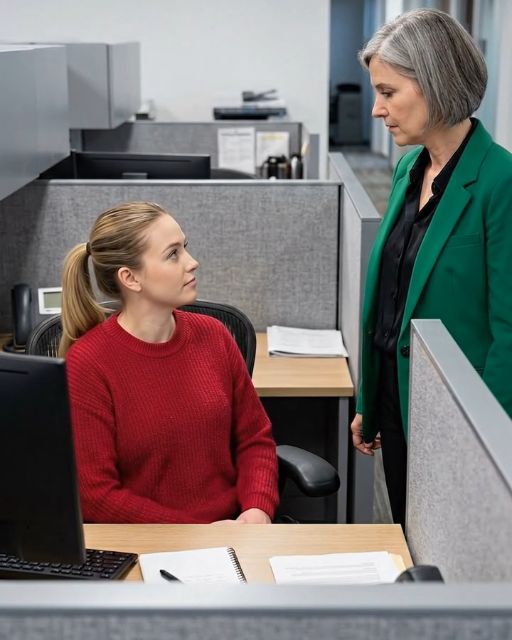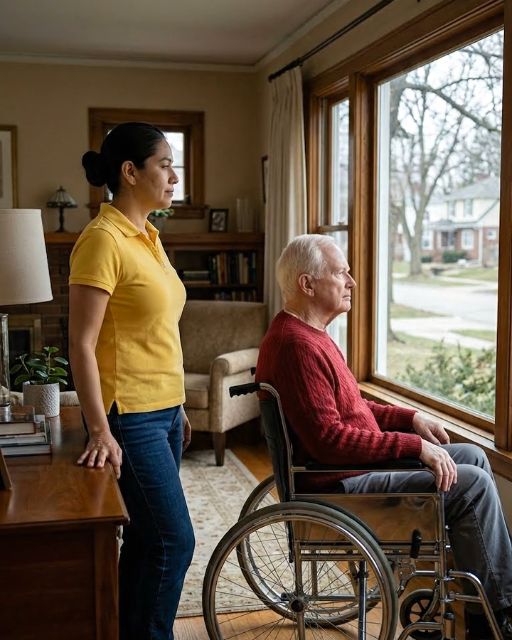
I can’t have children of my own. Last week, my brother bragged that he and his wife will inherit everything. Shocked, I asked Mom. Her reply: ‘What’s the point of passing things to you? You’re a dead end!’ That’s when, without a word, I pulled out an envelope. She froze. Inside was a deed.
It was the deed to a small, sun-drenched cottage on the edge of a village called Fairmere. Not much, at first glance—just two bedrooms, a tiny kitchen, and a garden that had long given up on growing anything but weeds. But it wasn’t the property that made her lips part in disbelief. It was the name on the deed.
Mine. Sole owner. Paid in full. No loans. No help. Just me.
She stared at the paper as if it had teeth.
“Where did you get the money for this?” she asked, almost accusingly.
“I’ve been saving. For years,” I said quietly. “I wanted something that was mine. Something no one could take away or call pointless.”
She didn’t respond. Just walked out of the room with a sigh and didn’t look back. Not even a “congratulations.” Not even a nod.
That was the last day I stepped foot in their house.
I moved into the cottage two weeks later. The walls smelled like old paint and dust, but the windows let in warm streaks of sunlight every morning. For the first time in a long time, I could breathe.
The first night there, I sat in the empty living room with a cup of tea and cried—not from sadness, but from relief. For years, I’d bent myself backward trying to please people who had already written me off. Who saw my worth through the lens of my uterus.
I had tried IVF. Twice. Both times, it failed. The second time nearly broke me. I had a quiet breakdown in a Target parking lot. Nobody knew. I told people I was fine. Then I got up, wiped my face, and kept going.
So no, I couldn’t give them a grandchild. I couldn’t pass on the family name. But did that mean my life was worthless?
I was determined to find out.
The cottage needed work. The garden looked like a jungle and the back fence had collapsed under the weight of time and neglect. I could’ve hired someone. But I didn’t. I wanted to do it myself. I wanted to build something—anything—with my own two hands.
On the third morning, while trimming some overgrown bushes in the front yard, I saw her.
A little girl. No older than ten. Sitting on the curb, legs crossed, watching me like I was the most interesting thing she’d seen in weeks.
“You moving in here?” she asked.
“Already have.”
“You’re the first one in years. The last lady had cats. Like, a lot of cats. You got cats?”
“Nope. Just me and a kettle.”
She grinned. “I’m Lila. I live two doors down. My mom says we’re not supposed to talk to strangers, but you don’t look very dangerous.”
“Well, I appreciate that.”
She came by nearly every day after that. Sometimes with stories. Sometimes with cookies she swore she baked herself. And sometimes with quiet sadness in her eyes she didn’t know how to hide.
One day, she sat on my front steps and blurted, “Mom and her boyfriend fight a lot. Sometimes, I sleep in the closet so I don’t hear it.”
My stomach twisted.
I didn’t know what to say, so I didn’t say much. Just listened. She seemed to need that more than anything.
She started calling my place “The Calm House.”
I didn’t correct her.
Over the next few months, word got around that the “quiet woman in the cottage” was good with kids. It started with one mom asking if I could watch her son for an hour while she went to the doctor. Then another, and another. Before I knew it, I had a handful of children in my garden every weekend, playing in the sun while I served lemonade and patched scraped knees.
They called it “The Calm Club.” No yelling. No judging. Just laughter, stories, and board games under a tree.
I didn’t mean to start a community project. It just… happened.
One Saturday, while cleaning out the attic, I found a box of old notebooks I’d forgotten about. Inside were pages of stories I’d written over the years—short tales about bravery, kindness, and little magical things that didn’t need logic to make sense.
Lila found them first. She read one out loud to the group during snack time. The others listened wide-eyed.
“You should write a book!” one boy said, mouth full of apple slices.
I laughed, but something about the idea stuck.
That night, I dusted off my laptop and began typing.
By spring, I’d written a whole collection of short stories. I self-published them online, thinking maybe a few friends would buy a copy out of pity.
But it spread. Teachers downloaded it for their classrooms. A local bookstore asked to stock a few. Then a parenting blog picked it up, and suddenly I was doing podcast interviews and mailing out signed copies.
One email stood out.
It was from a woman named Sofia who ran a children’s foundation. She’d read my book, followed my story, and wanted to fund a small reading center in Fairmere—right on my property.
“Just a cabin,” she wrote, “where kids can come after school, read, and be safe. We’ll cover the costs. All we need is your heart.”
I cried harder than I had during any failed fertility treatment.
The reading center opened on a breezy June afternoon. Parents brought flowers. Kids brought drawings. Lila brought cookies.
That same week, I received a letter from my mom.
No greeting. No emotion. Just a single sentence:
“Your brother and his wife are getting divorced. She left with the kids.”
I read it twice.
Turns out, the picture-perfect family wasn’t so perfect. He’d been having an affair for over a year. His wife found out, packed up the kids, and moved across the country. My mother was devastated—not because her golden son was a liar, but because now she had no one left to “carry the name.”
I didn’t respond.
Three weeks later, she showed up at my gate. The same woman who called me a dead end now stood before the garden I’d planted with children who weren’t mine, stories that weren’t about bloodlines, and laughter that filled a space she never tried to enter.
She looked older. Smaller.
“I didn’t know what I was saying that day,” she whispered.
“You did,” I replied. “You just didn’t think it would matter.”
She sat on the bench. Watched the kids painting on cardboard. One of them handed her a flower and smiled.
“You built something beautiful here,” she said.
I nodded. “I did. Without being anyone’s mother. Without needing your approval.”
She swallowed hard.
“Would you ever consider adopting?” she asked, eyes on Lila.
I didn’t answer right away. Not because I hadn’t thought about it, but because I wanted to be sure she was asking for the right reasons.
“I’ve considered fostering,” I finally said. “Not because I need to prove anything. Just because there are kids who need peace more than biology.”
She nodded.
That night, Lila’s mom didn’t come home.
By morning, police were knocking. The boyfriend had taken her car and vanished. Lila was taken into protective care.
My house felt empty. I waited for updates. I called every number I could. Days passed.
Then a call came from social services.
“Lila listed you as her emergency contact. You’re not a relative, but… would you be willing to become her foster guardian while we figure things out?”
I didn’t hesitate.
She came home the next day—quiet, pale, tired—but home.
She climbed into bed with a worn blanket and whispered, “Can I stay for a while?”
“As long as you need,” I said.
Six months later, I officially became her foster parent.
On her eleventh birthday, we planted a small apple tree in the back garden.
“For new beginnings,” she said.
I got her a bracelet that read: Not all family is blood.
The reading center flourished. We called it The Story Nook. Kids from neighboring towns began visiting. Volunteers came in every week. The local news ran a feature titled: “The Dead End That Became a Beginning.”
I didn’t tell them the full story.
I didn’t need to.
My brother reached out once. Asked if I wanted to split the house Mom was planning to leave behind.
I told him I had a home. A better one. And a family of my own making.
He didn’t reply.
Mom still visits sometimes. Brings fruit. Reads with the kids. She doesn’t talk about the past, and I don’t ask her to.
Some wounds heal quietly.
If you had told me a year ago that not having children would be the very thing that led me to a life full of them, I wouldn’t have believed you.
But here I am.
A so-called dead end that bloomed into something living.
Sometimes, what we think is the end of the road… is just a turn we didn’t expect.
So to anyone reading this, feeling forgotten or underestimated—know this:
Your worth isn’t measured by what you can or can’t give biologically.
It’s measured by your heart. Your courage. Your kindness. What you choose to build when no one else believes in you.
Thank you for reading.
If this story moved you, like and share it. Maybe someone out there needs to be reminded that even dead ends can grow flowers.