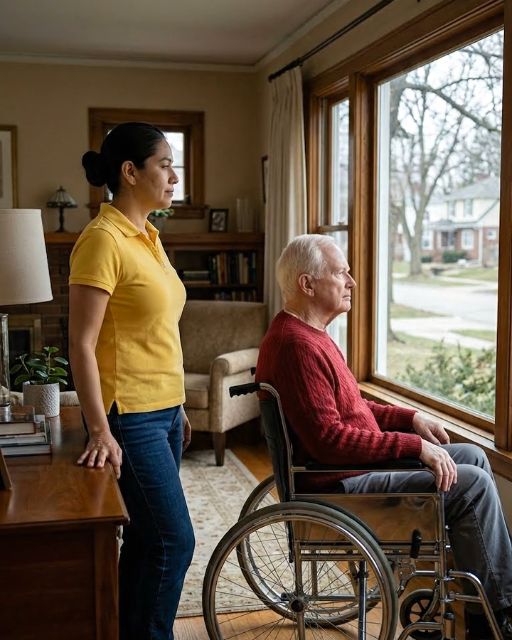
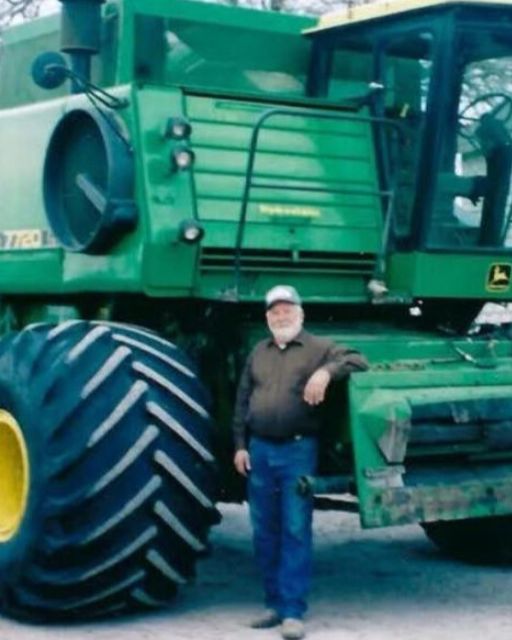
In Pine Ridge, Kansas, 70-year-old Earl spent his life fixing tractors and combines. But when big corporations drove out small farms, Earl’s shop grew silent.
The town’s decline started slowly, years before Earl realized it was happening. First, it was a few farms closing up. Then, one by one, the businesses that catered to the farms — feed stores, hardware shops, and auto parts stores — started closing too. As the soil became less fertile and the weather less predictable, the farms just couldn’t keep up. By the time Earl was in his late sixties, the world he’d known for so long had nearly vanished.
He’d tried to fight it. For years, he refused to sell out to the larger corporations that had moved into the area, promising convenience and speed. But the truth was, Earl didn’t have the funds to compete with their bigger warehouses and quicker delivery systems. The repair shop that had been a hub of activity for decades now sat mostly empty, its sign faded and its windows covered in dust.
One day, as Earl was cleaning out a dusty shelf, he found a crumpled piece of paper wedged between some old catalogs. He unfolded it slowly, recognizing the handwriting.
“Earl, my planter’s dead. Crops’ll rot. Can’t afford a new one. — Maggie.”
Maggie had been one of the first people to trust Earl when he was just starting out, and she was still one of the few farmers who kept her land. She lived about ten miles outside of town, but had been coming to Earl’s shop since he was in his thirties.
Earl sighed as he read the note, then carefully folded it back up. His joints ached with the thought of hauling himself into the shop, but he couldn’t let her down. He grabbed his old wrench and headed outside, feeling the cool wind on his face.
His bones creaked as he worked under the hood of Maggie’s old planter, using scrap parts he’d saved over the years. Earl was used to making do with whatever he had, even if it wasn’t the ideal solution. That was the way of the land, after all. You used what you had, and you didn’t complain.
The sun was setting when Maggie pulled up in her truck. She looked at him with a tired smile as he wiped his hands on his overalls.
“You’re a lifesaver, Earl,” she said.
He shrugged, not wanting to admit how much the simple task had worn him out. But it felt good to help. When Maggie tried to pay him, he shook his head.
“You keep your money,” he said, his voice rough. “I’ve got enough for myself. You just keep your farm going.”
She looked at him for a moment, as if she wanted to say something, then nodded and climbed back into her truck. Earl stood in the dimming light, watching her go. He felt a pang of something he couldn’t quite name.
Word spread quickly through the town. Earl’s shop, once forgotten, was now alive with activity. Farmers came in with broken-down machinery, and Earl would fix it with whatever he could find. He patched up milking machines with fridge parts and rewired greenhouses with car batteries. It wasn’t pretty, but it worked. And that’s what mattered.
The money wasn’t great, but Earl didn’t care. His work, though imperfect, kept people going. He found a strange sense of pride in that. It wasn’t about making a profit. It was about keeping the town’s heart beating.
But life, as always, had its way of throwing curveballs. One summer evening, after a particularly brutal stretch of work, Earl stepped outside to survey the evening sky. That’s when he saw the dark clouds rolling in. The wind picked up, and he knew the storm was coming fast. It wasn’t long before the hail started to fall, pounding the roof of his barn like rocks.
Earl rushed inside, trying to save what he could. But by morning, the barn was gone. The roof had caved in, and the walls were nothing but rubble.
At first, Earl just stood there, staring at the mess. He’d put so much time and effort into building that barn, and now it was reduced to debris. But as he stood there, his eyes welled with tears—not out of frustration, but because he realized something. The town was in trouble, and he couldn’t do it alone. He had always prided himself on being self-sufficient, but this time, he needed help.
The next morning, he was woken up by a knock at the door. He shuffled to it, rubbing his eyes, and opened it to find a group of farmers standing there, their faces set with determination.
“We’re here to help,” one of them said, a young man named Jake. “We’re gonna rebuild your barn.”
Earl stared at them for a moment, feeling a lump form in his throat. He’d never been one to ask for help, but here they were, ready to give it.
They worked together, hauling wood and nails, hammering and sawing, until the barn was standing again. It wasn’t perfect, but it was sturdy. And that was all that mattered.
When it was finished, Maggie showed up with a jar of honey in her hands. She handed it to Earl, her eyes soft.
“You kept us going all these years,” she said. “Now, we’re keeping you.”
Earl didn’t know what to say. It felt like a weight had been lifted from his shoulders, and for the first time in years, he allowed himself to feel something like hope.
As the days passed, Earl’s shop became more than just a place to fix machinery. It became a gathering spot for the young farmers who still had the drive to make things work. Earl started what he called a “Parts Library,” where young farmers could come and learn how to fix their own equipment. They worked on old tractors, machines, and tools, always under Earl’s watchful eye.
“You listen close,” Earl would say, his voice gruff. “The engine will tell you what’s wrong.”
The young farmers didn’t mind his rough demeanor. They saw the value in what he was teaching. Slowly but surely, Earl became not just the mechanic of Pine Ridge, but a mentor, a guide. And as they worked together, they shared stories of the old days, of the way things used to be when farms thrived and life was simpler.
One afternoon, a young woman named Clara brought her camera along. She’d been recording bits of their work for weeks, capturing Earl’s lessons and the camaraderie that had sprung up in the shop. She put together a short video, not thinking much of it, and posted it online. Within hours, it went viral.
The video of Earl, surrounded by young farmers, fixing machines and sharing wisdom, struck a chord with people far beyond Pine Ridge. It resonated with anyone who had ever struggled to keep going, to make something work when the odds were stacked against them. It was a story about community, about resilience, about people who refused to give up.
Earl didn’t care much about the attention. He was an old man, set in his ways. He wasn’t interested in being famous. But he couldn’t help but smile when people started showing up at his shop from all over the state, wanting to learn from him, wanting to be a part of something bigger than themselves.
When they asked him for interviews, Earl just shrugged. “Ain’t about me,” he would say. “It’s about folks who don’t quit.”
In the years that followed, Earl’s shop became a symbol of survival. The town started to thrive again, not because of some grand miracle, but because people had come together, just as they always had. They shared tools, knowledge, and resources. They helped each other, and in doing so, they found a way to keep their town alive.
Earl didn’t live forever, of course. He passed away quietly, in his sleep, at the age of 86. But the legacy he left behind wasn’t just about fixing machines. It was about showing people that when things break, you can always find a way to put them back together — if you’re willing to put in the work, and if you’re willing to do it together.
The story of Pine Ridge didn’t end when Earl died. It kept going, as stories always do. The parts library remained, and the young farmers kept coming, learning from each other. And every now and then, someone would find an old wrench or a broken-down machine and remember Earl, the man who taught them that everything could be fixed — as long as you didn’t quit.
It was a quiet promise, one that didn’t need to be said out loud. We’re in this together. And that was enough.
Earl’s legacy wasn’t just in the machines he fixed, or the parts he shared. It was in the spirit of the town, in the way people cared for each other, in the way they worked side by side. And that spirit lived on, generation after generation.
The moral? Life doesn’t always go as planned, and it can get pretty tough. But no matter what, the best way forward is together. The support you give, and the kindness you offer, will always come back in ways you least expect. It’s never too late to lend a hand, or to ask for one.
Share this story with someone who might need to hear it today, and let’s all keep fighting for each other.