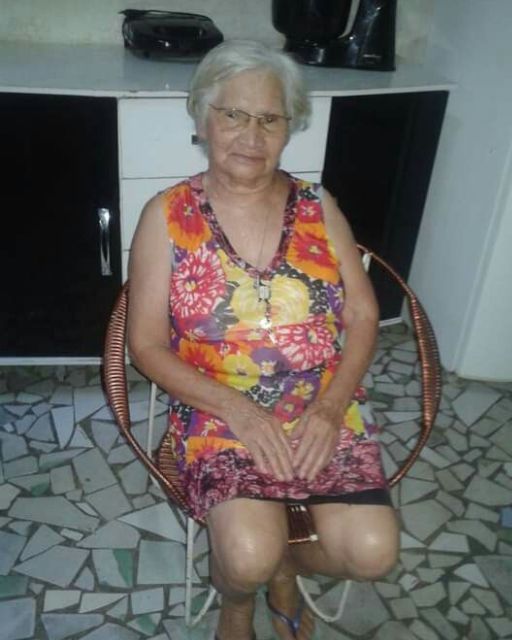
She always kept the TV on loud and nodded like she understood everything. Telenovelas, lottery numbers, church news. But she never read the screen. Not once.
We only figured it out when my cousin Bruna tried to teach her how to text. Vovó fumbled with the letters, got flustered, then said, “Just call me instead, querida,” and changed the subject.
But a month later, when I was helping defrost her ancient freezer, I found them.
Stuffed behind the frozen peas, wrapped in plastic and taped shut: a stack of envelopes.
Every single one addressed to her.
Some yellowed. Some new. All unopened.
I asked her about them. She stared at the floor.
“I didn’t want to throw them out,” she whispered. “Some might be good.”
She’d been collecting them for years. Letters from relatives, the energy company, the city, the post office—even one from my brother in Italy.
But right when I asked her, she looked so fragile. It felt like I was asking about something buried deep in her heart.
I didn’t push. Instead, I carefully stacked them back in the freezer, like they were precious relics, which, to her, they were.
But I couldn’t stop thinking about it.
I’d never known my grandmother to be a heavy reader—she wasn’t illiterate, but she always preferred to listen. Her world was one of stories told aloud, of family gatherings, of conversations at the table. Books were never her thing, not even as a child. I guess the reading thing just never stuck.
Still, this was different. This wasn’t just about not reading; this was something else. She was hiding them.
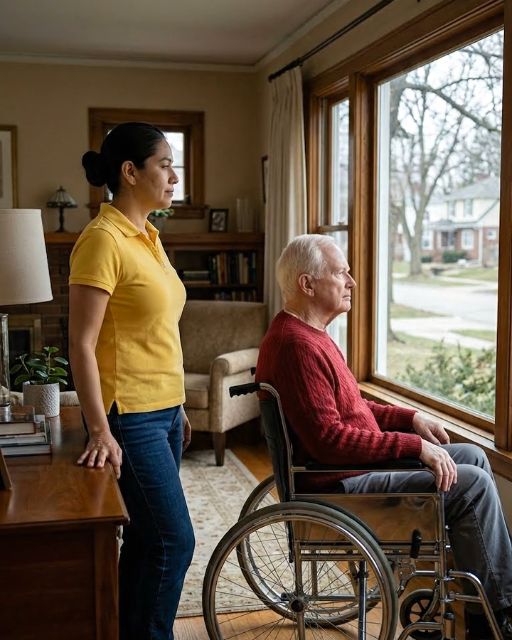
A few weeks passed, and I kept seeing those unopened letters in my mind, almost like a quiet cry for attention. One afternoon, after a long walk, I found myself sitting with her in the living room, the TV blaring as usual. I hesitated, but then I decided to ask.
“Vovó, why don’t you ever open your letters?” I said it casually, like it was no big deal. But the way she stiffened made me feel like I had just opened a door to something much bigger than I could handle.
“I don’t know how to read them,” she replied quickly, but her voice was different. There was something heavy in it, like she was telling me something that had been locked away for years.
I waited, but she didn’t say more.
For days, the thought of those letters gnawed at me. Why had she never opened them? What did she feel when she looked at them?
It didn’t sit right. So I decided to take matters into my own hands.
That weekend, I took a deep breath and went back to the freezer. I pulled out the stack of letters, wondering what was so important about them. Slowly, I peeled away the plastic wrap from the first one.
It was from the city, dated ten years ago. A bill, maybe. My heart skipped a beat as I scanned it quickly. Then I grabbed the next one. A letter from her sister, who had passed away five years ago. Her handwriting was familiar, but the words made no sense. There were long pauses between the lines, her letters jagged and uneven. It was almost as if her sister had been trying to say something that she couldn’t.
Then came a letter from my brother, now in Italy for over a decade. It was written in a language she wouldn’t have understood. Italian. There was a picture inside of his family, smiling at the camera. They had sent it with a note: “We miss you.” But she never read it. Never saw his face in it.
The pile seemed endless. Some letters had been unopened for years. Some were only a month old. Each one brought new realizations, but none of them felt complete. It was as if Vovó had carefully curated her own world—a world where she never had to confront her inability to read.
But what broke me the most was the letter from her daughter, my mother.
My mother had written it to tell her that I was moving to another city for university. It was about how proud she was of me and how much she missed her mother. It was a letter about family and love, something that could’ve made my grandmother smile. But it had been sitting untouched for who knows how long.
I felt a knot in my stomach.
The letters weren’t just about bills or news from distant relatives. They were about connection—things she had never fully embraced, never allowed herself to feel.
I walked into the living room with the letter from my mother and handed it to her. Her eyes were soft, like she hadn’t expected to see me holding it. “This one’s from Mom, Vovó,” I said gently, “You should read it.”
Her hand trembled slightly as she took it. She didn’t say anything for a long time, just held the letter.
“I’m sorry,” she whispered after a while. “I never wanted to disappoint anyone. I didn’t want anyone to know I couldn’t read.”
My heart ached.
It wasn’t about not being able to read. It was about the shame she had carried for so long. The embarrassment of not being able to participate in the world as others did. The fear of being judged.
She didn’t want anyone to see her as less than she was. But in trying to hide it, she had isolated herself, pushing away the connections that could’ve helped her feel loved.
“Vovó,” I said, kneeling beside her, “You don’t have to do everything like everyone else. We’re a family. And we love you. You don’t need to be perfect.”
She looked at me, her eyes glistening. “But I wanted to be… I didn’t want you to see me like this.”
I reached out and touched her hand. “You don’t have to hide anymore.”
That afternoon, we sat together in silence, the air heavy with unspoken emotions. I thought about how many years my grandmother had spent feeling small, just because she didn’t know how to read like everyone else. It was a fear that had shaped her entire life, and now, I understood.
A few days later, we started something new.
Bruna—my cousin, who had been patient enough to teach Vovó how to text—came over and helped her write a letter to my mother. It was simple, nothing fancy, but it was a start. My grandmother smiled the whole time, like she was reclaiming a part of herself that had been locked away for so long.
She wrote, “Thank you for the love. I’m proud of you, too.”
It wasn’t much, but it was everything.
I realized something that day: Vovó hadn’t just hidden the letters. She had hidden herself. But once she allowed herself to be seen—really seen—it was like a weight lifted.
She started opening the letters after that. Slowly, carefully. Some were from people she hadn’t heard from in years. Others were simple things, like her doctor’s reminders or old holiday cards. But now, they meant something. They weren’t just things to fear. They were messages of love, of family, of life itself.
As I watched her read those letters, one by one, I understood what true connection meant. It wasn’t about being perfect. It was about being open. About allowing others to see us, flaws and all, and still finding love and acceptance.
Vovó never learned to read like the rest of us. But what she taught me—what we all learned from her—was that sometimes the most important things can’t be learned from books or letters. They’re learned from the way we live, the way we love, and the way we allow ourselves to be vulnerable.
And that’s what makes us human.
Share this story if you’ve ever felt like Vovó, hiding away something important out of fear. Sometimes, all we need is someone to remind us that we don’t have to hide anymore.