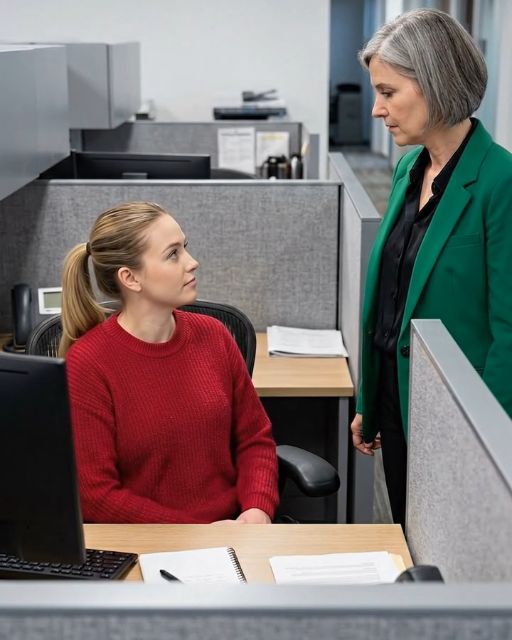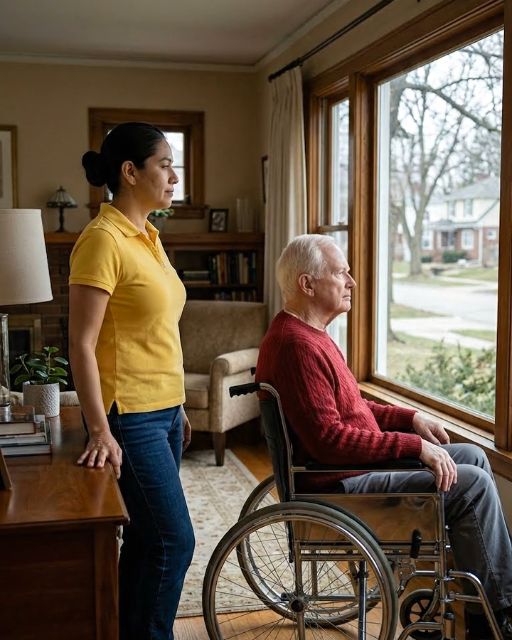

After my surgery, my daughter-in-law offered to help around the house while I recovered. I was grateful—until I noticed little things missing. A brooch here, a silver spoon there. I mentioned it to my son, and he laughed it off. But last night I hobbled to the kitchen for water and caught her whispering on the phone, saying, “She doesn’t even notice—it’s practically mine already.”
My heart sank. I froze by the hallway wall, my hand still clutching the edge for balance. She was standing near the back door, phone pressed tight to her cheek, whispering fast and low. I didn’t hear the rest, just that one sentence, but it echoed in my chest like a drum. It’s practically mine already.
She could have been talking about anything. A dress. A car. But I knew. I knew.
For the past week, ever since they moved in to “help” while I recovered from my hip surgery, small things had vanished. Trinkets mostly, nothing dramatic. At first, I thought I was being paranoid—just foggy from the pain meds. But my pearl-handled sewing scissors? A ring my mother gave me when I turned 18? Those things didn’t just get up and walk away.
I mentioned it casually to my son, Navid, over tea one afternoon. He chuckled like I’d told him a joke. “Mina wouldn’t take your old things, Ma. She’s not into that vintage stuff.”
Vintage. That word stung. These weren’t thrift store knick-knacks. They were memories.
So that night, after hearing her on the phone, I stayed quiet. I shuffled back to my room and sat on the edge of the bed for what felt like hours, piecing together the timeline. Who else had been in the house? No one. My neighbor Akiko stopped by with soup, but she never went beyond the living room. My home nurse only came during the day, and we always stayed in the front of the house.
It had to be her.
Still, I needed to be sure. The last thing I wanted was to accuse my son’s wife without proof. Not just because of family drama, but because if I was wrong, it would break something we couldn’t glue back together.
So I got clever.
The next morning, I played the role—grateful, slow, slightly loopy. I asked Mina to help me with my closet, saying I wanted to pick out some outfits for the week to feel “less like a patient.” She lit up like I’d handed her a prize.
I watched her eyes. She kept glancing at my jewelry box.
Later, when she went out for groceries, I placed a small velvet box with a fake but very real-looking sapphire necklace in my nightstand drawer—sticking halfway out like I’d forgotten to put it away. I noted the time and angle.
When I checked after her return, it was gone. Just—gone.
That was it. That was my confirmation.
Now, here’s where things get strange.
I wanted to tell Navid right away, but the thought of his face—how he’d look at me, at her—I hesitated. So instead, I called someone else. Someone I hadn’t spoken to much in years: my cousin’s daughter, Rehana.
She’s a few years younger than Navid, works as a legal assistant downtown, and is sharper than a blade. She’s also the only one in the family who never fell for Mina’s charms.
I invited her over under the pretense of bringing me some legal papers to review—something about a property tax exemption I didn’t even qualify for. She came that same afternoon, a giant tote bag over her shoulder and her laptop in hand.
Mina offered her tea but stayed out of the way.
I filled Rehana in while Mina was upstairs folding laundry. Her eyes got wide. “So what’s the plan?” she asked.
That’s when a wild idea came to me.
“I want to give her a test,” I said. “But I want it to look like a reward.”
Rehana grinned.
That night, I told Mina how grateful I was for her help. How I didn’t know what I would’ve done without her. Then I asked her to do one last favor—help me go through some old boxes in the attic. She looked nervous at first but said yes.
We went up the next morning. I brought out an old metal cash box I hadn’t touched in years and told her it had sentimental things—photos, small jewelry, my wedding mangalsutra. Truthfully, most of it was costume stuff, but one piece was real: a thin gold chain with a tiny locket shaped like a rose. My father gave it to my mother, and she gave it to me.
I told Mina I wasn’t sure what to do with it. Maybe donate it all, or maybe gift the special piece to a future daughter-in-law—wink, wink. She beamed.
I left the box on the floor near a stack of dusty books. Told her I was tired and going to nap.
Then I waited.
Three hours later, the chain was gone.
I didn’t say anything. Not yet.
Instead, I told Navid I needed help moving some things to the safety deposit box at the bank, “just in case.” He agreed. Mina suddenly looked pale when I mentioned it, asking if I was sure I wanted to take the old stuff out of the house.
I smiled. “Better safe than sorry.”
Here comes the twist.
I wasn’t really going to the bank. I was going to the police. With Rehana.
We met with a quiet officer at the precinct, a man who reminded me of a tired owl. I showed him the photo of the missing necklace, the timing, the items gone, the pattern. He listened carefully. Then he said, “Do you want to press charges?”
I hesitated. I didn’t. Not yet.
So instead, we filed a “recorded incident” with full inventory photos and dates—just in case.
Then we did something petty. Or maybe strategic. I sent Mina a text that night.
“Found my old chain in the laundry room under a towel! So relieved. Would’ve hated to lose something so irreplaceable.”
Her reply came fast:
“Oh wow, yes, good thing you found it!”
Except—I never told her it was missing.
Two days later, Navid got a call from his friend Malik, who owns a small pawn shop in East Portland. “Hey,” he said. “Is your mom selling her old jewelry? ‘Cause someone came in with a piece I swear she used to wear.”
Navid looked confused. Told him no.
When he asked for details, Malik sent a photo.
It was the rose-shaped locket.
That’s when everything changed.
Navid didn’t laugh anymore. He stared at the photo for a long time, then got quiet. Said he needed to go for a drive. He came home late. Didn’t eat dinner. Mina kept asking what was wrong. He said nothing.
That night, I heard them arguing through the vent.
I didn’t catch every word, but I heard:
“You said she didn’t notice!”
and then—
“What else did you take?”
The next morning, Mina was gone.
Her suitcase, missing from the hallway. Half her clothes, gone from the guest room closet.
Navid didn’t say much at first. Just helped me to the table and made tea the way I like it—one sugar, no milk.
Then he sat down and said, “I’m sorry, Ma.”
He didn’t cry. Neither did I.
But we sat there for a long time.
Eventually, he told me the truth.
Mina had been struggling with money. Credit card debt she never told him about. She was reselling my jewelry online to pay some shady loan guy she met before they got married. She thought if she just “borrowed” a few pieces and replaced them later, no one would know.
But it spiraled.
It always does.
Navid said he’d already contacted Malik and two other shops. Got back three pieces so far. Said he’d keep trying.
He moved back in for a while after that. Not just to help me, but to clear his head.
We watched old cooking shows together. He fixed the broken lock on the shed. I showed him how to make the yogurt from scratch again—he used to love it as a kid.
One day, I told him something I hadn’t planned to.
That I once took a pair of earrings from my own mother when I was 19. Nothing fancy. Just little silver hoops. I wanted to impress a boy at college.
My mother never mentioned it. But two weeks later, she left a small note in my drawer that said, “I trust you know the difference between taking and stealing.”
That was all.
Navid just nodded. He got it.
A month later, I got a letter in the mail. No return address. Inside was the sapphire necklace. The fake one I used as bait.
There was also a folded scrap of paper that said: “I’m sorry. I was scared.”
I didn’t recognize the handwriting, but I knew it was hers.
And you know what? I forgave her.
I didn’t call. Didn’t text. But I let the anger go.
Because sometimes people fall. Hard. And sometimes, life finds a quiet way to teach them.
Navid’s doing better now. He’s seeing someone new—a woman named Layla. Kind eyes, good listener.
As for me? I got most of my little treasures back. Not all, but enough.
And the rest?
Just things.
Here’s what I’ve learned: when someone shows you their truth—believe them, but also leave room for grace. People mess up. But karma has a longer memory than we do.
If you’ve ever trusted the wrong person and still found your way back to peace, hit like or share this with someone who gets it. ❤️